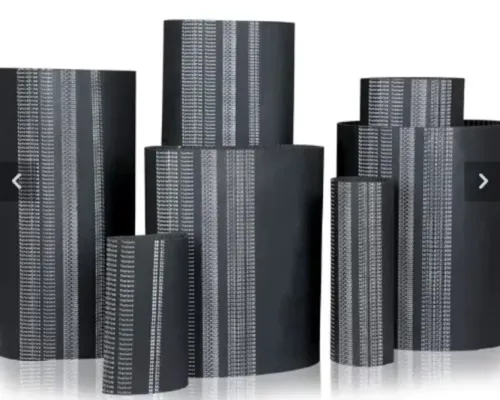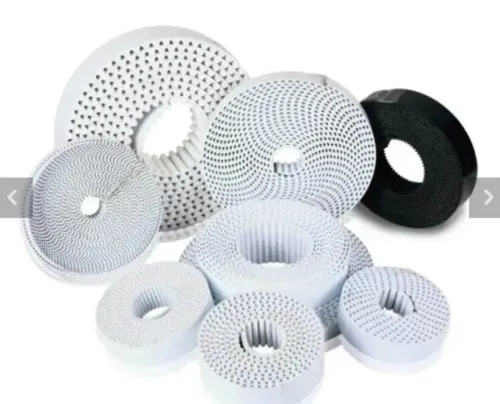
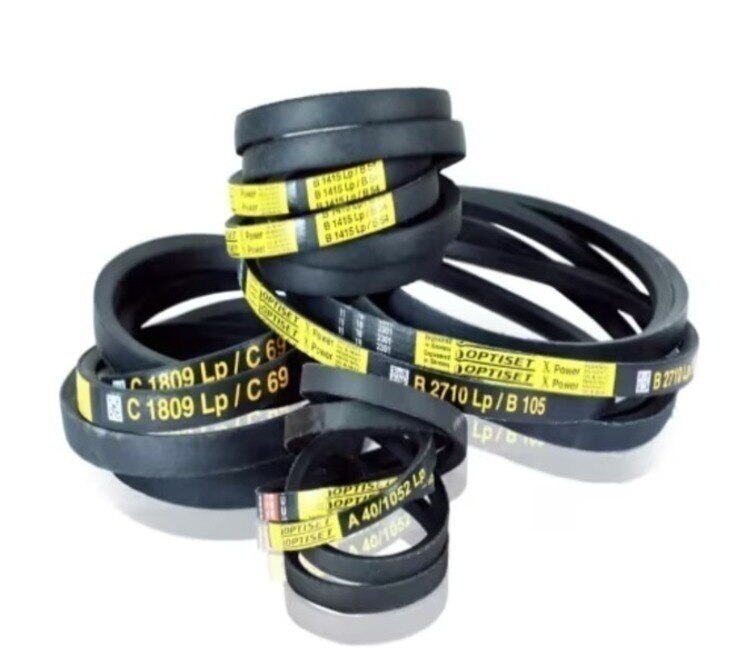
A banded V-belt transfers torque through friction between its sidewalls and the matching flanks of two sheaves, while its tie band keeps multiple ribs working as one unit. By the end, you will be able to trace the power path, calculate the key drive values, specify a compatible belt, and install it without creating avoidable alignment or tension problems.
Key takeaways
- Friction between belt sidewalls and sheave flanks transfers motor torque.
- The tie band keeps multiple belt sections aligned during shock loads.
- Match belt profile, sheave groove, speed ratio and calculated power.
- Set tension correctly, then inspect for slip, heat, wear and misalignment.
How torque travels from the motor to the driven machine
A banded V-belt transfers motor torque through friction, not teeth. The motor turns the driver sheave, whose angled flanks wedge against both sidewalls of each belt. That squeezing force creates friction, and the moving belt carries tension around to the driven sheave, turning the driven shaft and its machine.
The power path is:
- Motor shaft rotates the driver sheave.
- Driver sheave grips the belt sidewalls and pulls the belt.
- The belt runs across the centre distance while carrying tight-side tension.
- The driven sheave receives that tension and rotates the driven shaft.
- The shaft delivers torque to the pump, fan, conveyor, compressor or other load.
The tie band joins the individual V-belts into one unit. It helps the set track together, limiting belt whip, sideways movement and unequal tracking when the load pulses or the machinery vibrates.
It does not make the drive a positive, no-slip system: elastic creep and some slip remain, so the driven speed changes slightly as load varies.
Understanding how banded for vbelts transfer power in mumbai begins with the installed geometry, not the application name. For reliable banded vbelts power transmission, match the belt section to the sheave grooves, then confirm the number of ribs or belts, effective length, centre distance and required speed ratio.
Check alignment in both parallel and angular planes; offset or cocked sheaves can quickly wear one belt edge even when the shafts are parallel.
What the tie band changes under shock and fluctuating loads
Separate V-belts can react differently when torque rises suddenly: one may stretch, another may slip, and a third may climb or turn in its groove. A banded V-belt joins two or more longitudinal V-belts with a continuous tie band across their backs, forcing them to move as one unit.
That connection limits belt whip, sideways wandering and unequal tracking during vibration or pulsating torque. The sheave grooves still grip each belt through its sidewalls, but the tie band keeps the ribs aligned so the load remains distributed instead of shifting abruptly between belts.
The benefit is stability, not an automatic increase in rated horsepower. On a crusher, compressor or intermittently loaded conveyor, a loose individual belt can oscillate after each shock; the linked unit settles together and is less likely to climb out of the sheave or turn over.
This makes rubber banded belt applications useful where starts, stops and vibration punish ordinary matched sets. In banded V belts machinery in Mumbai, the same advantage applies to humid, dusty or heavily cycled drives, but only when the belt section and sheave grooves match.
A damaged tie band, glazing, rubber dust or rising temperature signals that the unit is no longer controlling movement; replace the complete banded belt rather than cutting out one rib.
How to match the belt, sheaves and drive calculations
Start with the installed sheaves, not the old belt label. A belt can look correct yet ride high, bottom in the groove or contact the wrong flank, causing slip and rapid wear.
1. Identify the belt section from the sheave groove profile, pitch spacing, included angle and minimum permitted diameter. Confirm whether it is classical, narrow or metric wedge section; similar nominal widths do not make these sections interchangeable.
2. Record the belt’s effective length, number of ribs, construction and manufacturer designation. Match the sheave groove count and confirm that the replacement’s complete banded construction has a published capacity rating. Do not assume three linked belts equal three independent belts.
3. Calculate the approximate speed ratio from pitch diameters: driven rpm = driver rpm × driver pitch diameter ÷ driven pitch diameter. Belt speed is π × pitch diameter × rpm ÷ 60, using metres and revolutions per second. Allow for elastic creep and slip; the actual ratio changes with load.
4. Calculate shaft torque with T = 9550P ÷ n, where T is newton-metres, P is kilowatts and n is rpm. Select a drive whose rated capacity exceeds the design power, which equals transmitted power multiplied by the service factor for shock, starts and fluctuating load.
5. Check centre distance, wrap angle and shaft alignment in both parallel and angular planes. Offset or cocked sheaves produce edge wear even when the shafts are parallel. For banded vbelts power transmission, verify the supplier’s rating against speed, diameter, wrap, rib count and service factor rather than relying on belt count alone.
How to install, tension and inspect a banded V-belt drive
1. Release the adjustable motor base or take-up mechanism, align the motor shaft, driver sheave, belt set, driven sheave and driven shaft, then roll the belt into the grooves. Never lever it over a sheave flange with a screwdriver; the force can cut the tie-band and permanently distort the belt.
Do not stretch the belt to obtain tension.
2. Set installation tension with the manufacturer’s span-deflection, force, or frequency method, not by judging visual tightness. Excess tension overloads shafts and bearings; low tension causes slip, heat, glazing, belt turnover and groove climbing. Confirm that every rib sits fully in its matching groove and that the sheaves are aligned.
3. Run the machine unloaded, then under normal load while checking for slip, squeal, vibration, belt whip and abnormal heat. Stop the drive if the tie-band moves laterally, separates, or rubs a flange. Recheck tension after the initial running-in period because the belt seats into the grooves.
4. Inspect at planned shutdowns for sidewall glazing, cracking, rib wear, frayed or separated tie-band, oil swelling, rubber dust and rising temperature. Remove the cause of contamination or misalignment before fitting a replacement.
Replace a banded belt as one complete unit; do not substitute unmatched individual belts, because one belt can carry most of the load and fail early. Confirm the replacement’s section designation and groove profile match the installed sheaves; classical, narrow and metric wedge sections are not interchangeable by nominal width alone.
How to specify a banded belt for Mumbai machinery
Give the supplier the installed drive’s measurements and operating conditions, not only the old belt’s printed length. A correct replacement for banded V belts machinery in Mumbai must match the sheaves, load, environment and safety controls.
1. State the belt section and dimensional standard: classical, narrow or wedge, plus the effective length and number of ribs or belts in the band. Confirm the section against the sheave groove profile; similar-looking nominal widths are not interchangeable.
2. Provide the drive data: motor power, driver and driven sheave diameters, shaft speeds, centre distance, required speed ratio, rotation direction, duty cycle and whether the load produces shock, vibration or pulsating torque. Explain if separate belts previously whipped, turned over or tracked unevenly.
3. Describe the construction and surroundings. Identify wrapped, raw-edge or specialty elastomer requirements, then give ambient temperature, oil or grease exposure, water, dust, chemicals and cleaning agents. Report the measured operating temperature if the existing belt runs hot.
4. State safety requirements separately. If dust, vapour or gas could ignite from static discharge, request a statically conductive belt and verification for the complete drive; “rubber” does not prove conductivity. Tell a banded belt supplier in Mumbai whether the site has a specified explosion-risk classification.
5. Send clear photographs of the belt markings, sheave grooves, tie band and guard, along with signs such as glazing, cracks, rib wear, oil swelling or rubber dust. Jigna Sales Corporation can use those details to check the replacement as a complete banded unit rather than matching one visibly damaged belt.
Related product
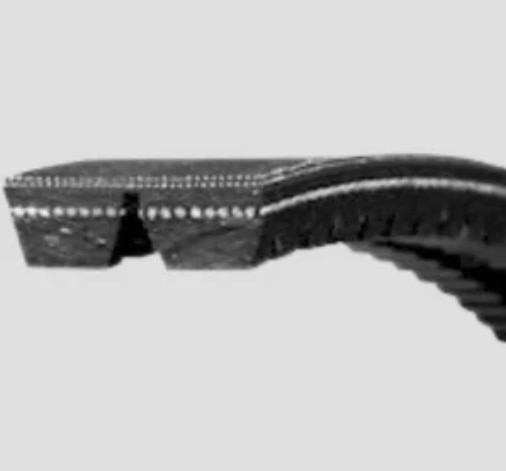 | Rubber Banded Belts Rubber Banded Belts are made up from Classical, Wedge or Narrow belts with strong tie band over them. View product → |
Frequently asked questions
How does a banded V-belt transfer power from a motor to a machine?
The motor turns the driver sheave. Its angled flanks wedge against the belt sidewalls, creating friction that carries tension around the driven sheave and turns its shaft.
What does the tie band change under shock and fluctuating loads?
The tie band connects the individual V-belt sections, keeping them aligned and sharing movement when torque changes or shock loads reach the drive.
How do you match a banded V-belt, sheaves and drive calculations?
Match the belt profile to the sheave grooves, then check power rating, speed ratio, centre distance, wrap angle and the number of belts required for the calculated load.
How should you install, tension and inspect a banded V-belt drive?
Fit the belt without forcing it over the sheaves, align the shafts and sheaves, set measured tension, and inspect for slip, heat, cracking, glazing, fraying and uneven wear.
What should you specify when ordering a banded belt for Mumbai machinery?
Provide the belt section, length, number of ribs, sheave dimensions, motor power, driver and driven speeds, centre distance, operating conditions and the machine application.