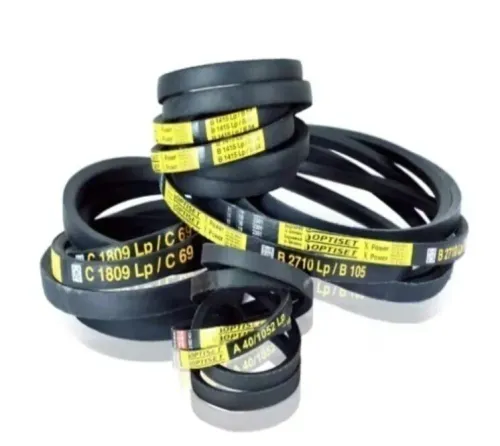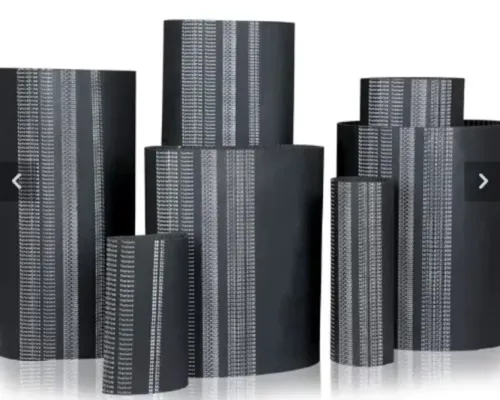
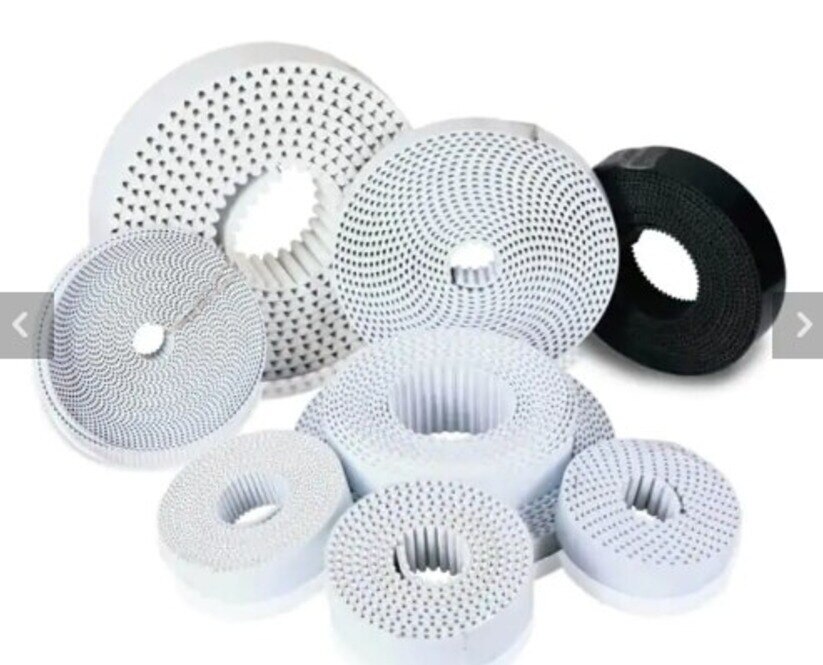
A PU timing belt is not defined by polyurethane alone: its cord, tooth profile, pitch-line length, joint construction and inspection record determine whether it will run accurately on an Indian machine. By following the production sequence and using a precise buying checklist, you can compare belts, identify hidden construction differences and specify a replacement that fits the drive.
Key takeaways
- Specify polyurethane hardness, additives and resistance requirements before production.
- Match steel or aramid cords to the belt load and operating conditions.
- Confirm the tooth profile: T, AT, HTD or STD before ordering.
- Request dimensions, material details and inspection records before buying.
From polyurethane compound to a finished belt body
A finished PU timing belt starts as a thermoplastic polyurethane compound, not as a ready-made strip. The manufacturer selects the polyurethane grade, hardness, colour and additives for the required oil, abrasion, humidity and temperature resistance, then dries and mixes the raw materials before processing.
- The compound is heated and homogenised into a controlled melt. Polyester and polyether polyurethane are not interchangeable: polyether grades handle hydrolysis better, while the selected compound must match the application’s chemicals and temperature.
- Steel, stainless-steel or aramid cords are prepared under controlled tension. The cords are positioned longitudinally so the polyurethane carries the teeth while the tension members control stretch and length stability.
- In continuous extrusion, the molten polyurethane surrounds the cords and passes through a die or forming wheel that creates the tooth profile. In molding, measured material and cord assemblies are formed against a toothed mold, then cooled or cured under controlled conditions.
- The resulting open-ended belt is inspected, slit or cut to width, and cut to the specified pitch length. A length quoted at the pitch line is not the same as outside or inside length.
- An endless belt can be molded as a continuous ring. Alternatively, the manufacturer joins an open belt by thermoplastic butt-welding or a prepared finger joint, then trims and grinds the joint flush.
- Final checks examine tooth formation, width, thickness, joint alignment, surface defects and pitch length.
PU timing belt manufacturers produce timing belts for India, but India production does not prove identical construction. Ask whether the body was molded or extruded, where joining occurred, and whether the belt is welded, molded endless or standard stock.
Steel cords, aramid cords and the construction of the belt
The cord is the belt’s load-bearing skeleton. A thermoplastic polyurethane body forms the teeth and protects longitudinal tension members positioned near the neutral axis; cord alignment controls pitch stability, while polyurethane hardness and tooth geometry control pulley engagement.
| Cord option | Strength and movement | Service-life trade-off |
|---|---|---|
| Steel cord | High tensile stiffness, low stretch and strong length stability | Handles high loads, but reverse bending, corrosion and small pulleys can accelerate fatigue |
| Aramid cord | Lower weight, good flex-fatigue resistance and non-metallic construction | More elastic, with different installation-tension behaviour and lower dimensional stiffness |
| Stainless-steel cord | Steel-like dimensional stability with improved corrosion resistance | Costs more and still requires correct pulley diameter and bending limits |
A manufacturer can make an endless belt as a continuous molded ring, avoiding a seam and preserving uniform tooth spacing around the circumference. That construction suits drives where uninterrupted running and maximum joint strength matter.
An open-ended belt can be joined by thermoplastic butt welding or a finger weld. Butt welding is quick but concentrates stress at one transverse joint; a poorly controlled bead can disturb tooth pitch and tracking.
Finger welding interlocks the ends over a longer area, improving load transfer and flexibility, but the joint remains the fatigue-sensitive zone.
Specify pitch length, not outside length. The pitch line follows the cord centre, so changing cord material or cord position changes the relationship between tooth count and centre distance. Reject a belt with adequate tensile strength if the splice, cord alignment or pitch error causes uneven pulley engagement; tooth wear and early failure follow.
How manufacturers form and verify T, AT, HTD and STD teeth
A T10 pulley is not automatically suitable for an AT10 belt: both have a 10 mm nominal pitch, but their tooth shapes differ. Manufacturers form teeth with a precision die, mold, or machining operation that positions the polyurethane around the tensile cords, then cool or cure the belt before cutting and joining.
| Profile | Tooth system | Matching rule |
|---|---|---|
| T | Metric trapezoidal | Use a T-profile pulley with the same pitch |
| AT | Reinforced trapezoidal | Use an AT-profile pulley; do not substitute T |
| HTD | Curvilinear, high-torque | Match the specified HTD pitch and pulley form |
| STD | Curvilinear, standard drive | Match the specified STD pitch and pulley form |
The pitch line determines drive geometry. Confirm whether a supplier quotes pitch length, outside length, or inside length; only pitch length, measured around the cord-defined pitch line, belongs in centre-distance calculations. A buyer comparing timing belts india suppliers needs the belt drawing and pulley tooth form, not only “PU belt.”
Acceptance checks should include:
- Tooth pitch, height, width, flank symmetry, and tooth count
- Pitch length and belt width across the full belt
- Cord alignment and lateral tracking
- Polyurethane hardness and tooth-surface condition
- Welded splice geometry, pitch continuity, and joint strength
- Correct engagement with a reference pulley without binding, backlash, or tooth skip
A belt with strong cords still fails if pitch error reduces pulley engagement. Measure welded belts after joining, because heat and pressure can distort the first teeth beside the splice.
Production conditions and quality checks in Indian factories
Heat and humidity can change a belt before it reaches the machine. An Indian timing belt manufacturer should control production temperature, protect polyurethane from moisture and direct sunlight, and prevent oil or ozone exposure during storage. During road transport, a closed vehicle or shaded packaging limits thermal expansion, deformation and premature ageing.
Check these conditions before accepting a shipment:
- Store belts flat or on the specified drum, away from heaters, windows, solvents and electric motors that generate ozone.
- Record production, inspection and dispatch dates, plus the polyurethane and cord batch numbers.
- Identify whether the belt was molded, extruded, welded locally, imported as stock or converted to a custom width.
| Check | Test or measurement | Problem revealed |
|---|---|---|
| Pitch length and tooth pitch | Calibrated pitch-length fixture and tooth gauge | Incorrect centre distance or cumulative engagement error |
| Tooth height, symmetry and width | Profile gauge, optical comparator or CMM | Poor pulley contact, tracking or tooth jump |
| Cord alignment and belt width | Section inspection and width measurement across several points | Lateral runout, uneven load or edge wear |
| Hardness and tensile strength | Shore A hardness and tensile test | Wrong compound, curing fault or weak reinforcement |
| Welded splice geometry | Visual profile check, runout measurement and joint tensile test | Reduced strength, noise, stiffness or early joint failure |
Measure pitch length, not outside length; cord position changes the pitch line. Condition samples at the factory’s reference temperature before comparing dimensions, or heat from transport can be mistaken for a manufacturing defect. Failed belts need quarantine, not adjustment on the machine.
The specification and documents to request before buying
Give the supplier the drive data and request a dimensioned belt drawing before placing an order. “PU timing belt” alone leaves tooth geometry, load capacity and construction undefined.
- State the profile and pitch, such as T5, T10, AT5, AT10, HTD 5M or STD 8M; pitch length or tooth count; belt width; cord material; tooth-facing fabric; polyurethane compound or hardness; and endless, molded or welded construction.
- Provide transmitted power or torque, speed, pulley tooth counts, centre distance, minimum pulley diameter, operating temperature, humidity, washdown conditions, oil or chemical exposure, and the required duty cycle.
- Specify the length reference. Timing-drive calculations use pitch length around the pitch line, not outside or inside length. Ask the supplier to label every quoted dimension because cord position and a welded joint alter the pitch line.
- State whether a seamless molded ring or a butt-welded open belt is acceptable. Request the welded joint’s strength rating and allowable load; never assume it equals the parent belt.
Request the product datasheet, dimensional drawing, material or compound specification, and a lot-specific inspection report showing pitch, length, width, tooth form and runout. Ask for the batch number, manufacturing date, cord and polyurethane origin, and confirmation of whether the belt was molded, extruded or welded locally.
This traceability helps buyers comparing timing belts India sources, including Jigna Sales Corporation, distinguish standard stock from converted sizes and control replacement lead time.
For humid Indian applications, request hydrolysis and temperature data for the actual polyester- or polyether-based compound, not a generic “PU” rating.
Related product
 | PU Timing Belts has high performance transmission. This PU Belts has high intensive and low extension adoptive modules. View product → |
Frequently asked questions
How do PU timing belt manufacturers build a finished belt body?
They dry and mix thermoplastic polyurethane compound, add the selected colour and additives, then process the material into the belt body.
Which cord material should you choose for a PU timing belt?
Steel cords provide high tensile strength, while aramid cords offer lower weight and flexibility. Choose based on load, speed, bending and installation requirements.
How are T, AT, HTD and STD timing-belt teeth formed and checked?
Manufacturers form the tooth profile during belt processing, then verify the profile, pitch, dimensions and surface condition against the specified belt standard.
What documents should you request from a timing belt manufacturer?
Request the belt specification, dimensions, polyurethane details, cord construction, tooth profile, batch identification and quality inspection records.