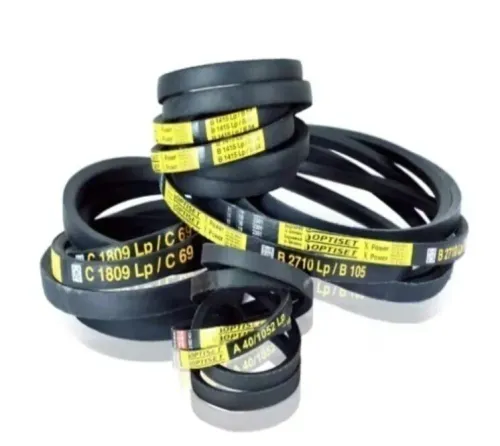
A banded belt is not interchangeable with a pile of loose V-belts, and the wrong section, length or sheave can create slip, edge wear and early failure. By the end, you will know how to select the belt construction, inspect the drive, decide whether two to five ribs are justified, install the replacement and compare Mumbai suppliers on technical evidence rather than unit price.
Key takeaways
- Use banded belts where separate V-belts drift, overturn or whip.
- Match the belt section, length, rib count and sheave profile exactly.
- Reuse sheaves only after checking groove wear, alignment and compatibility.
- Send suppliers drive dimensions, belt markings, rib count and operating conditions.
When a banded belt is the right choice for the drive
A banded belt is the right choice when separate V-belts would turn over, move sideways or whip under vibration, shock loading, vertical shafts or an unstable drive. Its continuous top band joins two or more V-belts and keeps the group running as one unit.
Loose belts can share load unevenly because they differ in wear, stiffness and length, even when their markings match. The result is slip, overheating and early failure; replacing a banded belt with separately purchased belts does not recreate a matched assembly.
Check these application limits before specifying banded belts:
- Confirm centre distance, pulley diameter, speed, transmitted power, wrap angle, reversing duty, vertical-shaft arrangement, shaft runout and shock loading.
- Record exposure to ambient heat, monsoon water or water ingress, dust, oil and chemicals. Also check the sheaves for alignment, groove wear and damage.
Banded belts are less laterally flexible than separate belts. Misaligned shafts, excessive runout and damaged sheaves remain faults; the band can produce edge wear or band damage rather than correcting them.
Ask the supplier for the compound’s stated temperature range, oil-resistance limits, storage guidance and derating information. Do not assume a chloroprene or EPDM compound withstands unlimited oil, solvents, steam, water or chemical exposure. Further checking is necessary when any operating value falls outside the belt maker’s published limits.
How to select the belt section and identify an exact replacement
Choose the belt section from the sheave, not from the old belt’s label alone. Compare the existing groove profile, included angle, groove width and depth with the section’s dimensions, then verify that its rated power covers the required power at the operating speed.
| Section family | Markings | Matching requirement |
|---|---|---|
| Classical | A, B, C, D | Match the classical sheave profile, included angle and groove dimensions |
| Narrow or wedge | 3V, 5V, 8V | Match the narrow-groove profile and the manufacturer’s power rating at speed |
A marking such as B or 5V is not interchangeable across standards or pulley systems. “Banded V belts” and “banded Vbelts” are alternate spellings, not complete specifications; neither identifies length datum, rib count, compound, cord, temperature rating or oil resistance.
Send the supplier this replacement checklist:
- Section: A, B, C, D, 3V, 5V or 8V
- Number of joined ribs
- Inside length and outside length, if supplied
- Pitch, effective or datum length
- Applicable length-measurement system
- Pulley groove count
- Rotation direction, where specified
- Rubber compound and cord construction
- Machine application
Require the quotation to state the matching system or allowable length tolerance. Order one complete matched assembly, not unrelated individual belts; nominally identical lengths can still share load unevenly and fail early. Include the drive’s required power and operating speed so the supplier can confirm the selection.
When existing sheaves can be reused and how to install the new band
Reuse existing sheaves only after confirming that their geometry suits the complete band. Inspect groove sidewalls for hooking or polishing, then measure groove width, depth, spacing and included angle against the belt specification. Check band clearance, pulley profile, flange damage, wrap angle, shaft parallelism, centre distance and shaft runout.
A pulley designed for one V-belt may lack the top-band clearance or groove geometry needed by a joined assembly. Reject sheaves with hooked or polished sidewalls, incorrect spacing, damaged flanges or an incompatible profile. Extra tension will not correct these faults; it can accelerate belt, bearing and shaft damage.
- Release the adjustable centre distance until the complete band can enter the grooves without force.
- Confirm that the sheaves are aligned, the shafts are parallel and the available clearance suits the band.
- Place the complete band into all grooves together. Do not lever it over a flange, twist it or install ribs one at a time.
- Restore the specified centre distance, then set tension across the whole band using the belt supplier’s procedure and measurement method.
- Run the drive under observation. Stop for edge wear, tracking movement, vibration, noise or slippage, and retension after initial running when the supplier specifies it.
Do not mix unmatched individual belts into a banded drive. Different lengths, stiffness or wear levels create uneven loading and can damage the joined band.
How to decide whether two, three, four or five ribs are needed
Start with transmitted power, speed, pulley diameter, duty cycle and shock factor. Apply the appropriate service factor to calculate the drive’s design power, or obtain that figure from the drive designer. Compare it with the manufacturer’s rated power per belt for the selected section and pulley.
| Rib count | Decision rule | Typical reason to select |
|---|---|---|
| 2 | Use the smallest complete band whose total rated capacity exceeds design power | Stable, aligned drive with adequate wrap and modest shock |
| 3 | Select when two ribs do not meet the design-power margin | Higher load or more demanding duty |
| 4 | Select when shock, reversing or limited wrap increases design demand | High-load or unstable operation |
| 5 | Use only when the supplier’s rating calculation requires it | Not a default replacement for a fault |
Choose the smallest complete band that carries design power within the supplier’s limits. Then verify centre distance, wrap angle, tensioning range and allowable speed; a nominally adequate rib count still fails if the belt cannot be tensioned or grips too little pulley.
Increase rib count for shock loading, reversing, vertical operation or limited wrap. Do not use a five-rib band to hide an undersized pulley, poor alignment or insufficient shaft capacity. The maximum recommended count is not universal: it depends on section, pulley geometry and rating method.
Require the quotation to state the rating basis, service factor, pulley assumptions and matched-length tolerance. A complete band with inconsistent rib lengths can shift load into one rib and fail early.
What to send Mumbai suppliers when requesting a quotation
Give Mumbai suppliers an application brief, not just a belt length, so rubber belt manufacturers can quote the same job:
- Machine make and model; shaft arrangement; driver and driven speed; transmitted power; duty hours; start-stop or reversing frequency; shock history.
- Centre distance, pulley diameters, groove count and profile, available adjustment, and belt photographs.
- Old belt markings, section, rib count and length designation, plus photographs of failures and damaged sheaves.
Ask whether the offered belt is locally manufactured, imported or supplied by a third party. Request the factory or manufacturing address, brand traceability, GST invoice description, declared production capability, batch or lot number, dimensional system, test certificate when available, warranty exclusions, storage guidance and local replacement availability.
Include Mumbai heat, monsoon water, dust, oil and chemical exposure, then request the compound’s temperature range, oil-resistance limits and any derating.
Compare rubber belt manufacturers banded belts in Mumbai by equivalent construction, not unit price:
| Option | Compare | Reject or verify |
|---|---|---|
| Same section and rib count | Classical, Wedge or Narrow profile and complete joined assembly | Different profiles or loose individual belts |
| Same length basis | Inside, pitch, effective, datum or outside length system and matching tolerance | Nominal length without a stated system |
| Same construction | Cord, compound, rating basis and test evidence | Unstated origin or warranty exclusions |
Banded vbelts from different systems are not price-equivalent. Jigna Sales Corporation is one Mumbai supplier you can approach with this brief, while verifying the offered belt against the machine and sheave data.
Related product
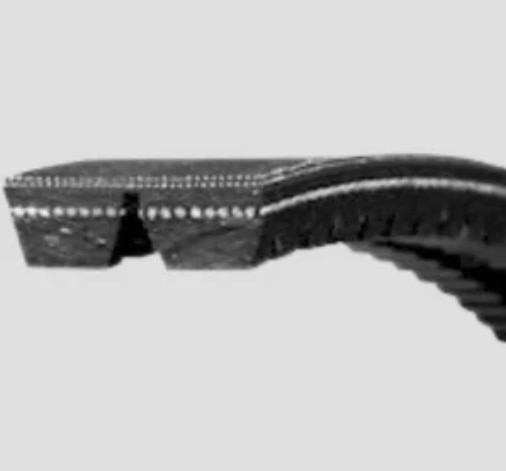 | Rubber Banded Belts Rubber Banded Belts are made up from Classical, Wedge or Narrow belts with strong tie band over them. View product → |
Frequently asked questions
When is a banded belt the right choice for an industrial drive?
Choose a banded belt when separate V-belts turn over, move sideways or whip under vibration, shock loading, vertical shafts or an unstable drive.
How do you identify an exact replacement banded belt?
Record the belt marking, section, outside or pitch length, rib count and construction. Confirm these against the manufacturer’s dimensions rather than matching length alone.
Can existing sheaves be reused with a new banded belt?
Reuse sheaves after checking the groove profile, groove width, wear, alignment and compatibility with the replacement belt section. Replace damaged or mismatched sheaves before installation.
How many ribs should a banded belt have?
Select two, three, four or five ribs according to transmitted load, service conditions and the drive manufacturer’s specification. Do not add ribs without confirming that the sheave can accept the wider band.