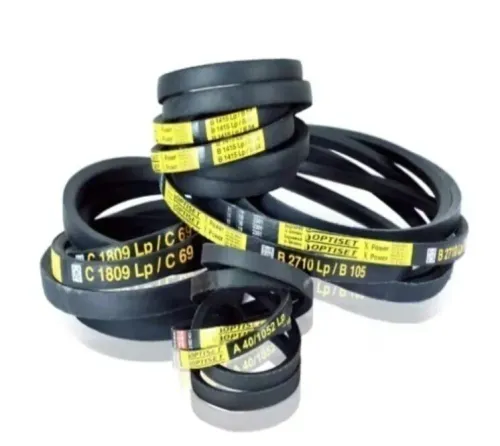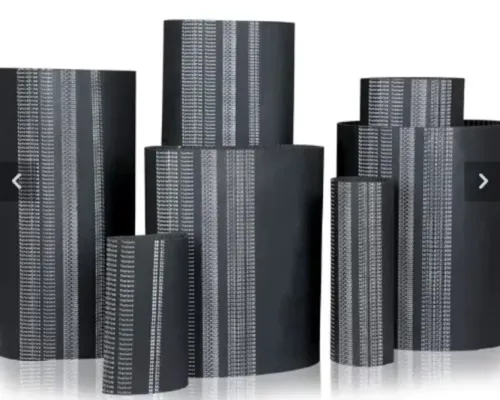
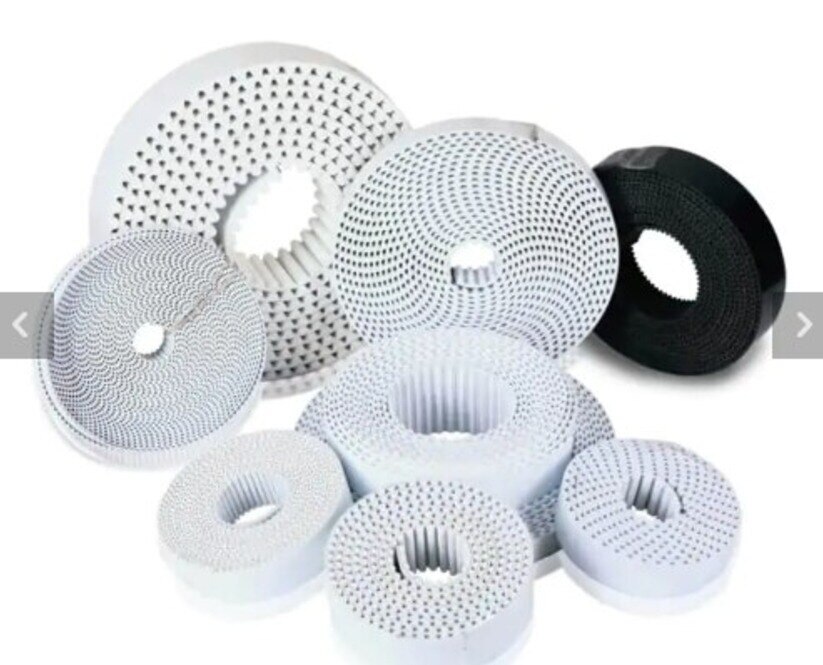
The word “Optiset” does not identify a recognised dimensional standard, so choosing between an Optiset-labelled belt and a PU timing belt by name alone can produce the wrong pitch, pulley fit or load rating. By the end, you will be able to specify the belt construction, match it to agricultural equipment, verify the drive, install it correctly and request measurable documentation from a supplier.
Key takeaways
- Treat Optiset as a product label, not a belt material or standard.
- Match tooth profile, pitch, width, length and pulley dimensions before ordering.
- Use PU for clean, precise drives; choose rubber when abrasion and contamination dominate.
- Prevent failures by checking tension, alignment, pulley wear and seasonal storage conditions.
What “Optiset” means—and how its construction compares with PU
“Optiset” is not a recognised material, tooth profile or dimensional standard. It may be a brand, product series or application label, so “Optiset timing belts agriculture” does not identify a technically interchangeable belt.
| Construction | Main advantage | Main limitation |
|---|---|---|
| Rubber timing belt | Damps shock and vibration in pulsating drives | Lower resistance to abrasion and many oils than PU |
| PU timing belt | Clean tooth engagement, abrasion resistance and resistance to many oils and chemicals | Can transmit more shock and demands accurate alignment |
| Steel-cord PU | Dimensional stiffness and registration | Less suitable for small pulleys or repeated reverse bending |
| Aramid-cord PU | Smaller pulleys and reverse bending, when permitted | Lower dimensional stiffness than steel |
Optiset is not equivalent to T5, T10, AT5, AT10, 8M or 14M. T5, T10 and AT profiles are not interchangeable, even when their nominal pitch appears similar. A mismatched tooth profile causes poor seating, tooth loading and premature jumping.
Before comparing optiset timing belts or pu timing belts agriculture, request the actual compound, pitch, tooth profile, pitch length, width, tensile-cord material, minimum pulley diameter, rated power, speed limit and belt-length tolerance.
For PU, ask whether the compound is polyester- or polyether-based. Polyether generally handles water aging and hydrolysis better; polyester may suit dry service. Check exposure to water, fertiliser dust, crop residue, ozone, ultraviolet light and operating temperature rather than relying on the label alone.
Which agricultural machines suit PU, rubber or another drive?
Choose by duty, not by the label “Optiset” or “PU.” Compare transmitted power, driver and driven speed, smallest pulley diameter, centre distance, start-up torque, shock loading, reversing, daily hours and required positioning accuracy.
| Machine | First choice to investigate | Why |
|---|---|---|
| Combine harvesters and threshers | Rubber timing belt or chain | Pulsating crop loads and shock favour damping; chains tolerate severe contamination but need lubrication. |
| Balers | Rubber timing belt, chain or geared reducer | Plungers create high peak torque; use a timing belt only when synchronisation is essential. |
| Seed drills and planters | PU timing belt | Clean indexing and accurate metering suit PU, provided soil and fertiliser dust are guarded out. |
| Irrigation pumps and sprayers | PU or rubber timing belt | PU suits oil or chemical exposure; verify water, temperature and power limits. |
| Conveyors and feed machinery | PU, rubber, V-belt or chain | Choose PU for clean positioning, rubber for pulsation, and chain for harsh overloads or repairability. |
Use PU when abrasion resistance, clean tooth engagement, oil or chemical resistance, and an open-ended or welded endless format solve a defined problem. A steel-cord PU belt is not automatically right for a small pulley or reverse-bending drive; check the cord’s minimum diameter and reverse-bend limits. Aramid cord may fit those duties better.
A suitable rubber timing belt often wins on high-load, pulsating or shock-heavy drives when its temperature and chemical limits fit. Fit guards against soil, crop residue and fertiliser dust, provide flange guidance, and protect the belt from standing water.
Timing belts need no lubrication and do not slip, but overload can shear teeth; chains tolerate contamination and shock yet need oil and take longer to repair. V-belts offer deliberate slip, while gears provide rigid accuracy but demand a cleaner, more costly installation.
Reject a timing belt where deliberate overload slip is protective, abrasion is severe and unguarded, or a chain or geared reducer handles the load better. In PU timing belt agriculture, duty—not material branding—decides the answer.
How to identify, measure and install the correct replacement
Record the failed belt before ordering: marking, pitch, tooth count, pitch length, width, tooth profile, tensile cord and any rotation arrow. Pitch length controls replacement length; outside circumference does not.
- Measure the driver and driven pulley tooth counts, outside dimensions, centre distance, shaft spacing, minimum pulley diameter and available flange clearance. Photograph both pulleys and the old belt. Confirm exact profile compatibility: an AT10 belt requires an AT10-compatible pulley, not merely a pulley with 10 mm nominal pitch.
- Inspect each pulley for hooked, polished, chipped or contaminated tooth flanks. Reusing damaged flanks can make a new belt skip; repeated ratcheting calls for pulley replacement or profile verification.
- Isolate power and adjust centre distance to create fitting slack. Install the belt without twisting, levering or forcing it over the flanges.
- Align pulley faces, confirm flange clearance, then set initial installation tension using the supplier’s force-and-deflection or frequency method. Initial tension seats the belt; operating tension develops under transmitted load, so do not substitute one value for the other.
- Tighten mounting bolts to the specified torque, rotate the drive by hand, and recheck tension. Misalignment pushes the belt against a flange, causing edge wear, tracking failure and tooth loss.
For any timing belts India agriculture purchase, send these measurements and photographs rather than ordering by “Optiset” alone. The belt and pulley must share pitch and tooth geometry.
How to prevent tooth jumping, cracking and seasonal failures
A synchronous belt can lose timing without breaking. Tooth ratcheting from low tension, misalignment, worn pulleys, overload, a jammed crop stream, inadequate flange guidance or incorrect belt width can cause processing errors.
1. Inspect before harvest, after the first operating shift, at each scheduled service interval and after any jam or contamination event. Check tooth wear or shear, cracking, glazing, exposed cords, edge wear, tracking, contamination, pulley damage and flange condition.
2. Match symptoms to causes. Edge wear indicates pulley misalignment or flange contact. Cracking points to heat, ozone, ultraviolet exposure or chemical attack. Repeated tooth stripping indicates inadequate power capacity, excessive start-up torque or shock loading.
3. Fit guards and remove crop residue, soil and fertiliser dust before they enter the tooth mesh. Clean with a suitable dry method; control water and washdown so moisture does not remain around the drive. Never use a similarly sized V-belt, wrong pitch, worn pulleys, excessive tension, adhesive or belt dressing.
4. Store pu timing belt agriculture spares cool, dry and shaded, away from humidity, heat, sunlight, tight bends and crushed stacks. Use an endless molded belt when indexing accuracy and continuous load make a joint unacceptable. For a welded joint, verify its location, tooth registration, joint strength, tracking and allowable load before installation.
5. Recheck alignment and tension after a jam. If jumping continues, stop the machine and recalculate power, shock loading, smallest pulley diameter and start-up torque rather than repeatedly replacing the belt.
What to ask PU timing-belt manufacturers in India before ordering
Compare suppliers by documented fit, not by “Optiset” or “PU” alone. For timing belts in India agriculture applications, send every PU timing-belt manufacturer in India the same quotation brief:
- Machine model and application; driver and driven speed; power; pulley tooth counts and profile; belt width and pitch length; centre distance; smallest pulley diameter; operating hours; reversing or shock duty; temperature; water, fertiliser and crop-residue exposure; and clear photographs of both pulleys and the belt.
- Require a drawing and lot-specific dimensional report stating pitch length, tooth profile, width, hardness, cord construction, joint location, tensile or tooth-shear results, temperature range, chemical compatibility, minimum pulley diameter and rated power at the actual pulley size.
| Construction | Evidence to request | Decision |
|---|---|---|
| Welded endless PU | Joint inspection method, allowable joint load and tooth-registration tolerance | Reject for precision indexing if the joint cannot meet the load and registration requirement |
| Molded endless PU | Uniform molded tooth section and continuous-load rating | Prefer when indexing accuracy makes a joint a risk |
| Rubber timing belt | Rated power, shock-duty capacity, temperature and chemical limits | Consider for pulsating or impact-heavy drives |
Ask for GST invoice details, belt marking, batch traceability, material declaration, lead time, minimum order quantity, export packing and delivery to a remote farm location. Jigna Sales Corporation can match a submitted specification and check replacement compatibility instead of quoting from “Optiset” alone.
A wrong belt costs emergency freight, pulley replacement, retensioning, realignment, labour and lost harvest production.
Related products
 | Rubber Timing Belts Timing belts make less noise compare to chain belts and gear belts and has high transmission capacity and efficiency. View product → |
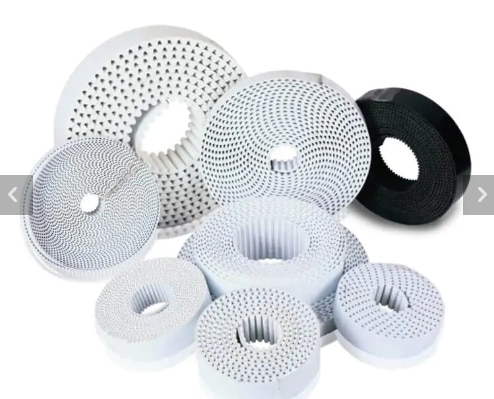 | PU Timing Belts has high performance transmission. This PU Belts has high intensive and low extension adoptive modules. View product → |
Frequently asked questions
What does Optiset mean in agricultural timing belts?
Optiset is not a recognised material, tooth profile or dimensional standard. Confirm whether it names a brand, series or application, then match the belt by documented dimensions and profile.
When should you choose PU instead of a rubber timing belt?
Choose PU when you need precise timing, high dimensional stability and resistance to oils or moisture. Choose rubber when the drive faces heavy abrasion, dust, shock loading or temperature conditions suited to its compound.
How do you identify the correct replacement timing belt?
Record the belt pitch, tooth profile, tooth count, width, length, construction and pulley dimensions. Do not order by outside length or appearance alone.
How can agricultural timing-belt failures be prevented?
Set tension to the manufacturer’s specification, align the pulleys, inspect tooth wear and replace damaged pulleys. Protect stored belts from sunlight, ozone, heat, oil and sharp bends.
What should you ask PU timing-belt manufacturers in India?
Ask for the exact profile, pitch, tooth count, width, tensile-member material, temperature range, chemical resistance, minimum pulley diameter, tolerances and inspection documents for the supplied belt.