A PU cord belt and a polyurethane belt with a PTFE surface are not interchangeable simply because both contain polyurethane. You will be able to match their construction, friction behaviour, operating limits and maintenance demands to a Mumbai automotive drive, then request a quotation with the measurements and test evidence needed to avoid premature failure.
Key takeaways
- Choose PU cord for welded, flexible conveying runs with suitable loads.
- Choose PTFE surfacing when low friction and release properties matter.
- Verify temperature, fluids, speed, tension and alignment before ordering.
- Include dimensions, joint method, testing and spare quantities in the quotation.
What changes between a PU cord belt and a PTFE-surfaced polyurethane belt?
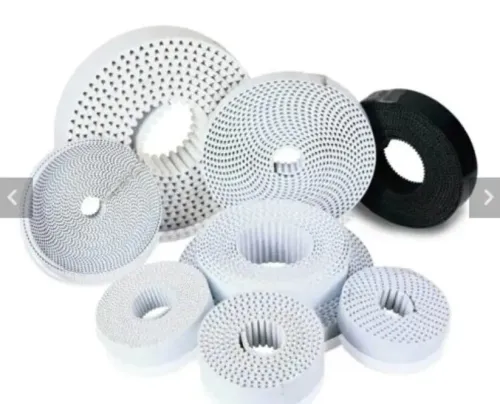
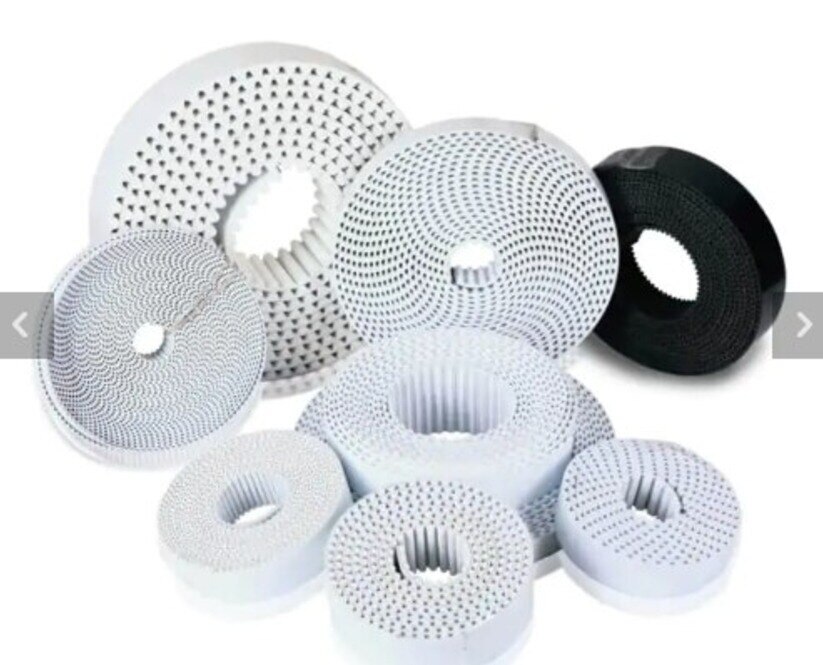
A PU cord belt is usually an extruded round thermoplastic-polyurethane belt, supplied open-ended and joined by heat welding. A PTFE-surfaced polyurethane belt has a polyurethane body with PTFE fabric or film on its product-contact surface; PTFE is normally not its primary tensile member.
| Construction | PU cord belt | PTFE-surfaced polyurethane belt |
|---|---|---|
| Pulley or product surface | Smooth round cord; friction depends on TPU hardness, diameter and pulley grip | PTFE lowers sticking and release force, easing cleaning, but also reduces friction in a friction drive |
| Strength and flexibility | TPU family, hardness, cord diameter and tensile member set stretch, flexibility and load capacity | Polyurethane body and embedded tensile cords carry the load; the PTFE layer mainly changes surface behaviour |
| Joint and profiles | Usually open-end and heat-welded; inspect for splice opening or weld bulging | Available smooth or toothed, endless or open-end; joint method and tooth profile must match the drive |
| Wear and contamination | Abrasive particles, oil and glazing can increase slip, noise or wear | Scraping and abrasive particles can damage the coating; oil contamination, glazing or delamination can expose polyurethane |
Compare smooth versus toothed profiles, endless versus open-end construction and the joint method before comparing price. PTFE-surfaced polyurethane belt benefits matter when clean release outweighs maximum pulley friction. A PU cord belt instead suits flexible, quiet conveying or roller drives, but its weld remains the critical failure point.
On a PTFE belt, replace it when the surface is worn through or delaminated.
Which Mumbai automotive drives suit PU cord, PTFE, timing, ribbed or V-belts?
Choose by drive geometry, not by the label “automotive”: PU cord suits light-to-medium roller drives, conveyors, inspection stations and assembly equipment where flexibility, low noise and field joining matter.
| Option | What it means | When it applies |
|---|---|---|
| PU cord | Flexible friction belt, often heat-welded from open-ended round cord | Rollers, conveyors and light-to-medium drives; not a direct engine-belt replacement |
| PTFE-surfaced polyurethane | Polyurethane body with a low-adhesion PTFE surface | Cleanable product-contact conveyors where release matters more than maximum friction |
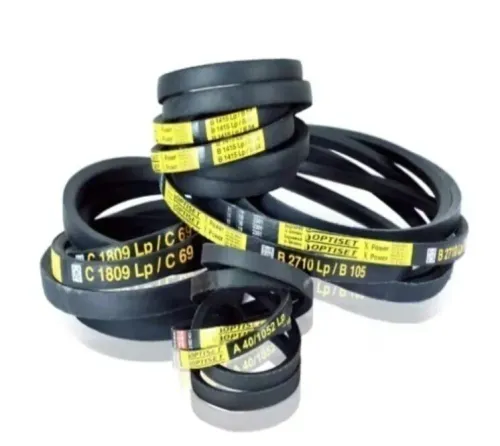
| EPDM V-ribbed belt | Molded ribs, embedded tensile cords and a defined pulley profile | Alternators, fans and engine accessories using serpentine drives |
| Toothed polyurethane timing belt | Positive tooth engagement with specified pitch, profile and embedded cords | Synchronous automotive or production drives requiring controlled speed ratio |
| Chain or gears | Positive mechanical transmission with high load capacity | High torque, severe contamination or zero-slip duty |
Use the exact machine’s torque, speed ratio, belt speed, centre distance, wrap angle and allowable slip to screen the choice. Then compare available space, minimum pulley diameter, start-stop loading and emergency-stop loads.
A friction belt can slip during acceleration or changing production loads. A timing belt carries positive engagement, but tooth pitch, pulley form, cord material, elongation and tensioner must match exactly; PTFE cannot correct an incompatible profile.
That is the practical frame for pu cord versus polyurethane teflon belt benefits in mumbai, not proof that either belt fits an engine drive. For pu cord automotive belts in mumbai, verify groove geometry, pretension and pulley alignment before ordering.
Which temperature, fluid, speed and alignment limits must you verify?
Verify the complete belt, not its advertising label. Ask for continuous and peak temperatures for the polyurethane body, tensile cords, weld and adhesive system; PTFE’s approximate 260 °C continuous-use capability does not raise any of those ratings. Check hot spots near engines, ovens, paint shops and wash-down areas.
| Check | Ask for | Failure if ignored |
|---|---|---|
| Heat | Continuous and peak limits for every belt component | Weld opening, softening or cord damage |
| Chemistry | Compatibility with engine oil, hydraulic oil, coolant, diesel, petrol, alkaline cleaners, and welding or cutting debris | Swelling, embrittlement or surface loss |
| TPU family | Polyester or polyether grade plus immersion data | Hydrolysis or unexpected oil and abrasion behaviour |
Polyester TPU needs hydrolysis scrutiny during prolonged hot-moisture exposure. Polyether TPU generally resists hydrolysis better, but its oil, abrasion and mechanical behaviour differs. Ozone resistance does not prove automotive-fluid resistance, and polyurethane teflon belt benefits do not override an unsuitable body material.
Request these operating limits in writing:
- Allowable belt speed, tension, torque and load-cycle count
- Minimum pulley diameter, bend radius, wrap angle and permitted misalignment
Store belts in Mumbai dry, shaded and away from ozone-producing equipment, direct sunlight, oil and grit. Keep water, oil and grit out of pulley grooves during installation. A PTFE layer cannot make an unsuitable polyurethane body safe in a hot or chemically aggressive zone.
How do you specify, install and test the belt before releasing the line?
Release the line only after the belt passes a documented specification, installation and commissioning check.
- Give the supplier belt length, cord diameter or belt width, smooth or toothed profile, groove width and angle or tooth pitch, pulley diameters, number of cords, centre distance, belt speed, torque, belt path, joint type, and whether it must be endless or field-weldable.
| Check | Acceptance focus | Failure consequence |
|---|---|---|
| Pulley geometry | Groove, diameter, runout, wrap angle and parallel shafts match the drawing | Slip, tracking drift and edge wear |
| Belt installation | Correct pretension, clean grooves and centred tracking | Heating, glazing or splice damage |
| Dynamic trial | Design speed and tension withstand starts, stops and load changes | Premature fatigue under production loading |
For a heat-welded PU cord, cut both ends square, use the manufacturer’s specified heating temperature and time, align them without twisting, and let the joint cool fully. Remove weld flash carefully; a hard bead or narrowed neck becomes the first failure point.
Set pretension with the manufacturer’s tension-versus-deflection or frequency method. Do not tighten until slip disappears. Verify shaft parallelism, pulley runout, groove cleanliness, tracking and wrap angle before rotating the drive.
Run at design speed and tension through repeated starts, stops and load changes. Record temperature, vibration, noise, slip and tracking drift, then inspect cord elongation, edge fray, glazing, splice opening, local bulges, pulley wear and contamination.
Expose the belt to the actual oil, coolant and cleaning agent. Request fatigue, splice-strength and dimensional-stability results; dry-sample tensile strength alone does not prove service life.
What should a Mumbai quotation and replacement plan include?
Compare total operating effort, not price per metre. Ask a PU cord belt supplier in Mumbai or an automotive belt manufacturer in Mumbai for a quotation that identifies:
- Profile or diameter, TPU base type, tensile-cord material, minimum pulley diameter and allowable tension.
- Continuous and peak temperature range, fluid-compatibility data for oil, coolant and cleaners, plus friction or release data.
- Dimensional tolerances, joint strength, splice method, endless-length lead time and installation support.
| Replacement choice | Main effort | Budget items |
|---|---|---|
| Field-weldable PU cord | Welding at the machine, cooling and flash removal | Joining tools, spare belts and inspection time |
| Endless belt | Longer downtime and pulley removal | Replacement labour, pulley access and stock |
| Either construction | Groove, tension and tracking verification | Pulley replacement if wear prevents correct fit |
Request a drawing or sample check against the actual pulley groove before approval. Nominal diameter alone cannot confirm fit: groove width and angle, runout, wrap angle, centre distance, alignment and pretension control slip, heat and splice life.
Record the installed belt, tension method, failure mode and running hours. Store replacements sealed, dry, shaded and away from heat, sunlight, ozone equipment, oil and grit. Jigna Sales Corporation belongs in the Mumbai comparison when it can provide the required construction and documentation; choose on matched dimensions, test conditions and service support.
Related product
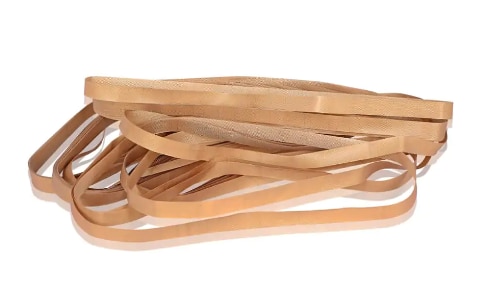 | Polyurethane Teflon Belt PU cord /Teflon belt has High Modulus Polyurethane compound which resists ozone and weather condition, having strength of smooth drives with high... View product → |
Frequently asked questions
What changes between a PU cord belt and a PTFE-surfaced polyurethane belt?
A PU cord belt is an extruded round thermoplastic-polyurethane belt joined by heat welding. A PTFE-surfaced polyurethane belt uses PTFE fabric or film on the contact surface, while polyurethane provides the body and tensile structure.
Which Mumbai automotive drives suit PU cord, PTFE, timing, ribbed or V-belts?
Use the belt profile that matches the drive load, pulley geometry, speed, synchronisation requirement and contact conditions. PU cord suits appropriate round-belt conveying or transmission runs; PTFE surfacing suits contact surfaces needing low friction or release; timing belts suit positive synchronisation; ribbed and V-belts suit their matching pulleys and load requirements.
Which temperature, fluid, speed and alignment limits must you verify?
Confirm the belt compound’s operating temperature range, exposure to oil, coolant, solvents and cleaning chemicals, permitted speed, tension, pulley diameter, tracking and shaft alignment. Obtain the supplier’s data for the exact belt construction instead of assuming all polyurethane belts share the same limits.
How do you specify, install and test the belt before releasing the line?
Specify belt profile, dimensions, length, hardness, surface construction, joint method and operating conditions. Install with correct alignment and tension, inspect the joint and tracking, then run the drive under controlled conditions while checking slip, noise, heat, tracking and load performance before production release.