A broken engine-drive belt is not automatically replaceable with PU cord or a cogged belt. The correct choice depends on the pulley profile, belt construction, length, temperature, load and the condition of the driven components. By the end, you will know how to identify the installed belt, measure an unmarked drive and specify a safe replacement for a Chennai repair.
Key takeaways
- Match the belt section to the pulley groove before ordering.
- Use PU cord for compatible round-groove drives, not V-belt pulleys.
- Record belt profile, length, markings and pulley dimensions from the installed belt.
- Demand a quotation that states belt construction, size and compatibility checks.
Start with the belt and pulley construction, not the name
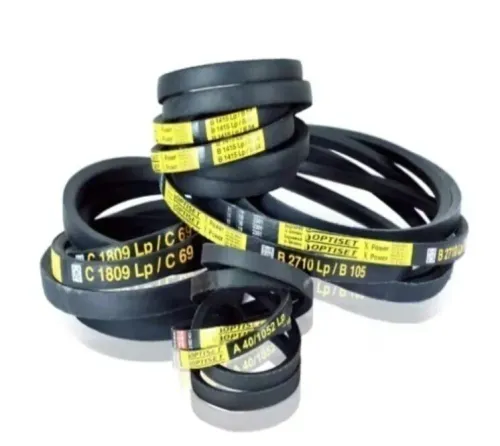
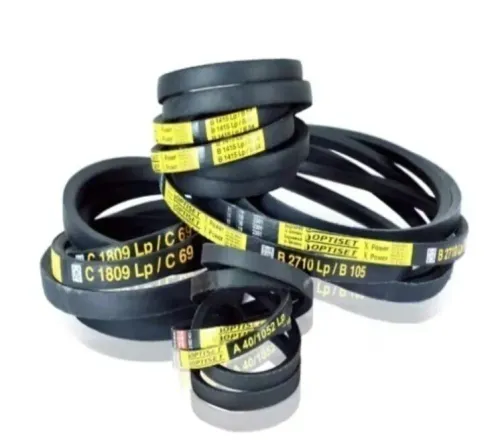
A PU cord is a round polyurethane belt joined into a loop by heat welding; its circular section runs in a matching round groove or pulley. A cogged belt is a V-belt with longitudinal notches on its inner side.
The notches improve flexibility around small pulleys, but the belt still transmits power through friction on its V-shaped sidewalls.
| Option | Construction | Drive requirement |
|---|---|---|
| PU cord | Round, weldable polyurethane cord | Matching round grooves, suitable tension range, and a power rating for compact auxiliary drives, workshop conveyors, or light-duty mechanisms |
| Cogged V-belt | V-shaped section with inner notches | Matching pulley section, top width, height, effective length, speed rating, and sidewall contact |
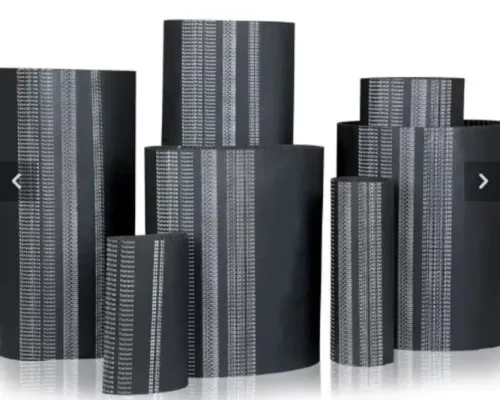
| Toothed timing belt | Teeth that engage pulley teeth positively | Matching tooth pitch and tooth count for synchronized drives |
A PU cord cannot correctly seat in a pulley designed for an automotive serpentine, V-ribbed, timing, or accessory V-belt. Fitting it as an emergency substitute can cause slip, rapid wear, belt ejection, or overheating.
Do not confuse a cogged belt with a toothed timing belt. A cogged V-belt relies on friction; a timing belt maintains synchronization through tooth engagement. Losing that distinction can stop an engine or damage its timing system.
For pu cord versus cogged belt automotive repairs in Chennai, specify the installed pulley profile before ordering. “PU cord” or “cogged belt” alone proves no interchangeability; the original section, length, pitch or tooth data, tension range, and power rating must match.
Choose by automotive function and drive geometry
A PU cord suits light-duty workshop conveyors and compact auxiliary machinery, not an automotive engine drive. A cogged V-belt suits an automotive pulley only when the specified section, effective length, pitch, tension range and power rating match the original system.
| Option | Suitable drives | Reject it when |
|---|---|---|
| PU cord | Workshop conveyors, packaging equipment and light-duty rollers with smooth or purpose-made grooved pulleys | The drive is an alternator, cooling fan, compressor, water pump, serpentine accessory or timing system |
| Cogged V-belt | An older automotive or industrial V-belt drive whose pulley profile and belt specification explicitly permit a notched replacement | The pulley expects a different V profile, rib count, pitch length or endless molded belt |
| Neither | Modern EPDM V-ribbed accessory drives, timing drives and applications contaminated by fluid | The correct replacement is a matched ribbed, toothed or manufacturer-specified belt |
The round PU cord cross-section cannot seat correctly in grooves moulded for an automotive V-belt or V-ribbed belt. Its weldable loop is valuable during machinery repair, but a thermal join does not provide the molded ribs, reinforcement cords, oil resistance or under-bonnet temperature rating of an engine belt.
Do not join a broken serpentine belt with PU cord, adhesive or a mechanical fastener. Alternators, cooling fans, compressors and pumps need a complete endless belt that tolerates cyclic bending and sustained tension.
For a workshop conveyor, a PU cord can be cut and welded to the required loop length if the pulley diameter, speed and load fall within its rating. For any automotive drive, identify the original geometry first; the word “cogged belt” alone proves no interchangeability.
Identify the installed belt before ordering
Order from the vehicle application or OE part number, then confirm the belt’s profile and length. Do not rely on an outside-length measurement alone: a belt slightly too long can leave the tensioner outside its working range, while a short belt can overload bearings.
1. Read every surviving marking. Record the manufacturer code, OE or cross-reference number, belt section, effective length, rib count and pitch for a serpentine belt, or tooth count and pitch for a timing belt.
2. Identify the drive function and vehicle details. Write down the make, model, year, engine variant, and whether the belt drives the alternator, cooling fan, air-conditioning compressor, water pump, or another accessory.
3. If markings are missing, measure the effective length with a belt-measuring tool or by tracing the belt’s neutral line around the specified pulleys. Measure the top width, thickness, rib spacing, or tooth pitch; do not substitute the outside circumference.
4. Inspect the pulley before matching the replacement. Record the groove count, groove angle, width, depth, and smallest pulley diameter, then check for polished sides, cracks, missing ribs, or a damaged tensioner.
A cogged belt is valid only when its section, effective length, tooth form, and pulley geometry match the original specification. A round PU cord has a different cross-section; its diameter and welded loop length do not specify an automotive replacement. Treat a cogged V-belt and PU cord as separate products, not interchangeable emergency choices.
Compare heat, contamination, load and failure risk
Service life is a system result, not a property of the belt alone. Compare heat exposure, contamination, transmitted load, pulley geometry and tensioner condition; a cheaper belt becomes the riskier repair if the underlying fault remains.
| Option | Heat and contamination | Load and service-life risk |
|---|---|---|
| PU cord | Suits clean industrial drives; oil, coolant, diesel, brake fluid and some solvents can swell or attack the polyurethane. | Best for compatible light-to-moderate loads; incorrect groove, tension or jointing causes rapid slip or separation. |
| Cogged V-belt | Notched construction improves flexibility around small pulleys, but fluid contamination still promotes slip and compound damage. | Handles a specified automotive or industrial load only when section, length and pulley geometry match. |
| Automotive EPDM V-ribbed belt | Built for under-bonnet heat, but ribs can look acceptable after cord damage or elasticity loss. | Replace according to age, mileage, noise, tensioner travel and the vehicle maker’s interval, not cracks alone. |
Before fitting either belt, correct these faults:
- Rotate the alternator, air-conditioning compressor, water pump and idlers by hand. A seized bearing will destroy the replacement.
- Check pulley alignment and wobble, then inspect the tensioner for weak spring force, rough movement or insufficient travel.
- Confirm the belt-routing diagram, section and effective length. A cogged V-belt is not a drop-in PU cord substitute.
- Repair every leak before installation. Replace a belt soaked with fluid; do not use dressing, PU cord or a joined section as a repair.
- Replace a broken modern accessory belt completely. Adhesive, mechanical fasteners and joined cord cannot equal an endless belt under cyclic bending and heat.
Specify a Chennai repair quotation that proves compatibility
A professional automotive belt repair in Chennai quotation must identify the vehicle and the drive, not merely request “PU cord” or “cogged belt.” Ask the supplier to state the compatibility basis in writing.
- Vehicle make, model, year, engine variant and registration or VIN reference
- Belt function: alternator, cooling fan, air-conditioning compressor, water pump or another auxiliary drive
- OE part number and any verified cross-reference number
- Belt section or profile, effective length, rib count or tooth count, and pulley arrangement
- Construction material, such as EPDM for a V-ribbed accessory belt, or the specified cogged-belt compound
- Tensioner position, pulley groove condition and any measured alignment fault
- Replacement warranty, supplied brand, batch identification and quotation validity
For pu cord versus cogged belt automotive repairs in Chennai, require the quotation to say whether the proposed belt is an approved equivalent or only a workshop-industrial alternative. A PU cord joint is not an equivalent repair for a molded engine accessory belt: it lacks the required ribs, reinforcement, oil resistance and high-temperature cyclic strength.
Jigna Sales Corporation can add useful matching support by checking the OE or cross-reference number against the requested profile, length and tooth or rib count, then flagging a pulley mismatch before dispatch.
Give the supplier photographs of the belt markings, pulley grooves and tensioner, plus the failed belt’s measured length; do not rely on outside length alone. A contaminated belt still requires leak correction and complete replacement.
Related products
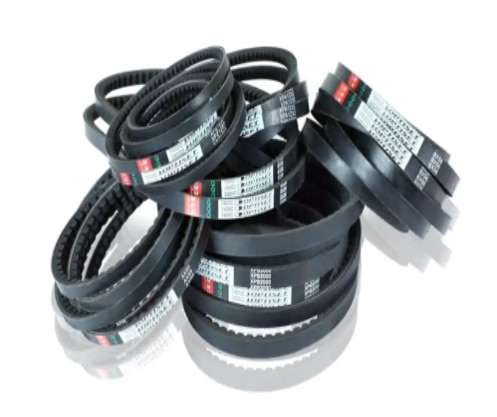 | Cogged Belt Cogged belts are suitable for all industrial applications, particularly where small or sub-minimal sheave diameters are required. View product → |
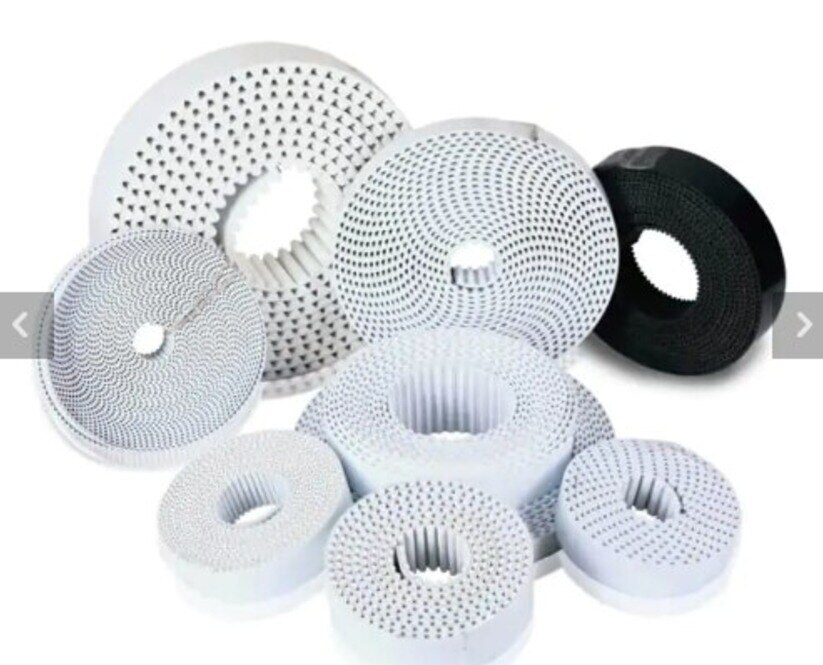
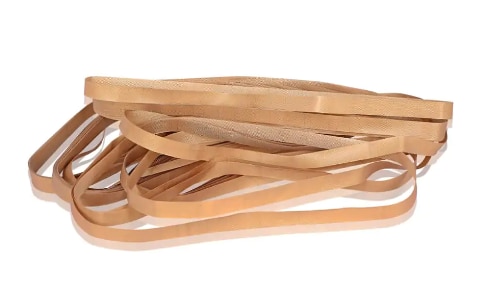 | Polyurethane Teflon Belt PU cord /Teflon belt has High Modulus Polyurethane compound which resists ozone and weather condition, having strength of smooth drives with high... View product → |
Frequently asked questions
What is the construction difference between a PU cord and a cogged belt?
A PU cord is a round polyurethane belt heat-welded into a loop for a matching round groove. A cogged belt is a V-belt with longitudinal inner notches that runs in a V-shaped pulley.
How do you choose between a PU cord and a cogged belt for an automotive drive?
Identify the automotive function and drive geometry first. Use a PU cord only with a compatible round groove; choose a cogged V-belt when the drive uses a matching V-belt pulley and requires that profile.
What should you identify before ordering a replacement automotive belt?
Record the installed belt profile, section, length, markings, pulley type and dimensions. Do not order from the vehicle model alone.
Which operating conditions affect belt choice and failure risk?
Compare heat, oil and fluid exposure, dirt, tension, speed, shock loading and pulley alignment. These conditions determine whether the belt material and profile suit the drive.
What should a Chennai automotive belt repair quotation include?
Request the belt construction, profile, dimensions, length, material, joint method, quantity and compatibility confirmation against the existing pulley and drive.