Choosing between a banded V-belt and a flat belt depends on the pulley geometry, load pattern, tracking conditions and space available—not on a generic horsepower label. By checking the existing drive and measuring its operating requirements, you can identify the safer replacement, avoid an incompatible retrofit and specify factory belts in Mumbai with enough detail for accurate selection.
Key takeaways
- Use banded V-belts for grooved pulleys, shock loads and reduced belt whip.
- Choose flat belts only when pulleys, tracking and tensioning suit flat-drive operation.
- Measure belt length, width, pulley geometry and centre distance before ordering.
- Give suppliers belt profile, dimensions, operating conditions and identification markings.
How banded V-belts and flat belts behave under load
A banded V-belt usually grips compact, grooved pulleys strongly and handles shock loads with less belt whip, rib-to-rib speed variation, turnover, or wandering than separate V-belts. Its continuous top band keeps the joined elements at one effective length, so they share load instead of fighting mismatched lengths.
It still needs correct tension and alignment, and it can slip under overload.
| Performance point | Banded V-belts | Traditional flat belt drive |
|---|---|---|
| Power in limited space | High power from a relatively narrow pulley package | Needs greater belt width or pulley diameter |
| Speed and efficiency | Efficient, but groove bending adds resistance | High efficiency and peripheral speed with suitable construction |
| Shock and pulsation | Tie band reduces whip, twisting, turnover, and jumping | More sensitive to tracking and tension changes |
| Noise and vibration | Stable under pulsating loads, but not always quiet | Low running noise; vibration rises with poor tracking or splicing |
| Slip and timing | Friction drive; overload causes slip | Friction drive; overload causes slip |
| Maintenance | One joined unit avoids mismatched separate belts | Inspect splice, belt face, tracking, and pulley crown |
A damaged tie band changes the calculation: the ribs can separate, wander, or turn over, so replace the banded belt rather than treating it as several independent belts. In a flat belt drive comparison, nominal width alone proves little; check allowable tension per unit width, splice quality, pulley diameter, pretension, and tracking.
Neither option provides fixed shaft phasing. Use a toothed synchronous belt when registration or speed ratio must remain exact under load.
Match the belt to pulley geometry and factory conditions
Choose a banded V-belt for a short-centre-distance drive that needs substantial power from a narrow pulley package. Choose a flat belt when the drive has large pulley diameters, long shaft centres, high peripheral speed, or a priority on low running noise.
| Option | Pulley geometry and layout | Factory conditions that favour it |
|---|---|---|
| Banded V-belt | Compact multi-groove drive, limited installation space, adequate wrap angle, and short shaft centres | High power in a narrow package, shock loading, or a drive where separate V-belts wander, twist, or turn over |
| Flat belt | Large-diameter pulleys, long centre distance, and a crowned driving pulley for tracking | High belt speed, low noise, efficient transmission, or a layout that allows careful alignment and tensioning |
A banded belt normally needs a pulley designed for its joined construction. Groove spacing, depth, or flange geometry from a standard multi-groove sheave can damage the tie band or prevent correct seating. Do not assume separate V-belt pulleys accept a banded replacement.
Flat belts need more disciplined setup. Poor shaft alignment, inadequate wrap, limited tensioning space, oil on the belt face, or abrasive dust can cause tracking failure and edge damage. Inspect the pulley crown, belt surface, splice, and pretension method before choosing one.
Treat oil, heat, solvents, abrasive dust, and washdown as separate selection inputs for industrial drive belts. Specify the belt material, cover, temperature range, and antistatic requirement; humid or coastal Mumbai air alone does not decide the belt type. Neither option maintains shaft phasing under overload, so use a toothed synchronous belt when registration matters.
Why a banded belt is not a drop-in replacement
Changing the belt without changing the drive is how a retrofit fails. A banded belt must match the existing sheave section, groove spacing, pitch diameter, wrap angle, speed, centre distance, service factor and required number of ribs; its tie band does not create extra capacity.
Replace separate V-belts only after confirming the complete sheave geometry and correcting alignment or tensioning faults.
| Option | Changes required | Wrong retrofit when |
|---|---|---|
| Banded belts | Fit the correct rib count and section; inspect sheave grooves, alignment, tensioner travel and clearance for the tie band. | The sheaves cannot accept the banded profile, the centre distance is too short for correct installation, or the process needs fixed shaft phasing. |
| Flat belt | Install suitable pulleys, usually with a crown; confirm pulley diameter, tracking, pretension, allowable tension per unit width and an endless belt or correctly specified splice. | Wrap is inadequate, tracking cannot be controlled, oil damages the belt face, shock loads are frequent, or tensioning space is limited. |
| Separate V-belts | Retain matched belts only when the sheaves are sound and the drive tolerates individual belt movement. | Belts wander, twist, turn over or load unevenly because of worn grooves, poor alignment or unequal belt lengths. |
Do not choose from the words “banded belts flat belt for drive comparison” or nominal horsepower alone. For factories in Mumbai, record oil, abrasive dust, solvents, washdown, temperature and any antistatic requirement separately; humid or coastal air alone does not select the belt.
Neither retrofit replaces a synchronous belt where registration or a fixed speed ratio matters. A flat belt also becomes a poor choice when its pulley cannot provide reliable tracking, while a banded belt is wrong when the existing pulley package cannot accommodate its groove geometry.
Measure the existing drive before ordering a replacement
Do not order until the drive passes three checks: its geometry matches the belt, its operating data supports the selection, and the hardware shows no condition that will destroy the replacement.
| Drive data | What to measure or inspect | Why it matters |
|---|---|---|
| Belt and pulley | Belt construction, section or width, effective length, pitch diameter, groove count, spacing, depth and angle | A banded belt needs a sheave designed for its joining band; a standard multi-groove sheave may damage or mis-seat it |
| Layout | Shaft diameters, centre distance, shaft arrangement, wrap angle, alignment and available tensioning travel | Incorrect geometry causes slip, tracking failure or impossible installation |
| Load | Driver and driven speed, transmitted power, service factor and shock-load pattern | A banded belt is not automatically equal to a matched set of separate V-belts |
| Environment | Temperature, oil, abrasive dust, solvents, washdown chemicals and static-conductivity requirement | Select elastomer or thermoplastic construction and cover material for the actual contaminant; humid or coastal air alone decides nothing |
Photograph the sheaves, measure visible wear, and check for cracked flanges, polished groove sides, burrs, wobble and shaft movement. Replace or repair a damaged pulley before fitting factory belts in Mumbai.
For a flat belt, record belt width, thickness, tracking direction, crowned-pulley condition and joint type. An endless belt or correctly welded thermoplastic joint is preferable at high speed; an improvised fastener can create vibration and noise.
If the process requires fixed phasing or registration, inspect for a toothed synchronous-belt option instead, because both ordinary flat and banded V-belts can slip.
Turn the inspection into a supplier-ready belt specification
Send a supplier a measured drive sheet, not a request for “industrial drive belts.” State whether the machine uses banded belts, separate V-belts, or a flat belt drive, then ask for a replacement recommendation based on the recorded geometry and duty.
- Belt construction: banded V-belt, separate V-belts, or flat belt; rubber, polyurethane, or another material.
- Section and size: V-belt section and number of ribs, or flat-belt width and thickness.
- Effective belt length, pulley pitch diameters, pulley face widths, groove count, groove angle, spacing, depth, and flange details.
- Shaft arrangement, centre distance, rotation direction, wrap angle, shaft speeds, transmitted power, and required service factor.
- Tensioning method, available adjustment, alignment condition, and whether the belt is endless or requires a joint.
- Operating temperature, oil, abrasive dust, solvent, washdown exposure, and any antistatic or static-conductive requirement.
Ask the supplier to confirm that the pulley is designed for the proposed banded construction. A standard multi-groove sheave may have unsuitable groove spacing, depth, or flange geometry; fitting a banded belt into it can damage the tie band. Request any sheave, tension, or centre-distance changes in writing.
Jigna Sales Corporation can use this information to compare a banded V-belt with a flat-belt alternative and identify a practical replacement rather than guessing from horsepower alone. If the process requires fixed shaft phasing or registration, include a toothed timing-belt option: both friction-drive choices can slip under overload.
Related product
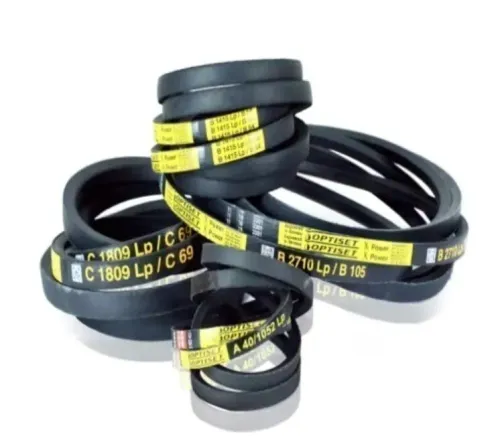
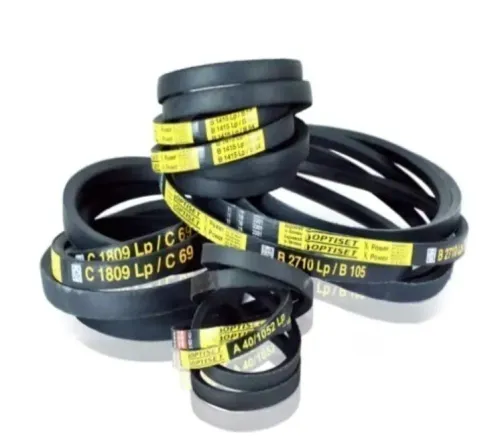
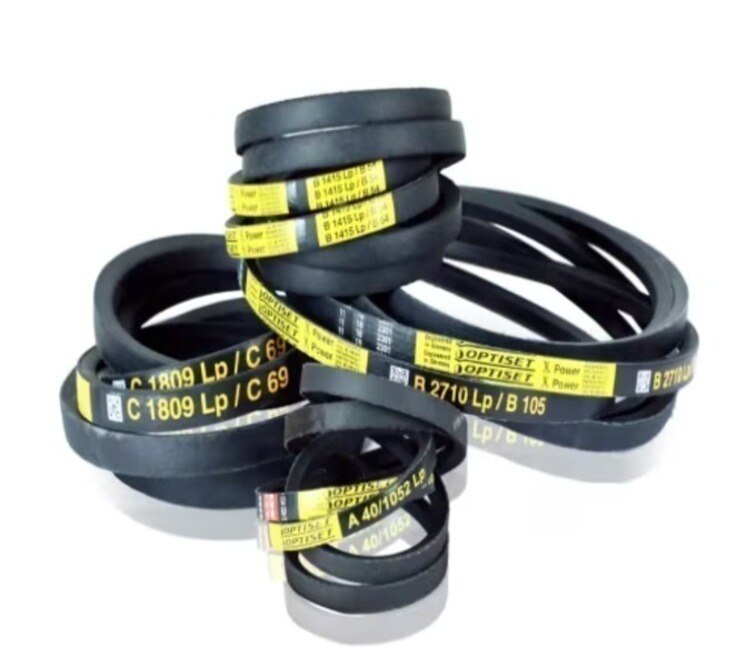
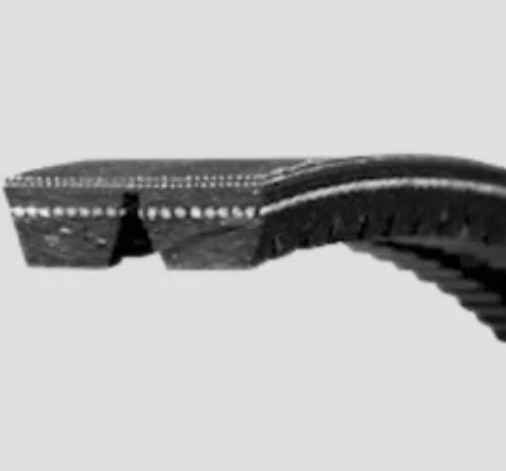 | Rubber Banded Belts Rubber Banded Belts are made up from Classical, Wedge or Narrow belts with strong tie band over them. View product → |
Frequently asked questions
How do banded V-belts behave differently from flat belts under load?
Banded V-belts grip grooved pulleys and share load across joined elements, reducing belt whip, turnover and wandering during shock loading. Flat belts run on smooth or crowned pulleys and depend on correct tracking, tension and surface condition.
How do I match a belt to pulley geometry and factory conditions?
Check whether the drive uses grooved V-belt sheaves or flat-belt pulleys, then assess shock loads, speed, dust, oil, heat, humidity, available space and tracking requirements.
Can I use a banded belt as a drop-in replacement for a flat belt?
No. A banded V-belt requires compatible grooved sheaves, while a flat belt requires pulleys designed for flat-belt tracking and tension. Changing belt types can require pulley replacement and drive redesign.
What should I measure before ordering a replacement belt?
Record the existing belt construction, profile or cross-section, length, width, pulley diameters, groove dimensions, centre distance, shaft arrangement and tensioning travel.
What information should a supplier receive in the belt specification?
Provide belt type, profile, dimensions, quantity, pulley details, speed, power, duty cycle, shock loading, temperature, contamination and photographs or markings from the existing belt.