Automation belt failures show up as slip, noise, vibration, tracking errors, overload trips and sudden stoppages, but the belt is not always the root cause. By following a structured inspection and matching the replacement to the drive, you can distinguish a worn cogged V-belt from a pulley, bearing, alignment or control problem—and avoid fitting a timing belt where friction drive is required.
Key takeaways
- Inspect sheaves, alignment, bearings, and tension before ordering a belt.
- Use a cogged V-belt for friction drive; use timing belts for positive engagement.
- Match belt profile, length, construction, speed, load, and operating conditions.
- Ask replacement suppliers for dimensional confirmation and traceable product details.
What Each Cogged Belt Failure Symptom Tells You
A squeal at startup, polished belt flanks, or visible cracks usually points to belt wear or insufficient tension; a tracking error, repeated edge damage, or sudden overload points beyond the belt. Read the symptom before ordering, because a replacement cannot correct worn sheaves, misalignment, seized bearings, or an undersized drive.
| Symptom | Likely cause | What to verify |
|---|---|---|
| Startup slip, squeal and heat | Insufficient tension, glazed belt or overloaded drive | Measure tension with the manufacturer’s span-deflection, force or frequency method; inspect for glazing |
| Cracks, missing cogs or frayed edges | Age, excessive heat, chemical exposure, misalignment or pulley damage | Check temperature, contamination, pulley faces and groove condition |
| Uneven flank wear or belt riding too deeply | Worn or incompatible sheaves | Measure the grooves with a belt gauge or the maker’s wear limits; replace damaged sheaves |
| Vibration, whip or repeated tracking error | Angular or offset misalignment, runout or incorrect tension | Check pulley faces after mounting and again after tensioning |
| Ratcheting, tooth skipping or registration loss | Synchronous-belt overload, inadequate engagement or low tension | Inspect tooth profiles and pulley engagement; do not substitute a cogged V-belt |
| Bearing noise, overload trips or abrupt stoppage | Seized bearing, bent shaft, shock load or an undersized belt | Rotate shafts by hand after isolation and inspect the drive rating |
A cogged V-belt remains a friction-drive belt: its notches improve flexibility but permit slip and speed variation. A synchronous timing belt engages pulley teeth, so changing between them is a redesign, not a like-for-like repair.
These clues explain many industrial belts automation problems and prevent a cogged belt automation failure from being repeated with a new belt alone. A multiple-belt drive also needs one approved matched set; mixing old and new belts shifts load unevenly.
The Inspection Sequence Before You Order a Replacement
Do not remove the failed belt until you have recorded the conditions around it. Photograph the belt, sheaves, tensioner position, contamination and tracking marks; these clues disappear during disassembly. Use this sequence to trace industrial belts automation problems before ordering parts.
1. Isolate and lock out the machine, then remove the guard without disturbing the drive. Mark the rotation direction and note whether the belt sits high, low or unevenly in the grooves.
2. Check pulley alignment at the faces and grooves. Parallel shafts do not prove alignment; angular or offset error creates edge wear, tracking faults and rollover. Recheck alignment after final tensioning because motor adjustment can move a shaft.
3. Measure installed belt tension with the belt maker’s specified method. Record the section, length, construction and number of belts. A multiple-belt drive normally needs a matched set; do not combine old and new belts.
4. Inspect every sheave with a belt gauge or the manufacturer’s wear limit. Polished, widened or damaged grooves reduce flank contact, let the belt sit too deeply and alter the drive ratio. Replace a worn sheave with the belt.
5. Find contamination and heat sources. Record oil, coolant, solvent, ozone, washdown exposure and operating temperature; “oil resistant” does not mean compatible with continuous immersion.
6. Turn the shafts by hand after confirming isolation. A seized bearing, rough bearing, bent shaft or loose hub can overload the replacement immediately.
Order only after matching the belt construction, pulley geometry, exposure limits and set-replacement rule to the inspection record.
Cogged V-Belt or Synchronous Timing Belt: Which System Do You Have?
Read the pulley, not the belt’s nickname: a conventional V-groove identifies a friction drive, while machined pulley teeth identify a synchronous drive. A cogged V-belt has longitudinal notches that improve bending flexibility, but its sidewalls still transmit power by friction; it can slip and vary speed.
| Drive type | What to see | What the belt requires |
|---|---|---|
| Cogged V-belt | Smooth, tapered V-grooves without teeth | Matching V-belt section, length and sheave groove; slip remains possible |
| Synchronous timing belt | Transverse teeth inside the pulley | Matching tooth pitch, tooth profile, tooth count and timing pulley; tooth engagement prevents normal slip |
A toothed V-belt replacement is not a timing-belt replacement. Fitting a synchronous belt into V-grooves gives no proper tooth engagement, while fitting a cogged V-belt over a toothed pulley causes tracking and power-transmission failure. Treat that change as a drive redesign.
For indexed, servo or registration-critical automation, choose the existing synchronous system or redesign it with engineering review. A cogged belt automation failure can shift position because of slip, elastic stretch, runout and tension changes; a timing belt can still jump teeth under overload, poor tension or inadequate wrap.
A cogged V-belt remains appropriate where the machine uses V-grooves, a small permissible pulley, frequent starts or limited centre-distance adjustment. Confirm whether the original is raw-edge or wrapped construction, then inspect sheave wear with a belt gauge before ordering. Polished or damaged grooves reduce flank contact and alter the effective ratio.
How to Specify the Correct Industrial Replacement Belt
Do not order by length alone: confirm the belt system, exact section, length convention, construction, load and environment before requesting industrial belts for replacement. Outside length, datum length and pitch length use different measurement references. Copy the designation from the manufacturer’s data; do not rely on a tape wrapped around the belt.
| System | Belt identification | Pulley requirement | Failure if mismatched |
|---|---|---|---|
| Cogged V-belt | V-section with molded cogs; friction drive | Matching V-groove and minimum diameter for that section and construction | Slip, heat and rapid wear |
| Synchronous timing belt | Tooth pitch and profile | Matching toothed pulley with correct tooth engagement | Tooth jump, tracking loss or immediate damage |
Confirm these ordering details:
- Belt section or profile, nominal length, pitch or datum length, construction, required power rating, operating speed and service factor.
- Pulley diameters, groove or tooth profile, number of grooves, centre distance, alignment and the manufacturer’s minimum pulley diameter. Cogging does not permit an undersized pulley; bending fatigue and cracking follow.
- Exposure to oil, coolant, solvents, ozone, washdown and operating temperature. “Oil resistant” does not prove compatibility with continuous immersion or every fluid.
- For a multiple-belt drive, order a matched set from one approved specification. Mixing old and new belts or different constructions shifts load unevenly, so one belt slips while another overloads.
- For indexed or servo motion, verify tooth pitch, profile, pulley engagement and tension; a cogged V-belt is not a drop-in timing-belt substitute.
Choosing a Replacement Source for Difficult Automation Drives
Choose a cogged V-belt when the drive uses conventional V-groove sheaves, needs flexibility around small diameters, and allows normal friction-drive slip. Its notches improve bending flexibility; they do not engage pulley teeth.
For indexed or servo motion, choose a synchronous timing belt instead, but treat that as a drive redesign requiring matching pitch, tooth profile, pulley and tension.
| Option | What it means | When it applies |
|---|---|---|
| Cogged V-belt | Friction drive in a V-groove | General variable-speed or high-speed drives where minor slip is acceptable |
| Matched cogged V-belts | Equal-length belts from one approved specification | Multiple-belt drives sharing one load |
| Synchronous timing belt | Toothed positive drive | Registration-critical motion, when the pulley and belt tooth geometry match |
Replace the complete matched set when one belt fails, unless the original manufacturer’s data permits individual replacement. Do not combine an old belt with a new one, or mix constructions and manufacturers; unequal length or stiffness can overload one belt and leave another slipping.
Ask cogged belt manufacturers or suppliers to verify these details in writing:
- Belt section, length, raw-edge or wrapped construction, rubber compound and temperature range
- Power rating at your speed, pulley diameters, start-up load and duty cycle
- Matching sheave profile, groove wear limits and recommended tension
- Whether the proposal is a true toothed V-belt replacement or a synchronous belt conversion
Jigna Sales Corporation can help compare industrial belts for replacement when the original belt marking is incomplete, provided you supply photographs, dimensions, pulley details and the machine’s load conditions.
Related products
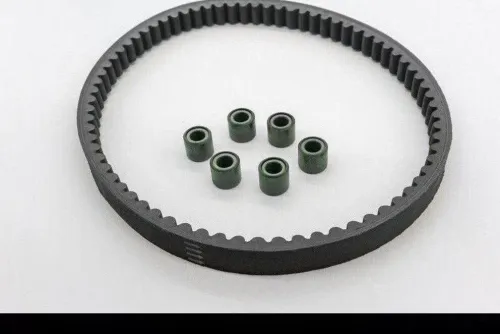
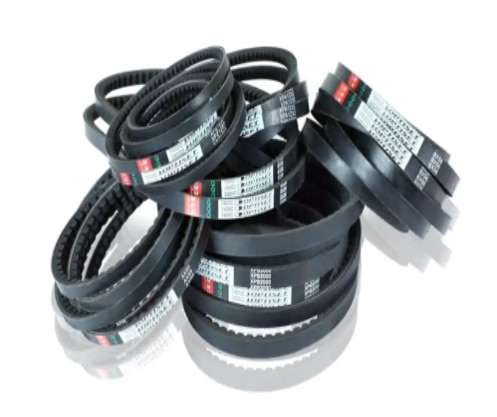 | Cogged Belt Cogged belts are suitable for all industrial applications, particularly where small or sub-minimal sheave diameters are required. View product → |
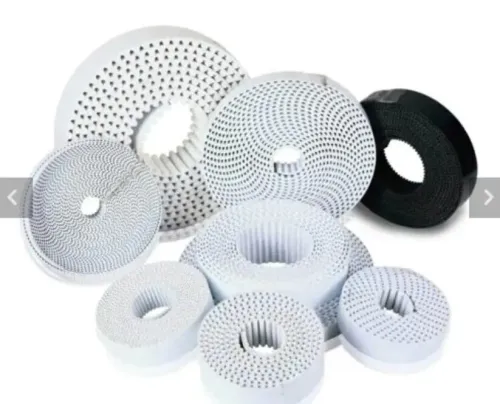
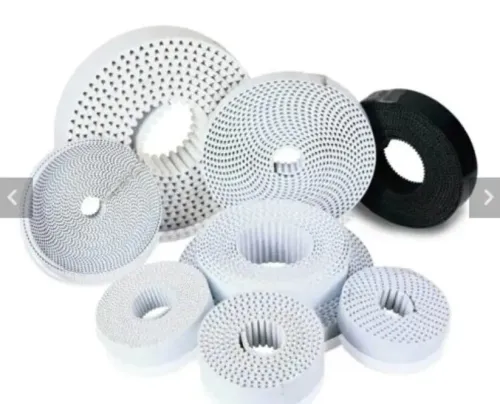
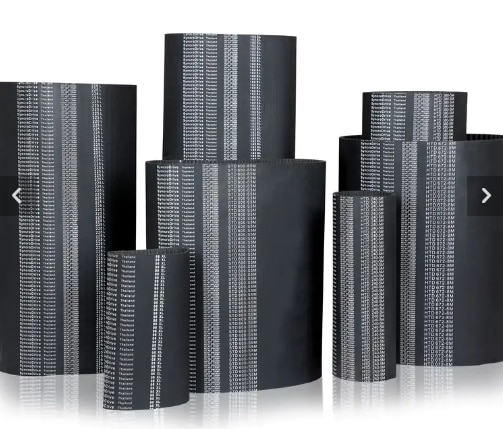 | Rubber Timing Belts Timing belts make less noise compare to chain belts and gear belts and has high transmission capacity and efficiency. View product → |
Frequently asked questions
What do squealing, polished flanks, and cracks indicate on a cogged belt?
They usually indicate belt wear or insufficient tension. Check tension, pulley condition, alignment, and bearing freedom before replacing the belt.
What should you inspect before ordering a cogged belt replacement?
Inspect belt wear, sheave grooves, shaft alignment, tension, bearings, contamination, and signs of overload or tracking damage.
How do you tell a cogged V-belt from a synchronous timing belt?
A cogged V-belt transmits power through friction on tapered sheave flanks. A synchronous timing belt uses teeth that engage matching pulley grooves.
What details must you provide when specifying an industrial replacement belt?
Provide the belt profile, pitch or length, width, construction, speed, power, pulley details, temperature, contamination, and duty cycle.
Related products
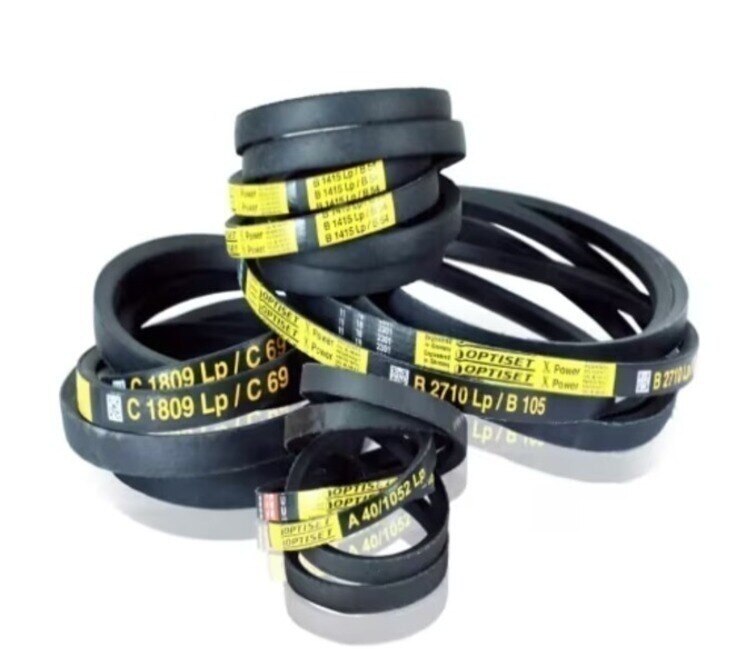
 | V-Belt V-Belt V-belts are widely used on high speed and high torque drives on light, heavy industrial and automotive machines. |
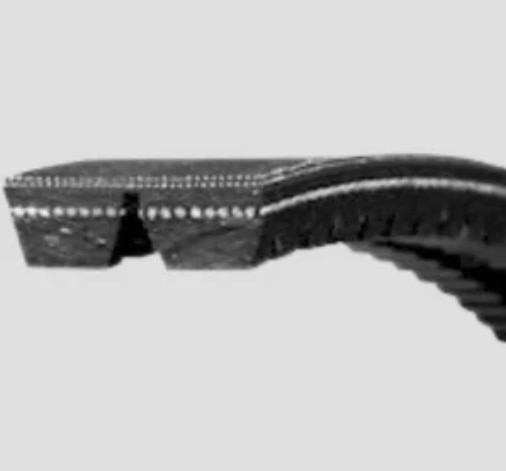 | Rubber Banded Belts Rubber Banded Belts are made up from Classical, Wedge or Narrow belts with strong tie band over them. View product → |
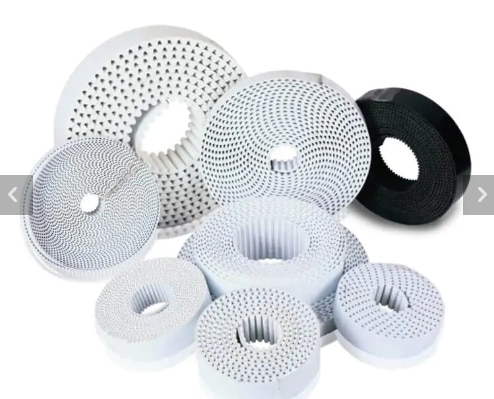 | PU Timing Belts has high performance transmission. This PU Belts has high intensive and low extension adoptive modules. View product → |
 | 5m, 7m, 11m Belts Belts are recommended for use on bench type milling machines, lathe drives, woodworking and metalworking machine spindle drives, computer peripheral... View product → |