A vibrating AHU or exhaust fan does not prove that the belt is at fault: belt tracking, pulley runout, fan imbalance, bearing wear, and loose mounts can produce similar symptoms. You will learn how to identify the installed belt, isolate the vibration source, set tension correctly, and specify a replacement that suits Mumbai’s humid operating conditions.
Key takeaways
- Match the belt profile and length before adjusting tension.
- Check pulley alignment, belt tracking, shaft bearings, and fan balance.
- Replace damaged belts and matched sets rather than compensating with excessive tension.
- Specify belt material, dimensions, operating conditions, and installation checks for Mumbai HVAC systems.
What HVAC belt vibration sounds and looks like
A belt-related vibration usually appears as a repeating pulse that follows shaft speed, not as random shaking. Listen for belt slap, a rhythmic thump at each belt revolution, squeal from slip, or a growl that rises with fan speed.
Watch through the guard window for belt flutter, lateral wandering, edge rubbing, or a pulley that appears to wobble.
Look for these clues while the AHU, blower, exhaust fan, or cooling-tower fan runs under normal load:
- Belt slap that increases at a particular speed points to incorrect tension, a damaged splice, tracking instability, or pulley runout.
- A thick, skewed, cracked, lifted, or separating splice creates one noticeable disturbance per revolution.
- Black dust, polished belt edges, flange marks, and repeated sideways movement show tracking or alignment trouble.
- Vibration that increases smoothly with speed points toward fan imbalance, shaft runout, pulley eccentricity, or a rotating assembly fault.
- A harsh bearing rumble, rising bearing temperature, or vibration that remains after belt removal points away from the belt.
- A loose guard, foundation bolt, motor slide, bearing housing, or soft mount can amplify a small belt fault into a large shake.
Do not diagnose by replacing the belt alone. Stop the drive, isolate power, and inspect pulley faces, shaft alignment, bushings, splice condition, and mounting hardware; never reach into a running drive.
After correction, run briefly with the guard fitted, then recheck tracking, slip marks, splice temperature, abnormal noise, and bearing vibration once the belt reaches operating temperature.
Identify the belt before diagnosing the drive
A flat belt is a smooth, broad strip with no longitudinal grooves, teeth, or separate ribs. It runs on flat pulleys, often with a crowned face that keeps the belt centred. A search for flat belt for drive vibration in Mumbai matches the installed drive only if the belt and pulley surfaces have this geometry.
| Drive type | What you see | Key identification |
|---|---|---|
| Flat belt | Broad, smooth belt | Flat or crowned pulley face; no teeth |
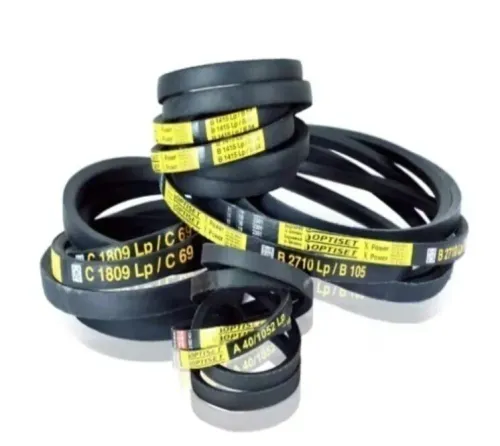
| V-belt | One or more trapezoidal ribs | Individual V-grooves in the sheave |
| Banded V-belt | Several V-ribs joined by a continuous top band | V-grooved sheaves; not a flat belt |
| Poly-V belt | Many narrow ribs on one side | Ribbed pulley with a serpentine profile |
| Cogged V-belt | Trapezoidal belt with notches on the inner side | V-groove drive; notches improve flexibility |
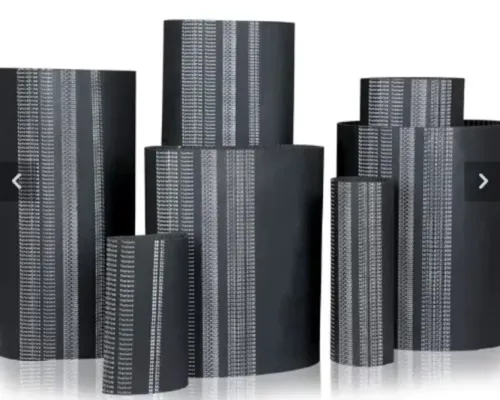
| Timing belt | Distinct teeth on the inner face | Toothed pulley; positive, non-slip engagement |
- Isolate the fan and motor, then photograph the belt edge and pulley face before removing anything.
- Count grooves or teeth, measure belt width and thickness, and record any printed section code. Do not identify a belt by width alone.
- Check whether the belt has a continuous top band joining multiple V-ribs. This is the common source of rubber banded belt vibration confusion.
- Compare the belt profile with the pulley. A flat belt forced onto a V-groove, or a banded V-belt fitted to a flat pulley, will track poorly and generate vibration.
A step-by-step inspection for fans, blowers, and AHUs
A belt fault is more likely when vibration disappears after the belt is removed; vibration that remains points to the fan, motor, bearings, base, or structure. Use this sequence, and do not select a replacement belt from one overall vibration reading.
1. Lock out the AHU, fan, or blower. Check for debris inside the guard, loose guard fasteners, belt-edge damage, contamination, and a splice with lift, cracks, separation, skew, or uneven thickness.
2. Rotate the drive slowly by hand. Mark pulley high spots and watch for belt wander, splice impact, pulley wobble, shaft runout, loose hubs, damaged bushings, and poor pulley-face alignment.
3. Check pulley faces for parallelism and shafts for angular or offset misalignment. Repeated tracking to one side points to alignment, pulley crown, runout, contamination, or the splice; increasing tension will not correct it.
4. Record vibration at motor and fan bearing housings in horizontal, vertical, and axial directions. Compare running speed, blade-pass frequency, harmonics, and sidebands: running-speed vibration suggests imbalance or eccentricity, while blade-pass vibration equals blade count multiplied by rotational speed.
5. If the design permits, remove the belt or uncouple the drive and repeat the readings. Persistent vibration shifts suspicion to fan imbalance, bent shafts, worn bearings, soft mounts, loose foundations, or structural resonance.
6. Refit the belt without forcing it over a pulley, then run to operating temperature. Recheck the splice, tracking, tension, pulley movement, and bearing noise; a fault that appears only hot often points to splice stiffness, alignment, or bearing clearance.
Set tension, inspect the belt, and replace matched sets correctly
Set tension with the belt maker’s span-deflection value, tension-frequency method, or a calibrated tension meter. Do not judge tension by pressing the belt with your thumb. A loose belt slips, heats, glazes, squeals, and causes speed fluctuation; an over-tight belt overloads motor and fan bearings and increases vibration.
- Isolate power, lock out the fan, remove the guard, and check the belt while turning the pulley by hand.
- Inspect for glazing, cracks, frayed edges, uneven thickness, contamination, and stretched sections.
- On a flat belt, examine the splice for lift, cracking, separation, skew, stiffness, or a raised section. A defective splice can create one disturbance per revolution and repeated tracking correction.
- Check pulley crown, rust, damaged surfaces, flange contact, loose bushings, and alignment. A flat belt does not self-center like a V-belt.
- Confirm the installed type before ordering. Many belts described as causing “rubber banded belt vibration” are banded V-belts: joined V-belt ribs that require matching V-grooved sheaves, not flat pulleys.
Replace according to the drive condition:
| Option | Replace | Decision |
|---|---|---|
| One flat belt | The complete belt | Use when it is the sole belt and the pulleys remain serviceable. |
| Multi-rib or matched V-belts | The complete matched set | Replace all belts when one belt is worn, stretched, damaged, or heat-glazed; mixing new and worn belts shifts the load. |
| Banded V-belt assembly | The entire banded assembly | Never replace one rib; confirm the correct section profile and inspect every sheave groove. |
Specify and commission a replacement belt for Mumbai conditions
Give the supplier the drive geometry and Mumbai exposure, not just the AHU make. A controlled specification for HVAC belt replacement in Mumbai includes:
- Equipment make, model, and drive position
- Motor and fan speed, pulley diameters, and centre distance
- Flat-belt width, thickness, splice construction, and pulley crown; or the exact V-belt section and banded-belt rib count
- Operating temperature and duty cycle
- Exposure to condensate, wash-down water, oil, or outdoor air
A flat belt needs a crowned pulley and accurate alignment because it does not self-centre in a groove. A banded V-belt needs matching V-grooved sheaves and the correct section; do not substitute one for a flat belt. Replace the complete matched set when multiple belts share the drive.
Jigna Sales Corporation can help compare the installed belt construction with the replacement specification, including whether a search for a rubber banded belts supplier in Mumbai matches the actual sheave profile.
Install the belt with the adjustment mechanism released. Never lever it over a pulley; that can damage cords, splice areas, and edges before the fan runs. Refit guards before operation.
Run the drive briefly, then recheck it after the belt seats and reaches operating temperature. Look for:
- Tracking, edge rubbing, slip marks, and abnormal noise
- Uneven temperature between belt sections
- Splice or fastener damage
- Bearing vibration and pulley wobble
Stop the drive before any close inspection or adjustment.
Related products
 | V-Belt V-Belt V-belts are widely used on high speed and high torque drives on light, heavy industrial and automotive machines. |
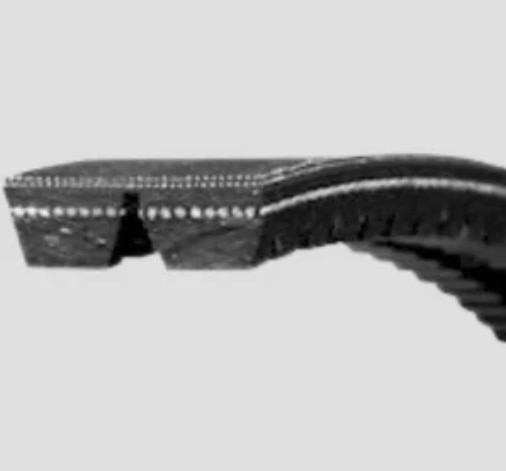 | Rubber Banded Belts Rubber Banded Belts are made up from Classical, Wedge or Narrow belts with strong tie band over them. View product → |
Frequently asked questions
What does belt-related HVAC vibration sound like?
Listen for belt slap, a rhythmic thump at each belt revolution, squeal from slip, or a growl that rises with fan speed.
Why identify the belt before diagnosing drive vibration?
Flat belts, rubber banded belts, and timing belts use different profiles, tension methods, and failure checks. Confirm the belt type, width, thickness, length, and construction first.
What should you inspect on a vibrating HVAC fan or AHU drive?
Inspect belt tracking, pulley alignment, belt condition, tension, pulley wear, shaft bearings, fan balance, mounting bolts, and guards.
How should you replace a matched set of HVAC belts?
Use belts with the same specified size and matched length, replace the complete set, align the pulleys, set tension to the manufacturer's requirement, and recheck tracking during commissioning.
What should you include when specifying a replacement belt in Mumbai?
Give the belt type, width, thickness, length, material, construction, pulley dimensions, speed, load, temperature, humidity, and installation environment.
Related product
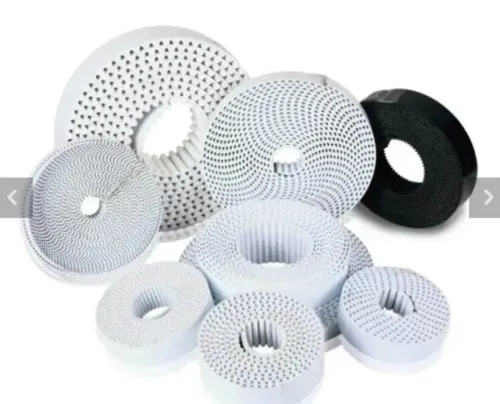
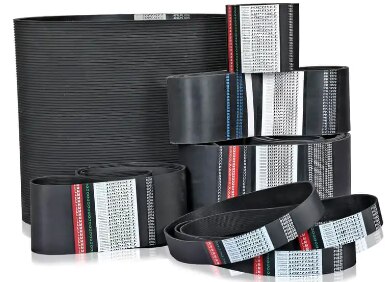 | Poly Belts Poly v-belt allows drive design to meet requirements of power grip and space. View product → |