The right drive depends on transmitted power, speed, pulley geometry, slip tolerance, contamination, and the effort required to replace it—not on belt material or purchase price alone. You will be able to identify your existing drive, compare the two systems, and prepare a specification that avoids premature failure in Mumbai conditions.
Key takeaways
- Choose PU cord for clean, flexible, light-to-moderate conveyor and roller duties.
- Choose V-belts for higher torque, shock loads, and established grooved-pulley drives.
- Measure belt profile, pulley geometry, length, speed, and duty before ordering.
- Specify temperature, oil exposure, service access, and belt quantity to Mumbai suppliers.
PU Cord or V-Belt: Which Drive Fits the Duty?
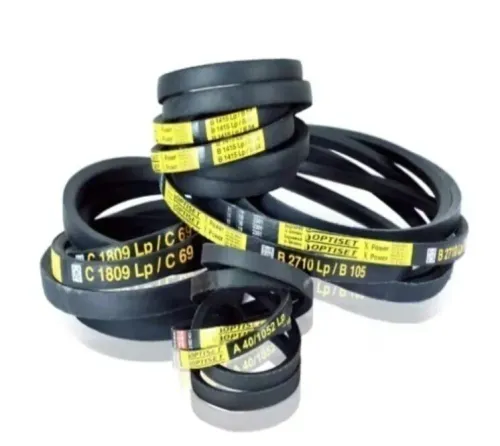
Choose a pu cord or v belt drive in mumbai from torque, speed, duty cycle, pulley geometry and service access—not belt price. A pu cord belt drive is a clean, flexible friction drive for conveyors, rollers, packaging equipment and light-to-moderate transmission.
A correctly rated classical or wedge V-belt handles higher power, shock loads, longer centre distances and multi-groove drives.
| Option | Performance comparison | Practical consequence |
|---|---|---|
| Round PU cord | Lower load capacity; suits high shaft speeds when pulley diameter and bend radius are correct. Quiet, low vibration and tolerant of small pulley layouts. | Tracks well only with correct groove fit and pretension. It is clean and weldable, but the joint, finished length and pulley alignment need care. Replacement is quick when service access is good. |
| Classical or wedge V-belt | Higher power and shock-load capacity; supports longer centres and multiple belts. Correct sheaves improve tracking and reduce vibration. | Requires matching section, groove geometry, alignment, tension and matched belts. Replacement takes more space and adjustment time. |
| Both systems | Slip occurs under overload, low pretension or contamination. Neither provides fixed phase or guaranteed no-slip indexing. | Use a toothed timing belt for synchronisation or exact indexing. |
Mumbai monsoon humidity, washdown water, heat and cleaning chemicals can shorten service life. Keep either drive guarded, dry between washes and away from excessive heat; inspect for glazing, cracking, corrosion and tracking drift. PU cord simplifies handling in confined service areas, while V-belts repay the extra installation effort on demanding machinery.
Identify the Existing Drive Before You Order a Replacement
Before ordering, identify the existing drive from the machine, not from a belt’s apparent width. This field checklist prevents a visually similar replacement from failing within days.
1. Record the belt section, nominal length, pulley or sheave groove profile, number of grooves, centre distance, shaft speed, transmitted power, duty cycle, and direction of rotation.
2. Photograph every belt marking before removal and measure the pulleys. For a V-belt, identify inside length, pitch length, and outside length; these are different dimensions. A worn belt may have unreadable printing, altered length from wear and tension history, or a size that no longer suits worn or incorrectly replaced sheaves.
Do not order by top width alone.
3. Match the section exactly. Classical Z or AX, A, B, C, and D belts are not interchangeable with narrow or wedge sections SPZ, SPA, SPB, and SPC; a different groove angle or width reduces seating, capacity, and service life.
4. For round PU cord, record cord diameter, construction, polyester or aramid reinforcement, finished length, pulley groove or channel shape, and whether you will heat-weld it into an endless loop. Note the joining method and cooling requirement.
5. Confirm that the cord is a round friction belt. A toothed PU timing belt is a positive-drive component for synchronisation and indexing, not a substitute for a friction-drive V-belt.
Match the Belt to the Pulley, Then Install It Without Damage
A correct belt fails on an incorrect drive when the belt section does not match the pulley geometry. Match each V-belt to the sheave groove angle, top width, depth, and pitch; inspect for bottoming, rust, burrs, glazing, and sidewall wear.
Power rating is not determined by shaft horsepower and belt width alone. Check shaft alignment, sheave parallelism, wrap angle, small-sheave diameter, centre distance, speed ratio, service factor, and number of belts. A multi-groove drive requiring matched belts must not mix manufacturers, batches, or nominal lengths.
Specify a PU cord belt drive by cord diameter, polyester or aramid reinforcement, finished length, pulley diameter, allowable bend radius, tension, and joining method. An oversized weld bead, angular cut, incomplete fusion, or insufficient cooling causes impact, tracking trouble, and early breakage.
Use this installation checklist:
- Loosen the motor base before installation; fit the belt over the sheaves instead of prying it on.
- Align the shafts and check sheave parallelism before applying tension.
- Set tension from the belt maker’s specification for the exact belt, pulley geometry, centre distance, and load.
- Run the drive briefly, then recheck tension after initial run-in.
- Stop if the belt bottoms, slips, wanders, or contacts a burr.
No universal tension value applies to every belt and drive. A tension setting copied from another machine can overload bearings or leave the belt slipping.
Choose the V-Belt Section—or Decide That PU Cord Is Wrong
Choose PU cord for clean, flexible, weldable, moderate-duty conveying or roller work—not automatically for a high-power drive. For machinery belt selection, compare these V-belt drive options against torque, speed, pulley size, duty cycle, environment, and sheave compatibility.
| Option | Select it when | Check before ordering |
|---|---|---|
| Classical Z/AX, A, B, C, D | A conventional sheave matches and calculated duty fits the section | Groove angle, top width, small-sheave diameter, and service factor |
| SPZ, SPA, SPB, SPC | Higher power is needed in a narrower drive | The manufacturer’s wedge-sheave dimensions and rating |
| Cogged V-belt | A small sheave or compact layout demands greater flexibility | Minimum diameter and maker’s power rating |
| Banded or joined V-belt | Vibration, pulsation, or shock could whip separate belts or split their load | Correct band construction and matched length |
| Poly-V belt | Space is limited and a multi-rib drive is required | Compatible ribbed pulleys and rib profile |
| PU cord | Moderate-duty, clean, flexible conveying or roller transmission is required | Cord diameter, polyester or aramid reinforcement, bend radius, finished length, and weld quality |
A V-belt needs the correct sheave groove; a similar-looking section with another angle or width loses capacity and wears quickly. Check the exact polyurethane compound, reinforcement, rubber compound, oil, solvent, cleaning chemical, steam, and hot-water limits. Polyester PU faces hydrolysis risk in wet heat, where ether-based PU is preferred.
A round PU cord is a friction belt, not a toothed timing belt. Neither provides guaranteed no-slip indexing. Guard every accessible nip, and specify antistatic construction separately when static accumulation is hazardous. Choose the complete, serviceable system—not the cheapest belt.
Prepare a Mumbai-Specific Purchase and Maintenance Specification
Send the supplier a measured specification, not a generic belt size, for an industrial belt drive in Mumbai. State the machine model, transmitted power or torque, driver and driven shaft speeds, speed ratio, centre distance, pulley diameters, groove count and profile, belt section or cord diameter, and required finished length.
| Option | Select it when | Confirm before ordering |
|---|---|---|
| PU cord | Clean, flexible, weldable, moderate-duty conveying or roller work | Reinforcement, finished length, joint method, tension, minimum pulley diameter |
| V-belt | Higher power, shock loading, longer centres, or multi-groove transmission | Section, sheave geometry, service factor, matched set, small-sheave limit |
Add these operating details to your request:
- Duty cycle, start-stop frequency, shock loading, ambient temperature, washdown chemicals, oil exposure, monsoon humidity, storage conditions, and available guarding.
- Belt construction, polyester or aramid reinforcement, temperature and chemical limits, minimum pulley diameter, joining instructions, tension procedure, and confirmation that the belt matches the existing pulley geometry.
- For multiple V-belts, request a matched set. If grooves are worn, inspect or replace the sheaves before fitting new belts.
- Keep belts dry and protected from direct sunlight, heat, ozone sources, and crushing. Provide drainage and corrosion protection around exposed pulleys.
Jigna Sales Corporation can help compare PU cord, classical, narrow, cogged, banded, or Poly-V options against measured machine data rather than a generic size. Choose the lowest-risk complete drive system, including pulley condition, installation access, guarding, and maintenance time—not the cheapest belt.
Related products
 | V-Belt V-Belt V-belts are widely used on high speed and high torque drives on light, heavy industrial and automotive machines. |
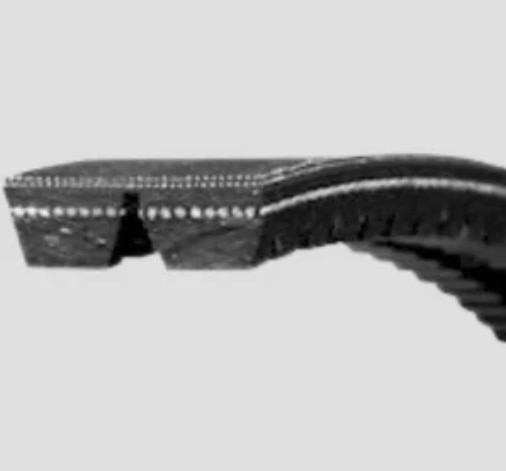 | Rubber Banded Belts Rubber Banded Belts are made up from Classical, Wedge or Narrow belts with strong tie band over them. View product → |
Frequently asked questions
When should you choose a PU cord belt instead of a V-belt?
Choose PU cord for clean, flexible friction drives on conveyors, rollers, packaging equipment, and light-to-moderate transmission duties. Use a V-belt when the drive needs higher torque capacity, shock-load resistance, or an existing grooved-pulley system.
How do you identify an existing industrial belt before ordering?
Record the belt cross-section, top width, thickness, inside or pitch length, pulley groove dimensions, number of belts, centre distance, pulley diameters, speed, and drive arrangement. Check the old belt markings and measure the pulley rather than relying on appearance alone.
How do you match a replacement belt to its pulley?
Match a PU cord belt to the correct round or suitable pulley groove and use the specified joining method. Match a V-belt to the pulley section, groove angle, groove depth, and belt length. Remove burrs, align the shafts, and tension the belt without prying it onto the pulley.
What should a Mumbai machinery belt purchase specification include?
State the belt type and section, length reference, material, temperature and oil exposure, operating speed, transmitted load, pulley details, quantity, joining requirements, delivery location, and replacement interval. Include a photograph and measured dimensions when the original belt marking is unclear.
Related products
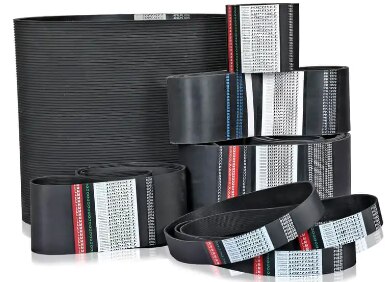 | Poly Belts Poly v-belt allows drive design to meet requirements of power grip and space. View product → |
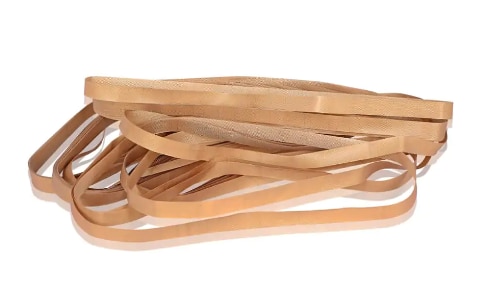 | Polyurethane Teflon Belt PU cord /Teflon belt has High Modulus Polyurethane compound which resists ozone and weather condition, having strength of smooth drives with high... View product → |