A replacement belt ordered as a “PU timing belt for a machine” can fail before installation because pitch, profile, length, cord construction, and pulley details were never defined. By the end, you will have a complete specification for identifying the belt, comparing quotations, approving the order, and checking the drive after installation.
Key takeaways
- Record pitch, tooth count, belt length, width, and pulley tooth profile.
- Match tensile cord, belt construction, joint method, and minimum pulley diameter to the duty.
- Approve the manufacturer’s drawing before issuing a purchase order.
- Check tooth engagement, alignment, tension, and tracking during installation.
Start with the machine duty and identify the existing belt
Before contacting a PU timing belt manufacturer, establish what the drive does and identify the belt already fitted. Motor power alone is insufficient: selection depends on tooth shear, tensile load, cord fatigue, minimum pulley diameter, and the number of teeth engaged.
1. Record transmitted power or torque, shaft speed, small-pulley tooth count, centre distance, operating hours, duty cycle, start-stop frequency, reversing loads, and the number of teeth in mesh.
2. Describe the environment: ambient temperature, chemicals, oil, dust, washdown exposure, and any food-contact, clean-room, static-control, spark, flame, or unusually high-temperature requirement. Request a compliance declaration and material data; “polyurethane” alone does not confirm those properties.
3. Read the belt marking or machine manual, then record the tooth profile and pitch, such as T5, T10, AT5, AT10, HTD 5M, or HTD 8M; pitch length, tooth count, and width. Outside length alone is unsafe because suppliers may dimension the same belt by pitch length, reference length, or outside length.
4. Inspect the pulley profile, tooth count, bore, centre distance, flanges, and guide arrangement. A centre-guide belt, side-guide belt, and unguided belt need matching pulley grooves; a mismatch causes poor seating, edge loading, or guide damage.
Send photographs and clear measurements if the old belt marking is worn or unreadable. Include the exact phrase PU timing belt in the enquiry, not merely the machine model.
Measure pitch, length, teeth, width, and pulley compatibility
Do not order by a machine name such as “conveyor belt.” Identify the belt profile first: T5, T10, AT5, AT10, HTD 5M, and HTD 8M use different tooth geometry and cannot share a pulley simply because their widths match.
Record these dimensions from the existing belt and pulleys:
- Pitch: measure the distance between matching points on adjacent teeth and record the profile marking.
- Tooth count: count every tooth, then calculate pitch length as pitch multiplied by tooth count.
- Width: measure the belt body, not the tooth tips, and record the permitted width tolerance.
- Length: distinguish pitch length from outside length and inside length; outside length alone cannot identify polyurethane industrial timing belts.
- Pulley compatibility: verify pulley tooth count, profile, face width, bore, and shaft arrangement against the belt.
Check the pulley teeth for hooked edges, polishing, chips, or a different profile. A T10 belt will not engage an AT10 pulley correctly, even when both have the same nominal pitch and width.
For a welded endless belt, specify the finished pitch length and ask how the supplier measures it: on the pitch line, over the teeth, or by another defined method. Also request the allowed length tolerance and joint location. Comparing one supplier’s pitch length with another supplier’s outside length can leave insufficient adjustment for tensioning.
Send a marked photograph, belt markings, tooth count, measurements, and pulley details with the enquiry. If the label is unreadable, use the pulley profile and tooth spacing rather than guessing from the machine model.
Choose the belt construction, joining method, and tensile member
A welded open-length belt suits a custom finished length, while a factory-endless belt suits a drive where uninterrupted tooth accuracy matters. Choose the tensile member separately: the same PU timing belt pitch and width can have different load ratings and pretension limits because of its cord construction.
| Option | What it means | When it applies |
|---|---|---|
| Welded open-length belt | Metre-length polyurethane belt joined by welding; the joint has its own strength, flexibility, appearance, and tooth-accuracy limits | Custom centre distances, long belts, or low-volume replacement work where the finished length is specified |
| Factory-endless belt | Continuously molded loop with no welded joint | High-speed, reversing, or highly synchronized drives where a joint could become the failure point |
| Steel cord | High-strength tensile member with low elongation and strong dimensional stability | High torque, long centre distances, and drives where retensioning or timing drift is unacceptable |
| Aramid reinforcement | Lightweight fiber construction with good flexibility and resistance to repeated bending | Compact, reversing, or bending-heavy drives where lower mass matters more than maximum stiffness |
For a welded belt, state the finished pitch length and tolerance, then ask how the supplier measures it: on the pitch line, over the teeth, or by another defined method. Do not compare one quotation’s pitch length with another’s outside length.
Your acceptance specification should name the cord, polyurethane hardness or compound, tooth profile, width tolerance, tooth or pitch tolerance, joint location and quality, and inspection documents. Confirm that steel or aramid reinforcement is compatible with the required load and pretension rather than accepting a nominally identical belt.
Turn the specification into a quotation, drawing approval, and purchase order
Send the timing belt manufacturer a controlled specification, not “PU belt, same as last time.” State the profile and pitch, such as T10, AT10, HTD 5M, or HTD 8M; these tooth forms are not interchangeable.
- Identify the pitch length or finished endless length, tooth count, effective width, and required width tolerance.
- Give the tooth profile, pulley tooth counts, pulley face width, bore, centre distance, and clearance at the pulley edges.
- Record speed, transmitted power or torque, operating hours, and the required direction or arrangement.
- Describe ambient temperature, oil or chemical contact, dust, washdown, and other exposure.
- Specify steel or aramid cord, compound or hardness, welded or factory-endless construction, joint location, inspection documents, packaging, and traceability.
Require the quotation to state how length is measured: on the pitch line, over the teeth, or by the supplier’s defined method. A welded belt also needs the finished-length tolerance and joint-quality requirement. Ask for a dimensioned drawing before approval, including every tolerance that will be inspected.
Put the approved drawing and technical specification in the purchase order, then separate them from commercial terms. Confirm quantity, delivery length, lead time, lot or batch identification, certificate requirements, packaging, replacement terms, and responsibility for freight, duties, taxes, and customs classification.
Jigna Sales Corporation can review a specification, but the buyer remains responsible for confirming classification with the importer or customs broker. For timing belts India shipments, do not infer tariff treatment from “PU” alone.
Related product
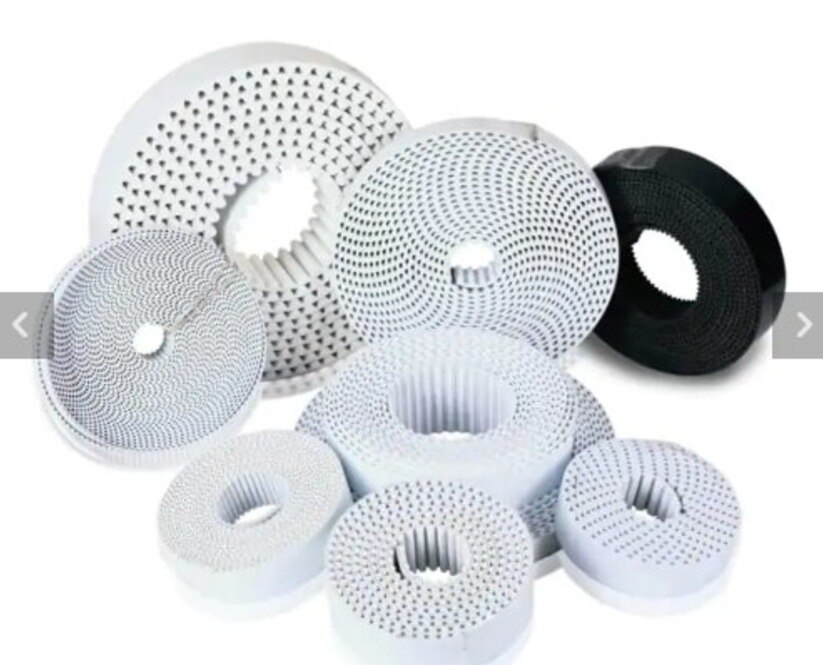
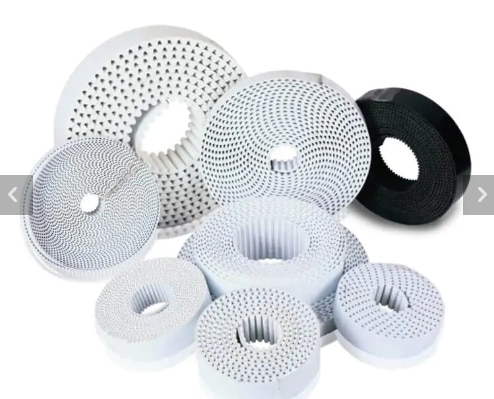 | PU Timing Belts has high performance transmission. This PU Belts has high intensive and low extension adoptive modules. View product → |
Inspect delivery, install the belt, and confirm tracking and tension
A delivered belt is not accepted because its box says PU. Compare the purchase order with the belt label and packing slip before removing the packaging. Inspect the teeth for cuts, crushed tips, contamination, and transit damage, then photograph the label and record the lot number.
- Confirm the pitch, tooth profile, pitch length or tooth count, and width.
- Confirm the cord construction, compound, hardness, and joint location for a welded belt.
- Check the finished length against the supplier’s stated measurement method; pitch-line length and outside length are not interchangeable.
- File the inspection certificate, dimensional report, and joint-quality record required for industrial timing belts.
Clean the pulleys and verify that their tooth profiles match the belt. Align the shafts and pulley faces with a straightedge or laser. Never force the belt over a flange; reduce centre distance or use the specified installation adjustment.
Apply the manufacturer’s pretensioning method, because excessive tension overloads bearings and cords while insufficient tension causes tooth jump.
Rotate the drive by hand through several revolutions. The belt must remain centred, engage every tooth, and show no tight spot. Run it at low speed without load, then check tracking, noise, and tooth engagement again.
Close acceptance with a record showing the measured tension, alignment result, running condition, and photographs. Do not approve the installation until the tension reading matches the specified method and the belt tracks without flange contact.
Frequently asked questions
What information should you give PU timing belt manufacturers?
Provide the machine duty, existing belt markings, pitch, length, tooth count, width, pulley details, speed, load, and operating conditions.
How do you measure a PU timing belt?
Measure the pitch, belt length, tooth count, width, and pulley tooth profile, then confirm that the belt and pulleys are compatible.
How do you choose PU timing belt construction?
Select the construction, joining method, and tensile member according to tooth load, tensile load, cord fatigue, minimum pulley diameter, and application requirements.
What should you check when a new PU timing belt arrives?
Compare the belt with the approved drawing and purchase order, then inspect dimensions, teeth, joint quality, surface condition, packaging, and identification.
How do you confirm correct timing belt installation?
Check pulley alignment, tooth engagement, specified tension, tracking, rotation direction, and operation under load before returning the machine to service.