The choice turns on how the belt transfers motion: toothed engagement gives a fixed phase relationship, while friction allows slip, cushioning, and flexible layout. By comparing load, speed, centre distance, contamination, installation limits, and positioning accuracy, you can select the drive type and specify a replacement without relying on motor power alone.
Key takeaways
- Choose timing belts for synchronized motion without intentional slip.
- Choose flat belts when shock absorption, long centres, or low cost matter more.
- Specify pulley dimensions, speed, load, centre distance, and operating conditions.
- Tell a Mumbai supplier the machine duty, belt markings, and replacement constraints.
How toothed engagement differs from friction drive
A rubber timing belt uses moulded teeth that engage matching grooves on a toothed pulley, creating positive engagement and synchronous motion under normal operation. A flat belt has a smooth running surface and transmits torque through friction against pulley faces, so creep and slip are inherent.
Slip can cushion an overload, but it changes the driven speed and makes exact indexing uncertain.
| System | Engagement | Practical result |
|---|---|---|
| Rubber timing belt | Teeth mesh with pulley grooves | Synchronous motion; tooth pitch, profile, width, tooth count, wrap angle, pretension, and service factor must match |
| Flat belt drive | Smooth surfaces rely on friction | Flexible speed ratio; adequate tension, wrap, clean faces, parallel shafts, and a crowned pulley are essential |
Nominal efficiency and motor kW do not settle a rubber timing belt comparison. Timing belt drive systems must also handle starting torque, braking torque, and the selected pulley geometry; a belt that carries steady power can still jump teeth or fail under a start.
Isolate power before inspecting the machine. Regularly spaced belt teeth and pulley grooves identify a timing drive; smooth pulley faces and a smooth or jointed belt indicate a flat drive. A visible belt joint, side-to-side tracking, or a crowned pulley strongly points to a flat system.
A crowned pulley guides the belt towards centre, while oil, water, poor tension, or misalignment reduces friction and increases slip.
Where flat belt drive benefits outweigh precise timing
Choose a flat belt when the machine values reach, flexibility, and forgiving overload behaviour more than exact phase. Flat belt drive benefits include low belt mass, simple construction, quiet running, long centre distances, variable speed, and one belt path serving several shafts.
During a short overload, controlled slip can protect shafts, keys, and gearboxes from the full shock.
Joint type changes field performance:
| Joint | Thickness and flexibility | Pulley entry, noise, contamination |
|---|---|---|
| Endless welded | Thin and flexible | Quiet entry; clean installation required |
| Glued | Smooth, flexible | Quiet; adhesive needs clean, dry surfaces |
| Clipped | Thicker and less flexible | Audible entry; suits compatible pulley layouts |
| Mechanically fastened | Thickest at the joint | Noisy entry; tolerates faster field replacement but can catch contamination |
For flat belt drive machinery in Mumbai, specify take-up travel, belt width, pulley crown, belt wrap, shaft parallelism, and a usable joining method before ordering. Water or oil on pulley faces reduces friction and causes slip. Excessive crown, a flat pulley, or misalignment can drive the belt toward the edge and throw it off.
Do not choose a flat drive for fixed indexing, registration marks, coordinated cutters, servo-like positioning, or any shaft that must hold phase with its driver. Replacement is practical only when the joint suits the pulley diameter, speed, contamination, and required flexibility.
When a rubber timing belt is worth the tighter design limits
Choose a rubber timing belt when fixed indexing, repeatable shaft speed, or coordinated motion matters more than forgiving overload behaviour. Positive tooth engagement holds phase between shafts, making it suitable where intentional slip is unacceptable. The rubber timing belt comparison is not settled by motor kW or nominal efficiency alone.
Tooth jump is not ordinary belt slip. The belt ratchets over the pulley when any of these conditions apply:
- Insufficient pretension
- Too few teeth in mesh or low wrap angle
- Excessive starting or braking torque
- Loose centre distance
- Pulley misalignment
Timing is lost immediately. Continued operation can shear teeth, fatigue tensile cords, wear tooth flanks, and damage pulleys.
Select timing belt drive systems using rated transmitted power at actual speed, service factor, peak torque, small-pulley tooth count, and wrap angle. The smallest pulley often governs: repeated bending raises stress and can reduce permissible power. Check the manufacturer’s minimum tooth count and do not assume a narrower belt is equivalent.
Do not replace a belt because the pitch appears identical. Match pitch, tooth profile, width, length, tensile-member construction, and pulley profile. A timing belt is the wrong choice for shock absorption, very long centre distances, simple belt shifting, or tolerated misalignment.
It still needs controlled alignment and an approved tensioning arrangement; otherwise its tighter design limits become the failure point.
How Mumbai conditions change the belt and installation decision
Start with the actual load, operating speed, centre distance, start-stop frequency, peak torque, positioning accuracy, and duty cycle. For flat belt drive machinery in Mumbai, also record oil, solvents, ozone, abrasive dust, water spray, ambient temperature, and stored heat before selecting a belt.
| Option | Choose it when | Main condition |
|---|---|---|
| Flat belt drive | Long-distance, shock-tolerant, flexible layouts | Accept controlled slip and provide correct tension, wrap, crown, alignment, and take-up travel |
| Timing belt drive systems | Accurate phase and repeatable positioning | Match pitch, profile, width, cord, pulley count, wrap angle, service factor, and peak torque |
| Neither yet | Environment or peak load remains unknown | Check contamination, temperature, starting torque, and pulley condition first |
Moisture alone does not reject a rubber timing belt. Wet abrasive deposits, trapped water, corroded pulleys, and poor storage do shorten service life; oil or chemical swelling can damage tooth geometry and cord adhesion while the teeth still look intact. Flat belts also lose traction when oil or water contaminates their running surfaces.
- Specify a timing-belt compound, facing, tensile cord, and temperature rating for the recorded conditions.
- Store either belt clean and dry, away from direct sunlight and ozone-generating electrical equipment. Never kink a belt during installation.
- Choose a flat drive for distance and overload tolerance; choose timing engagement for synchronization. Reject both until environment and peak load are checked.
What to give a Mumbai belt supplier for a defensible quotation
A defensible quotation starts with machine data, not “rubber timing belts or flat belt drive in Mumbai.” Send the complete belt designation and belt type, plus:
- For either system: pitch and tooth profile, or flat-belt width; belt length; pulley tooth count or diameter; centre distance; shaft speed; driven torque; motor starting method; duty cycle; ambient temperature; and contamination exposure.
- If the designation is unreadable, attach photographs showing the pulley profile, belt surface, joint, tensioner, and alignment.
| Drive | Add to the quotation request |
|---|---|
| Timing belt | Minimum pulley tooth count, permissible power at operating speed, service factor, installation tension, and approved centre-distance or tensioning method |
| Flat belt | Crown, take-up travel, joint method, pulley surface condition, and whether the belt must be endless or field-joined |
An imported belt and a locally supplied belt are not interchangeable because both are described as “timing” or “flat.” Compare the complete designation, dimensional drawing, material, and traceable batch documentation; matching only the nominal pitch or width can produce tooth jump, poor tracking, or premature failure.
For flat belt drive machinery in Mumbai, include replacement and joining constraints, not just motor kW. Jigna Sales Corporation, a Mumbai industrial belt supplier, dealer, importer, and exporter, can use this record to assess a replacement or power-transmission requirement against the actual installation.
Related product
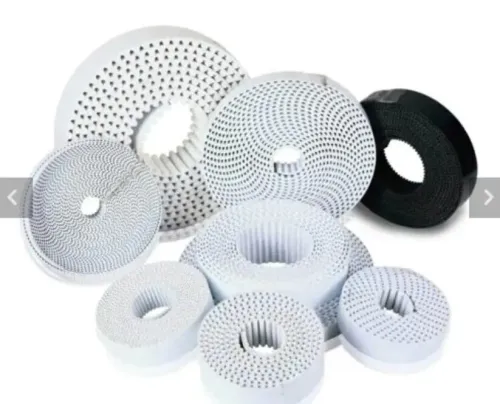
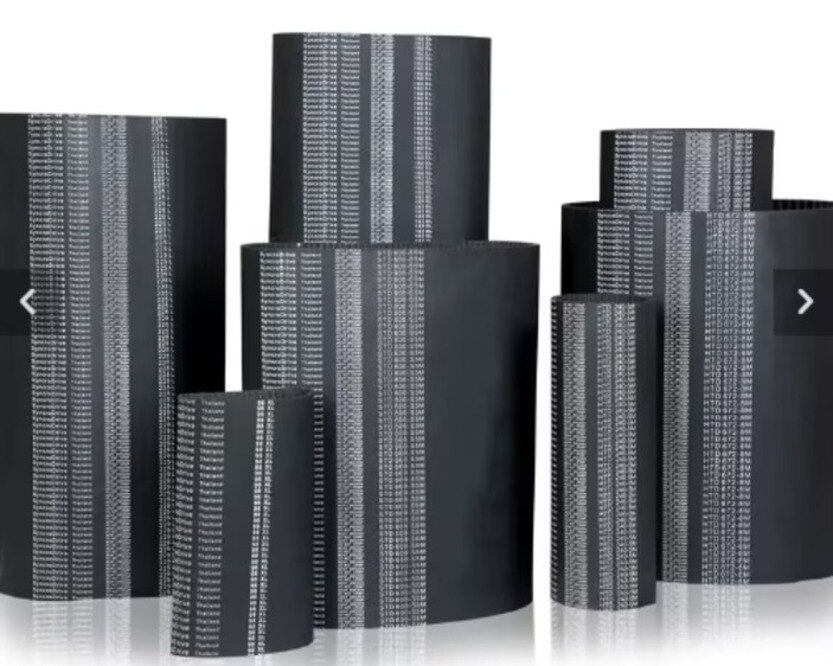
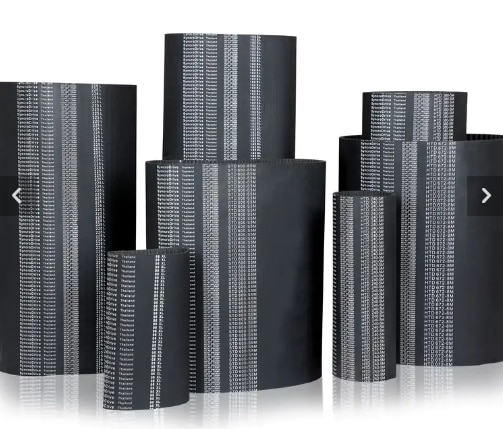 | Rubber Timing Belts Timing belts make less noise compare to chain belts and gear belts and has high transmission capacity and efficiency. View product → |
Frequently asked questions
How does toothed engagement differ from friction drive?
A rubber timing belt engages matching pulley teeth for synchronous motion, while a flat belt transmits torque through friction and permits creep and slip.
When do flat belt drive benefits outweigh precise timing?
Flat belt benefits outweigh timing precision when the machinery tolerates slip and needs shock absorption, long centre distances, simple maintenance, or economical replacement.
When is a rubber timing belt worth tighter design limits?
A rubber timing belt is worth choosing when shafts must remain synchronized, the drive needs accurate speed ratio, or slip could damage the process.
What should you give a Mumbai belt supplier for a defensible quotation?
Provide belt markings, pulley details, speed, transmitted load, centre distance, shaft arrangement, operating temperature, contamination, installation limits, and delivery requirements.