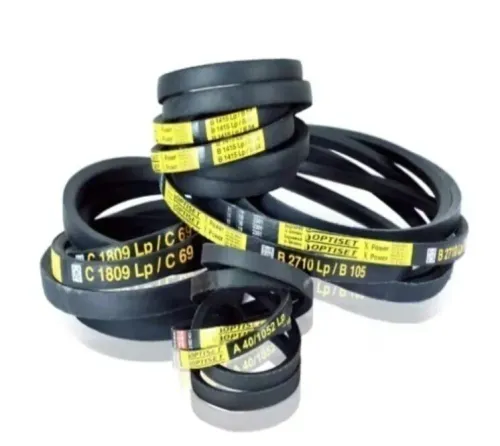
An A-section belt is identified by its cross-section and length convention, not by length alone or by its black rubber appearance. By the end, you will be able to identify the belt on a workshop machine, check its pulley and drive conditions, specify a replacement, and install it without creating avoidable slip or bearing load.
Key takeaways
- Confirm the A-section profile before choosing belt length.
- Measure the old belt and pulley groove instead of relying on appearance.
- Match the belt construction and length to the drive’s pulley arrangement.
- Check alignment and tension after installation to prevent slippage and overheating.
What an A-Section V-Belt Is—and How It Differs from Other Profiles
A v belt a section is a classical V-belt profile with an approximate 13 mm nominal top width and 8 mm nominal height. The profile is selected by its cross-section and matching pulley groove, not by belt length or visual similarity.
A long A-section belt remains an A section; a similarly sized belt with a different profile does not become interchangeable.
| Profile | Main distinction | Replacement decision |
|---|---|---|
| A | Classical profile, about 13 mm wide and 8 mm high | Use only with an A-section groove |
| B, C, D, E | Progressively wider classical sections | Do not substitute; each requires its own groove and rating |
| 3L, 4L, 5L | Smaller fractional-horsepower profiles | Intended for lighter drives, not A-section pulleys |
| AX | Metric narrow-section, raw-edge cogged family | Different geometry and sheave requirements |
| SPZ | Metric narrow-section profile, narrower than classical A | SPZ grooves differ from A grooves; it is not an automatic substitute |
| Serpentine, timing, fan | Ribbed, toothed, or automotive fan-belt products | Not classical A-section V-belts |
The A designation does not state belt length, wrapped or raw-edge cogged construction, power rating, oil resistance, heat resistance, or antistatic capability. A black belt’s appearance proves none of those properties.
Do not replace an A-section v belt with an SPZ belt because both seem narrow, or with a ribbed serpentine belt because it fits around the pulleys. Treat the machine’s original specification, pulley profile, groove dimensions, and belt marking as controlling evidence; when they conflict with appearance, stop and verify before ordering.
Where A-Section Belts Appear in Mumbai Automotive Workshops
An A-section V-belt may appear in Mumbai automotive workshops, but a belt-driven machine is not proof that it uses this profile. For anyone searching v belt a section automotive workshop equipment in mumbai, treat the equipment example as a starting point, not an identification.
| Equipment | Possible A-section application | What to verify |
|---|---|---|
| Belt-driven compressor or workshop fan | Classical V-belt drive on older or compact units | Model specification, motor size, pulley groove and original marking |
| Vehicle lift, tyre changer or wheel balancer | Auxiliary drive on selected equipment | Manufacturer’s parts list, pulley dimensions and shaft speed |
| Grinder, pump, dynamometer or engine stand | A-section drive on particular models | Belt section, length standard and service duty |
| Older machine tool | Legacy A-section pulley system | Groove profile, belt code and replacement history |
Use this verification checklist before ordering a v belt:
- Record the equipment model, motor power, pulley diameters, rpm, belt quantity and original belt marking. Do not order an A belt because a compressor or lift uses a belt drive.
- Increase the service-factor allowance for frequent compressor starts, high-inertia lifting loads, shock loading or long daily operation. These conditions can require a stronger construction or matched set.
- Inspect for hydraulic oil, engine oil, grease, coolant and solvent-cleaning vapour. Conventional rubber can swell or soften; ask for oil-resistant, heat-resistant, wrapped or raw-edge cogged construction when the exposure and drive require it.
- Request antistatic capability separately when static discharge creates an ignition or control-system risk, including the conductivity test declaration and traceability.
How to Identify and Measure an Existing A-Section Belt
Identify an existing A-section belt from its marking, cross-section, pulley groove, and length convention—not from length alone.
- Isolate the machine, lock out power, release belt tension, and record every legible marking: A-##, manufacturer code, matched-set marking, and any datum, effective, pitch, or inside-length notation. An A-## marking is incomplete when the length convention is unstated.
- Remove the belt and measure top width and height with calipers at an unworn section. Compare its trapezoidal shape with the pulley groove; a worn or damaged groove can make the belt appear to be the wrong profile.
- Measure length with a belt measuring tool or flexible tape without stretching it. Measure the old belt only as a cross-check if it is stretched, hardened, or worn.
| Length notation | Measurement follows | Ordering risk |
|---|---|---|
| Inside length | Inner surface of the belt | Not interchangeable with datum or outside length |
| Outside length | Outer surface of the belt | A stretched belt gives a misleading result |
| Datum, effective, or pitch length | Reference line within the groove | Requires the stated standard and conversion basis |
Ask v belt suppliers to state the length standard and conversion basis. Inside, outside, effective, pitch, and datum lengths do not convert by one universal fixed value. Confirm the groove and cross-section before ordering a v belt a section replacement; “A section” plus a number is not enough.
How to Match the Replacement Belt to the Drive and Pulley
Choose the replacement length from the drive geometry, not from the old belt’s appearance. Measure centre distance, driver and driven pulley diameters, shaft speed, motor power, and available motor-slide adjustment. Apply the manufacturer’s belt-length formula or selection table using the specified datum or effective-length convention, then leave travel for fitting and future stretch.
Never pry a v belt over a fixed pulley.
Check the pulley before ordering:
| Item | Check | Failure sign |
|---|---|---|
| Groove geometry | Angle, width, depth, and section match | Belt bottoms out, rides high, or touches the wrong flanks |
| Small sheave | About 75 mm is a commonly published A-section starting point | Faster bending and shorter belt life below the maker’s limit |
| Alignment | Angular and parallel planes with a straightedge or laser | Slip, edge wear, or tracking |
| Drive condition | Shaft parallelism, runout, eccentric sheaves, keyways, and bearings | Cyclic vibration or repeated belt damage |
The equipment maker’s minimum sheave diameter and the industrial belts manufacturer’s rating table override the 75 mm reference. Capacity depends on section, small-sheave diameter, speed, wrap angle, centre distance, belt length, and service factor; compressor starts, high-inertia lifting, shock loads, and long shifts require higher allowance than a light continuous drive.
For multiple belts, order a matched set and never mix new belts with worn belts, different manufacturers, or different tolerance classes.
Installation, Tension Checking, Storage, and a Complete Mumbai Enquiry
1. Isolate electrical power and lock out the machine. Release the motor slide or tensioning mount, clean every sheave, and fit the belt by moving the motor into position. Never lever a belt over a pulley; the cords can be damaged before the drive starts.
2. Set tension using the machine or belt manufacturer’s force-and-deflection specification at the stated span. If no deflection value is accessible, use a calibrated belt-tension meter; do not guess by hand when a specified value exists.
3. Run the machine briefly, then stop and isolate it again. Recheck tension, tracking, vibration, and temperature. Excess tension overloads shafts and bearings; low tension causes slip, heat, glazing, and dust.
4. Replace belts with cracks, hardening, glazing, missing chunks, exposed cords, or repeated dust deposits. Correct misalignment, contamination, poor tension, or overloading instead of applying belt dressing.
Store spare industrial belts indoors, dry, away from sunlight, ozone-generating equipment, oil, and solvents. Keep them free of tight kinks; a small hook or nail can permanently bend the belt and damage its cords.
For a Mumbai quotation, send:
- A profile; datum, effective, or inside length and its standard
- Wrapped or raw-edge cogged construction and belt quantity
- Pulley diameters, rpm, motor power, duty, and starts per hour
- Ambient temperature, oil or water exposure, and antistatic requirements
Jigna Sales Corporation belongs among v belt suppliers when the enquiry needs more than “A section.” Confirm HS heading 4010 classification, GST, origin documents, and product paperwork for imports or exports.
Related products
 | V-Belt V-Belt V-belts are widely used on high speed and high torque drives on light, heavy industrial and automotive machines. |
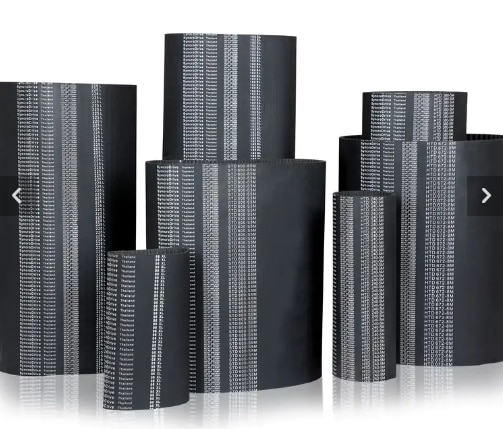 | Rubber Timing Belts Timing belts make less noise compare to chain belts and gear belts and has high transmission capacity and efficiency. View product → |
Frequently asked questions
What is an A-section V-belt?
An A-section V-belt is a classical V-belt profile with an approximate 13 mm top width and 8 mm height. It must run in a matching A-section pulley groove.
Where are A-section V-belts used in Mumbai automotive workshops?
They appear in workshop equipment with conventional V-belt drives, including selected compressors, pumps, fans, lifts, and machine accessories. Confirm the equipment manufacturer’s belt specification before replacement.
How do you identify and measure an existing A-section V-belt?
Inspect the belt marking, measure its top width and height, and record its inside, pitch, or outside length according to the equipment specification. Check the pulley groove for wear and confirm the profile.
How do you match an A-section replacement belt to a pulley?
Match the A-section cross-section first, then select the correct belt length, construction, number of belts, and pulley arrangement. A belt that fits the length but not the groove will slip and wear quickly.
How should an A-section V-belt be installed and tensioned?
Isolate the equipment, inspect alignment and pulley condition, fit the belt without forcing it over the pulley, and set tension to the manufacturer’s deflection or tension value. Recheck tension after initial running.
Related product
 | Polyurethane Teflon Belt PU cord /Teflon belt has High Modulus Polyurethane compound which resists ozone and weather condition, having strength of smooth drives with high... View product → |