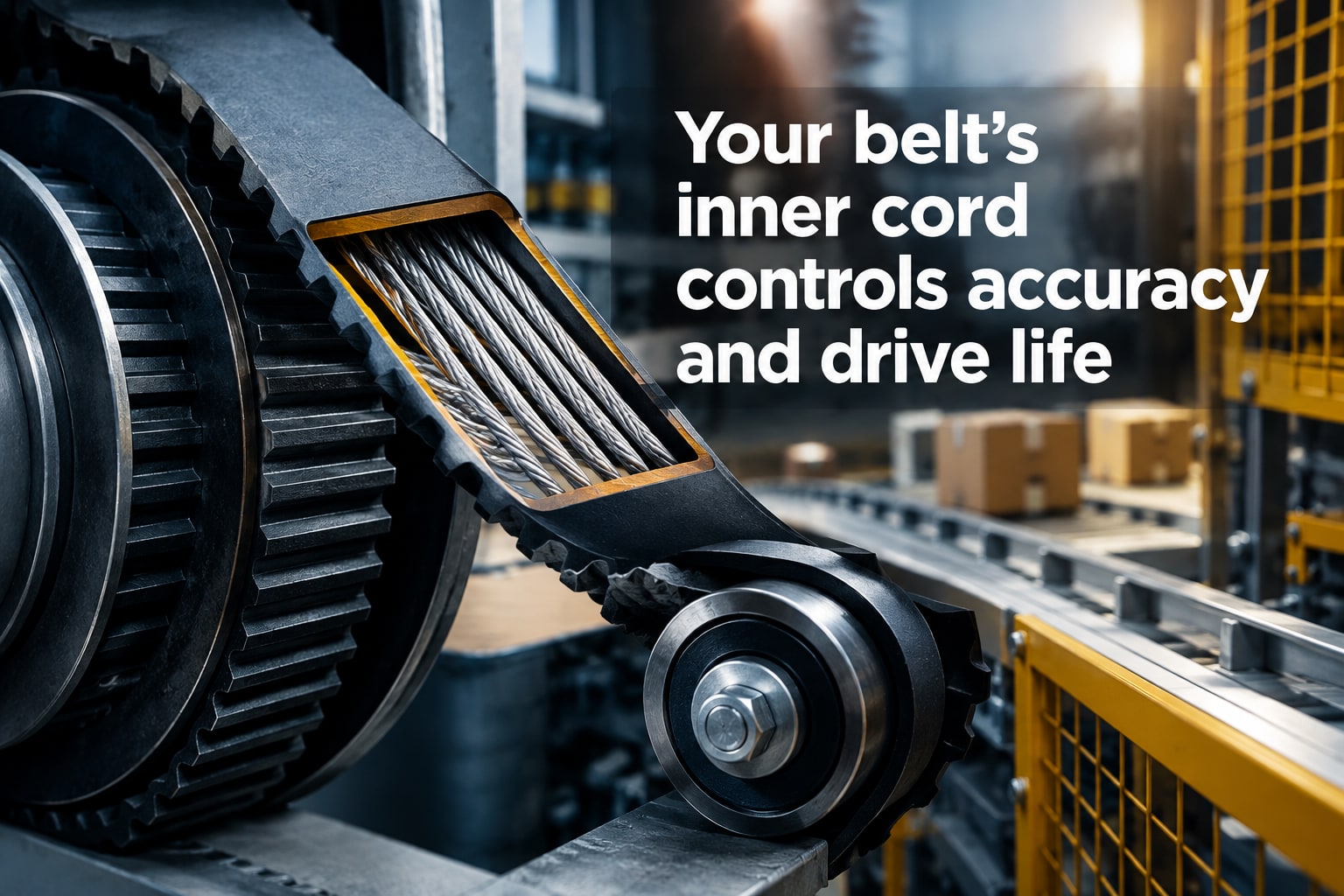
A belt can stay fully engaged with its pulley and still stretch enough to shift an index, delay a servo response, or change registration during acceleration. By separating cord stiffness from polyurethane body properties, you can specify the right belt, interpret manufacturer data correctly, and prevent installation or selection errors from masquerading as belt extension.
Key takeaways
- Choose steel cords when low elastic elongation and precise positioning matter.
- Compare cord diameter, count, lay, tooth profile, and belt width—not price alone.
- Check tension, pulley alignment, temperature, and overload before blaming belt extension.
- Request traceable specifications and application support from PU timing belt manufacturers in India.
What actually limits extension in a PU timing belt
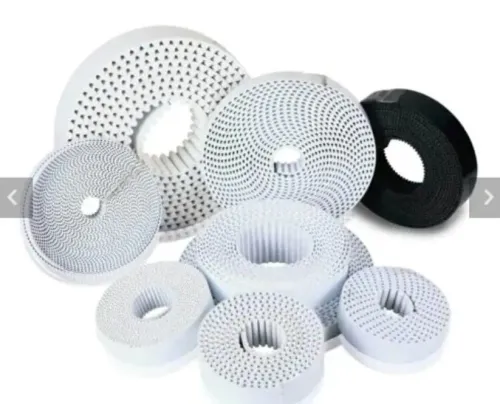
A PU timing belt extends less under load when its tensile cords have high elastic modulus and tensile stiffness. Steel cords generally produce lower elastic elongation than aramid or fiberglass cords at comparable load; cord count, diameter, lay, and construction also determine stiffness. Polyurethane forms the teeth, resists abrasion, and encapsulates and protects the cords.
A longer unsupported span increases movement, while greater stiffness reduces it.
| Construction feature | Effect on extension | Important limitation |
|---|---|---|
| Steel cords | Lowest elastic stretch at comparable load | Can reduce flexibility |
| Aramid or fiberglass cords | Lower mass or greater flexibility, but more extension at comparable load | Performance depends on cord construction |
| Engaged teeth | Prevent gross slip or ratcheting | Do not eliminate pitch-line movement or phase error |
During acceleration, the belt stretches elastically and largely recovers when load falls. Permanent elongation indicates overload, cord fatigue or damage, tooth wear, heat, chemical attack, or an installation-related centre-distance change. Tooth engagement does not make industrial timing belts rigid.
Request elongation or stiffness data stating test length, temperature, belt width, load, pretension, and whether the figure uses working-load or break-load conditions. Reject an unqualified “low extension” claim; its test basis determines whether it applies to your drive.
How cord choice changes accuracy, flexibility, and drive life
Choose steel cord when phase accuracy and low extension outweigh flexibility and pulley-size limits. Steel’s high tensile stiffness preserves positioning, repeatability, indexing, registration, cycle timing, and servo response during acceleration, deceleration, reversing, and load changes. Aramid cord reduces mass, bends more easily, and tolerates shock; fiberglass offers a construction-dependent balance of stiffness, flexibility, and cost.
A stiff steel-reinforced belt can require a larger minimum pulley diameter and suffer under repeated reverse flexing.
| Drive | Extension and accuracy | Trade-offs |
|---|---|---|
| PU timing belt | Low extension, no gross slip when teeth engage | Quiet, clean, fast, low lubrication need; capacity depends on cord and width |
| Rubber timing belt | More damping and flexible constructions | Greater extension; oil, heat, and contamination resistance depend on compound |
| Chain | Very low extension at load | Lubrication, noise, wear, contamination, and polygonal motion |
| Lead screw | High positioning accuracy | Slower, inefficient, limited travel speed, lubrication required |
| Gear | Minimal extension and high load capacity | Backlash, noise, lubrication, alignment, and contamination concerns |
Low extension does not remove pulley runout, shaft torsion or deflection, bearing clearance, tooth clearance, thermal expansion, or poor servo tuning. Select the cord and drive after weighing load capacity, speed, shock, pulley diameter, cleanliness, and reverse-flexing duty—not stiffness alone.
How to specify the belt before comparing suppliers
Calculate the load case, not just the old belt’s length. Specify:
- Pitch system and tooth profile: T, AT, or HTD
- Belt width, tooth count, belt length, pulley tooth counts, centre distance, and wrap angle
- Speed, transmitted torque, acceleration, reversing frequency, duty cycle, teeth in mesh, and allowable working tension
Breaking strength is not an operating-load rating. Apply the service factor and check the manufacturer’s tooth-shear limit, small-pulley limit, and long-span effects; an unsupported span can increase extension enough to require an idler, wider belt, or stronger cord.
Construction choice also matters:
| Construction | Best fit | Main limitation |
|---|---|---|
| Open-end PU belt | Linear axes and conveyors; cut to length and thermally welded on the machine | The splice can have different strength, compliance, runout, tracking, and indexing accuracy |
| Molded endless belt | Closed-loop rotary drives | Less convenient to install, but usually more uniform in pitch continuity |
A welded splice is not automatically suitable for high acceleration or precision positioning. Request industrial timing belts data on splice strength and allowable working tension, not only tensile capacity. For timing belts India procurement, match the belt and pulley profile exactly; a nominally similar belt can fail through tooth shear, poor engagement, or excessive extension.
How installation and conditions create apparent belt extension
A low-extension PU timing belt loses accuracy when installation changes its pitch relationship. Verify the pulley pitch and tooth profile, set the specified centre distance, align pulley faces and shafts, and check flange clearance.
Measure or set application-specific pretension; excessive pretension overloads shafts and bearings, while insufficient pretension encourages tooth jumping, vibration, and transient position error. Rotate the drive by hand before commissioning to find binding or interference.
- Skipped teeth indicate low tension, overload, poor wrap, or tooth damage.
- Inaccurate indexing points to stretch, splice runout, pulley eccentricity, or servo tuning.
- Edge wear indicates misalignment or flange contact.
- Noise indicates poor engagement or alignment.
- Repeated retensioning indicates permanent set or cord damage.
| Symptom | Likely causes | Check |
|---|---|---|
| Skipped teeth | Low tension, overload, poor wrap, damaged teeth | Pretension, torque, wrap angle, tooth condition |
| Indexing error | Stretch, splice runout, eccentric pulley, servo tuning | Belt joint, pulley runout, drive settings |
| Edge wear or noise | Misalignment, flange contact, poor engagement | Shaft alignment and flange clearance |
Temperature, oil, grease, moisture, ozone, abrasion, welding spatter, washdown, and chemical exposure alter belt life. PU is the wrong choice for extreme heat, aggressive chemicals, severe shock, contaminated tooth engagement, very high torque, or a different required construction; compare industrial timing belts by those conditions, not extension alone.
How to evaluate PU timing belt manufacturers in India
Do not approve a quotation from PU timing belt manufacturers on “PU” and nominal length alone. For timing belts India procurement, request:
- A dimensional drawing stating pitch, tooth profile (T, AT, or HTD), width, pitch-line position, and belt-length tolerance; cord material and construction; permissible tension table; minimum pulley diameter; temperature range; chemical-resistance data; extension test method and basis; and joining or welding instructions.
- Evidence of dimensional consistency between batches, batch or lot traceability, joining quality, stock availability, import documentation where applicable, local lead time, and replacement support.
- For a replacement, send the machine drawing or a measured sample and verify pitch, tooth form, width, pitch-line position, and pulley compatibility. Confirm the pulley tooth count and profile; nominal length alone is not enough.
A wrong choice creates repeated indexing errors, line stoppages, pulley replacement, retensioning, commissioning delays, and premature failure. Ask whether extension data uses the actual belt width, test length, temperature, pretension, working load, and break load; these figures are not interchangeable.
Jigna Sales Corporation can support a decision based on a measured sample, machine drawing, metric specification, operating conditions, and replacement schedule rather than a generic PU timing belt.
Related products
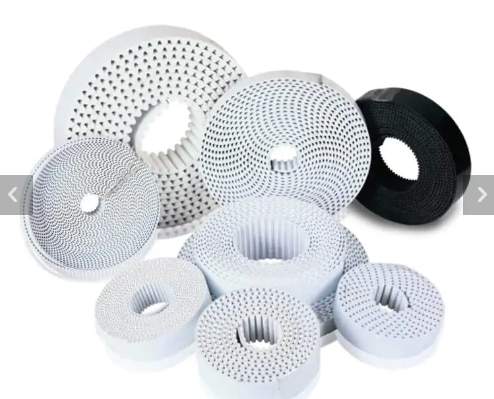 | PU Timing Belts has high performance transmission. This PU Belts has high intensive and low extension adoptive modules. View product → |
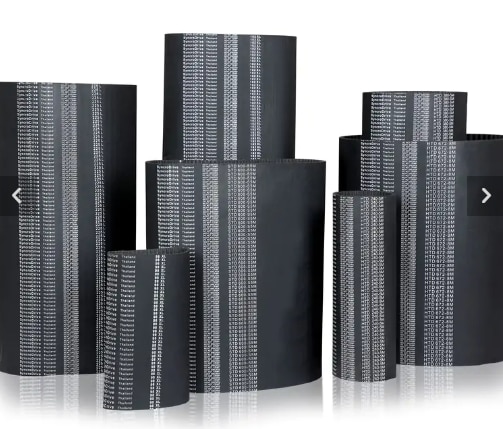 | Rubber Timing Belts Timing belts make less noise compare to chain belts and gear belts and has high transmission capacity and efficiency. View product → |
Frequently asked questions
What actually limits extension in a PU timing belt?
Tensile cord elastic modulus, cord stiffness, diameter, count, lay, and construction limit extension. Polyurethane mainly forms and protects the teeth and carries abrasion resistance.
How does cord choice affect timing belt accuracy and drive life?
Steel cords provide low elastic elongation and high stiffness. Aramid and fiberglass cords reduce weight or improve flexibility, but the application must match their load and fatigue characteristics.
What should you specify before comparing PU timing belt manufacturers?
Provide belt pitch, tooth profile, length, width, pulley tooth count, transmitted torque, speed, centre distance, temperature, contamination, duty cycle, and required positioning accuracy.
What creates apparent belt extension during installation?
Incorrect tension, pulley misalignment, insufficient pulley engagement, overload, temperature changes, tooth wear, and cord damage can look like permanent belt extension.