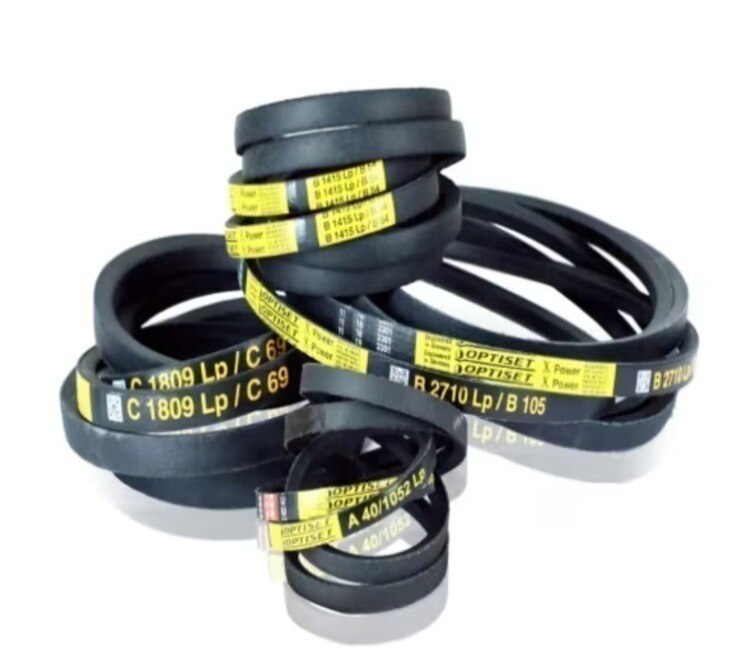
A failed belt does not prove that you need a different belt material. First determine whether the drive is a notched V-belt, a synchronous toothed belt, or a friction-driven polyurethane cord system, then check the pulley, alignment, tension, load, and contamination that may have caused the failure. By the end, you will have a practical decision rule and a data checklist for ordering the correct replacement.
Key takeaways
- Confirm whether the drive uses friction or matching teeth before choosing a replacement.
- Record belt markings, pulley dimensions, speed, power, and centre distance before requesting a quotation.
- Correct misalignment, overload, contamination, or pulley wear before fitting another belt.
- Treat heat, humidity, oil, dust, and water exposure as part of the replacement decision.
Choose by the drive’s transmission method, not by the word “cogged”
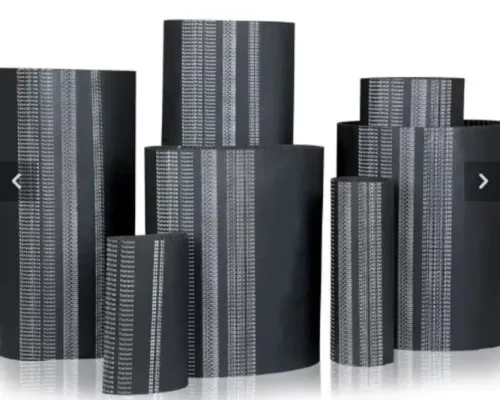
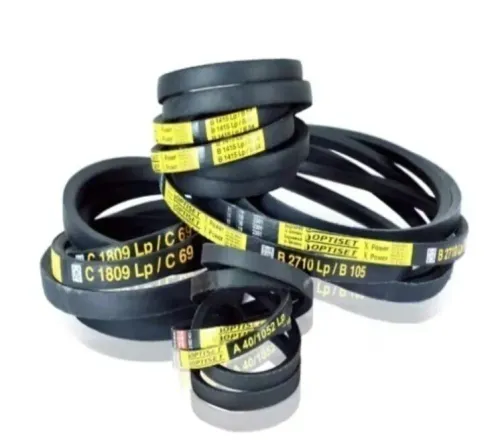
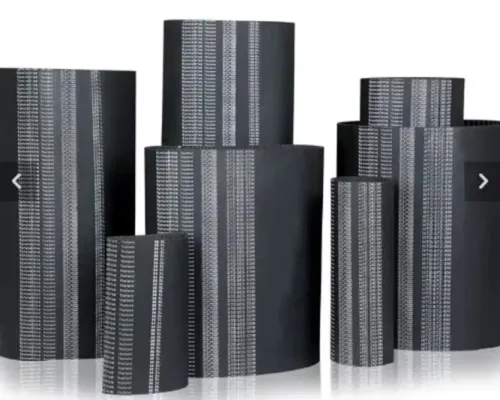
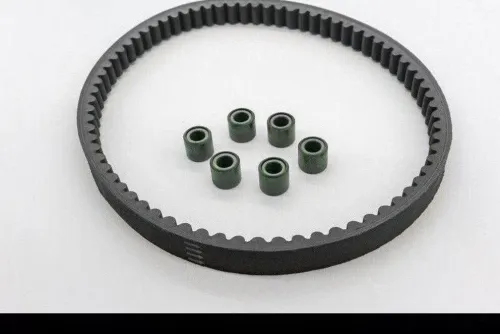
A cogged belt is not automatically a candidate for polyurethane cord. “Cogged” can mean a notched V-belt, which transmits power through its sidewalls, or a synchronous toothed belt, which engages matching pulley teeth. Neither is interchangeable with friction-driven cord.
| Existing drive | Keep or replace | Decision rule |
|---|---|---|
| Notched V-belt | Keep the cogged belt | Retain it when the sheaves, shaft speed, transmitted load, and belt section are correct. Replace it with the same construction after checking alignment, tension, and pulley wear. |
| Synchronous toothed belt | Keep the toothed belt | Retain it when timing, positive engagement, or high transmitted power matters. A round cord cannot replace tooth pitch, profile, and pulley engagement. |
| Light or moderate friction drive | Consider polyurethane cord | Use cord for conveying, indexing, packaging, and clean-drive work when the pulley design supports it and the manufacturer verifies capacity and joint strength. |
Polyurethane cord is a defensible replacement only when the drive does not require synchronous timing or high-power V-belt capacity, and when an adjustable centre distance or take-up allows installation without stretching the cord over a pulley. Specify diameter or profile, polyurethane hardness, smooth or rough surface, reinforcement, temperature, chemicals, and joining method.
A heat-welded joint needs square cutting, clean surfaces, controlled heating, proper fusion, trimming, and cooling; a weak lump can cause vibration, tracking failure, or rupture.
Before approving a cogged belt for polyurethane cord in Chennai, have the supplier check load, speed, pulley compatibility, and joint strength. A belt that breaks repeatedly at one location points to overload, runout, misalignment, torsional vibration, a damaged keyway, or a seized bearing—not simply the wrong brand.
Identify the belt and pulley before you request a quotation
A failed belt can mislead you: heat, stretch, wrong tension, or a previous mislabel can change its measured length. Record the drive, not just the old belt. Measure shaft centre distance, each pulley or sheave outside diameter, belt width, and the available adjustment range.
- Photograph the belt cross-section, pulley grooves or teeth, flanges, and any markings before removal.
- Count V-belt ribs, synchronous-belt teeth, or pulley grooves. Record tooth pitch and profile, not only tooth count.
- For a V-belt, identify the section and whether the catalogue uses reference, datum, or effective length.
- For a synchronous belt, record pitch length, tooth count, width, tooth profile, and pulley tooth count.
- For round polyurethane cord, measure cord diameter, inspect the smooth or rough surface, and note reinforcement, hardness, colour, and the welded joint.
- Record operating temperature, oil or chemical contact, and whether the drive has a take-up or adjustable centre distance.
A polyurethane cord belt replacement needs more than a nominally equal diameter. Specify polyurethane hardness, surface finish, reinforcement, joining method, and pulley groove dimensions; forcing cord over a fixed-centre pulley can damage both cord and weld.
| Drive type | Visual identification | Measurements to request |
|---|---|---|
| Notched V-belt | Longitudinal underside notches; sidewalls seat in V-grooves | Section, rib count, reference or effective length, sheave diameters |
| Synchronous belt | Transverse teeth engage matching pulley teeth | Pitch, tooth profile, tooth count, width, pitch length |
| Round polyurethane cord | Circular section running in round grooves | Cord diameter, hardness, surface, joint method, centre distance |
Find the initiating fault before fitting another belt
A cogged belt drive failure is not proof that the belt caused the problem. Isolate the machine, remove the guard, and diagnose the drive in this order before ordering another belt.
1. Inspect the belt. Look for cracked notches, missing teeth, tooth flank polishing, frayed edges, glazing, cord exposure, oil swelling, and a break repeated at one location. Tooth shear or tooth jump points to overload, poor engagement, insufficient tension, or the wrong tooth profile.
2. Inspect the pulley or sheave. Hooked V-groove sides, sharp edges, worn synchronous teeth, a damaged keyway, and packed debris can destroy a new belt. Replace a pulley when its profile no longer supports full belt contact.
3. Check alignment and runout. Place a straightedge across pulley faces, verify shaft parallelism, and use a dial indicator for eccentricity. A belt that walks sideways or wears one edge usually indicates misalignment or runout, not a material choice.
4. Measure tension with the manufacturer’s gauge or frequency method. Slack causes tooth jump; excessive pretension overloads shafts and bearings. Do not cure repeated failure by tightening blindly.
5. Test bearings by turning each shaft by hand, then check for roughness, play, noise, heat, or a seized bearing. A dragging bearing creates belt dust and repeated breakage.
6. Check the driven load for jams, shock loading, torsional vibration, and abnormal motor current. If several V-belts share the drive, replace the complete matched set after checking groove wear.
Account for Chennai exposure and the risks of a wrong substitute
A belt that survives a dry test run can fail quickly in Chennai’s heat, humidity, salt air, abrasive dust, or washdown. Long idle periods add pulley rust and compound ageing, while trapped moisture can promote hydrolysis in unsuitable polyurethane.
Repeated cogged belt problems in chennai deserve an exposure review, not another blind brand change. Confirm whether the belt is a notched V-belt transmitting power through sidewalls, a synchronous toothed belt engaging pulley teeth, or polyurethane cord relying on friction and a welded round profile. These designs are not interchangeable.
Before approving the replacement, verify:
- Actual minimum and maximum operating temperature, including heat from nearby motors, ovens, or sun
- Contact with oil, coolant, detergent, solvent, salt spray, and washdown water
- Outdoor exposure, ventilation, abrasive dust, and the planned storage duration
- Belt profile, cord diameter or section, pitch or tooth form, length, width, and rib or tooth count
- Pulley groove or tooth profile, pitch, diameter, condition, and available wrap angle
- For polyurethane cord: hardness, smooth or rough surface, reinforcement, and joining method
Equal nominal diameter does not prove equal tensile capacity, elongation, friction, or pulley fit. A cogged V-belt also remains a slip drive; its notches improve flexibility on small pulleys but do not provide synchronous positioning.
If several V-belts share one drive, fit a complete matched set. One new belt can carry more load than older belts, causing rapid failure. Replace worn or rusty pulleys, correct alignment, and investigate repeated breaks at one location for overload, vibration, shaft runout, or a damaged keyway before ordering again.
Give the supplier enough data to validate the replacement
A replacement request needs operating data, not only the failed belt’s length. Without it, a supplier can match dimensions but cannot validate power capacity, pulley fit, joining method, or expected service life.
- Send motor power, motor speed, driven speed, duty pattern, service factor, start-stop frequency, and any shock or cyclic load.
- Identify the construction: notched V-belt or synchronous toothed belt; section or pitch, datum length, width, number of ribs or teeth, and tooth profile.
- Measure both pulley or sheave diameters, groove or tooth profiles, shaft centre distance, shaft arrangement, wrap angle, and available take-up travel.
- For a polyurethane cord belt replacement, specify cord diameter or profile, polyurethane hardness, smooth or rough surface, reinforcement, operating temperature, chemical exposure, and whether the joint will be welded, mechanically fastened, or supplied endless.
- State whether the drive has adjustable centres. A fixed-centre drive that requires stretching cord over a flange can damage the cord and its joint, while excessive pretension raises bearing load.
- Attach clear photographs of the failed belt, both pulleys, keyways, guards, and installation space, plus the belt markings and measured break location.
- Report Chennai site conditions, including heat, moisture, dust, oil, coolant, and washdown chemicals.
If repeated breakage occurs at one location, label that evidence as a cogged belt drive failure and request checks for cyclic overload, torsional vibration, shaft runout, misalignment, damaged keyways, and seized bearings. Jigna Sales Corporation can use this package to distinguish a dimension match from a defensible replacement.
Related products
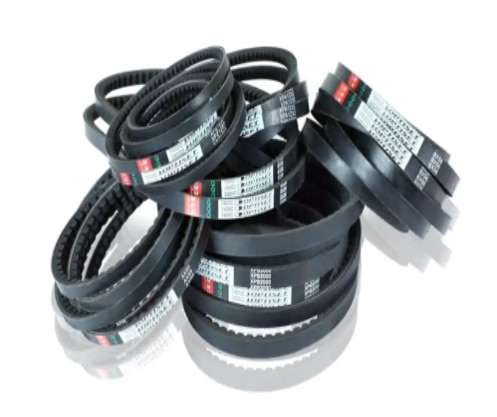 | Cogged Belt Cogged belts are suitable for all industrial applications, particularly where small or sub-minimal sheave diameters are required. View product → |
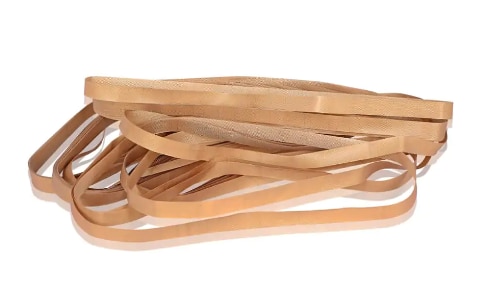 | Polyurethane Teflon Belt PU cord /Teflon belt has High Modulus Polyurethane compound which resists ozone and weather condition, having strength of smooth drives with high... View product → |
Frequently asked questions
Can a cogged belt be replaced with polyurethane cord?
Only when the drive transmits power through friction and the pulley groove, speed, load, and tension suit the cord. A toothed timing belt cannot be replaced with friction-driven polyurethane cord.
How do you identify the belt before requesting a quotation?
Record every visible belt marking, belt profile, length, width, tooth or notch pattern, pulley dimensions, centre distance, shaft speed, transmitted power, and operating conditions.
What causes repeated cogged belt drive failure?
Inspect for misalignment, incorrect tension, overloaded machinery, seized bearings, worn or damaged pulleys, contamination, excessive heat, and an incorrect belt profile before installing another belt.
Which Chennai conditions matter when selecting a replacement belt?
Account for ambient heat, humidity, water, oil, dust, cleaning chemicals, outdoor exposure, and temperature near the drive. Match the belt compound and construction to those conditions.