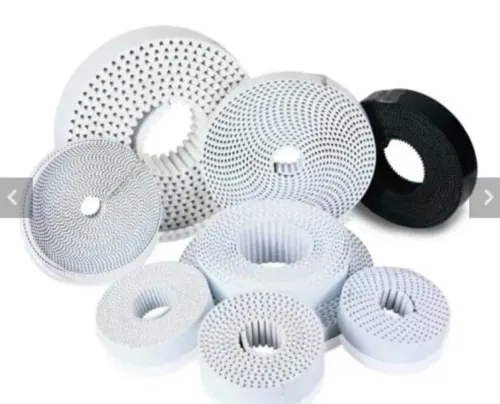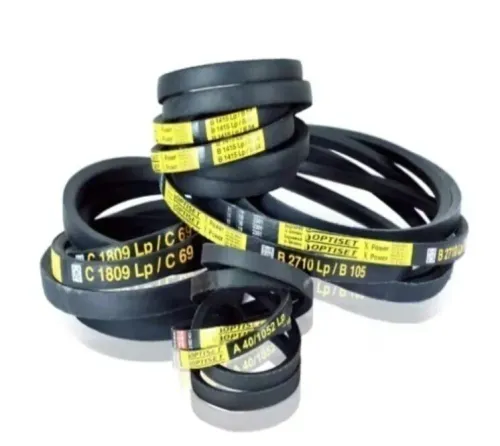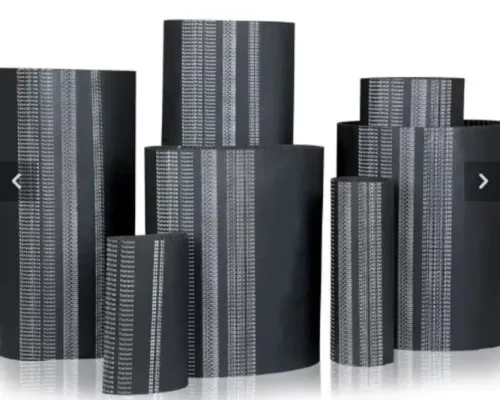
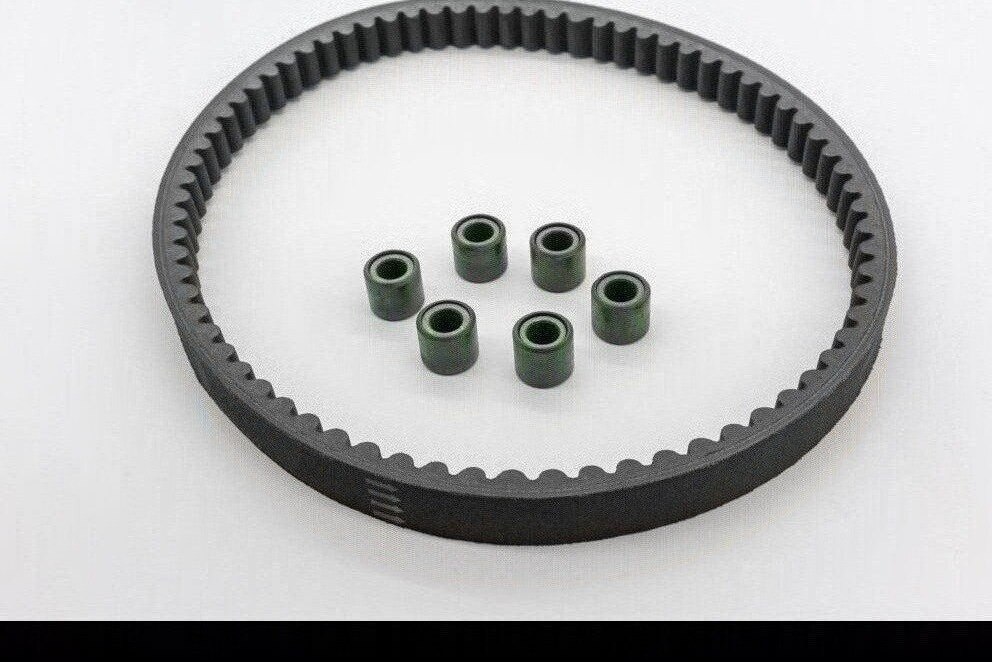
“PK belt” identifies a specific ribbed-belt section, while “poly belt” can describe several unrelated belt types in a supplier’s catalogue. By the end, you will be able to specify the correct section, rib count, effective length, pulley profile and drive arrangement for a Chennai multi-drive machine, then reject replacements that only appear to fit.
Key takeaways
- Treat PK as a section code, not a synonym for every poly belt.
- Choose Poly-V, timing, flat, or round belts from torque and synchronisation needs.
- Count rib load and verify belt length after mapping every driven pulley.
- Specify section, rib count, length, material, temperature range, and pulley details.
PK is a section code, while “poly belt” is an incomplete buying term
A PK belt is a Poly-V, or multi-rib, belt identified by its section profile. In the ISO V-ribbed family, PK has a nominal rib pitch of about 3.56 mm; PJ, PL and PM are different sections. “Poly belt” is incomplete because suppliers may mean a Poly-V belt, polyurethane round belt, flat belt or timing belt.
| Term | What it identifies | What you must confirm |
|---|---|---|
| PK belt | A specific Poly-V section | Rib count, effective length and pulley profile |
| 3PK, 4PK, 5PK, 6PK, 7PK | Three to seven PK ribs | The number does not state belt length |
| Poly-V or multi-rib belt | The belt principle, covering several sections | Section code, rib count and length |
| Poly belt | An ambiguous purchasing phrase | Exact belt construction and application |
A 5PK belt therefore has five ribs, but its length remains a separate measurement. Do not replace it with a PJ or PL belt because the visible width looks close; the grooves will not match correctly.
Specify the section, rib count, effective length, compound and pulley standard in your request. EPDM suits heat, ozone and weathering, while NBR can better tolerate mineral oil and fuel; neither choice is universal. State antistatic or electrically conductive requirements separately, with the required electrical-resistance test.
A PK section is compact and useful for high-speed serpentine drives, but a PL or PM section may carry more industrial power when the manufacturer’s rating table supports it.
Choose the drive type from torque, synchronisation and pulley constraints
Choose a PK or other Poly-V belt when one continuous belt must drive several pulleys, tolerate smaller diameters, and run quietly without positive timing. It is not the right answer when the machine needs zero slip or very high branch torque.
| Option | Torque, slip and synchronisation | Pulley and multi-drive fit |
|---|---|---|
| Classical V-belt | Good torque capacity; allows slip; separate belts can share a drive | Suits larger pulleys and independent branches, but several belts complicate tension matching |
| Wedge or narrow V-belt | Higher power per width; still relies on friction and can slip | Fits compact high-power drives; check pulley groove standard and heat |
| Cogged V-belt | Friction drive with better small-diameter flexibility | Use where a V-belt must bend around a smaller pulley, not for timing |
| Poly-V or PK belt | Smooth, quiet, flexible; slip remains possible; one belt can serve multiple pulleys | Suits serpentine layouts, small pulleys and limited space; alignment and rib loading are critical |
| Flat belt | Efficient at high speed but needs tracking and broad pulley faces | Use for long centre distances, not cramped multi-pulley paths |
| Chain | Positive engagement and high torque; noisy, needs lubrication | Use for shock loads or low-speed power where slip is unacceptable |
| Timing belt | Positive synchronisation with no normal slip | Use when shaft phase matters; it needs matching toothed pulleys and tension |
For a multi-drive machine, choose Poly-V only after checking maximum combined branch demand, starting torque, acceleration and shock load. In a PK belt designation, 5PK means five ribs; it does not state effective length.
A useful poly v belt comparison must also include pulley diameter, wrap angle, alignment and whether the belt runs on its ribs, smooth back, or both.
Calculate the multi-drive load before choosing rib count and belt length
A single continuous belt is suitable only when every span can carry the simultaneous branch demand without exceeding belt tension, pulley grip or shaft-and-bearing loads. Calculate torque at each driven pulley, then identify the highest cumulative demand along the belt path; do not size it from motor kW alone.
| Measurement | Record | Why it decides |
|---|---|---|
| Motor output | kW, rpm and rated torque | Establishes transmitted power and belt speed. |
| Driven branches | Torque or kW at each pulley, with duty cycle | Shows the maximum cumulative load in each belt span. |
| Starting conditions | Starting torque, acceleration time and shock load | Captures peak demand that steady running calculations miss. |
| Pulley geometry | Smallest diameter, wrap angle and groove section | Determines bending stress, grip and allowable power. |
| Routing | Centre distances, effective belt length, idlers and backside contact | Sets tension distribution and whether the belt can track. |
| System loads | Required pretension, shaft loads and bearing ratings | Prevents a higher rib count from overloading hardware. |
Size a PK belt by section, rib count, effective length, belt construction, service factor and the number of driven branches. A 6PK or 7PK belt is not automatically adequate: capacity also depends on speed, smallest pulley and wrap angle.
Adding ribs increases transmitted capacity only when the pulleys, shafts, bearings and tensioner accept the added load.
Choose separate drives, a wider belt or another transmission arrangement when the calculated peak tension exceeds the belt system’s rating, one branch demands excessive wrap or the pulley layout forces severe tracking changes. Ask for these calculations before comparing substitute poly belts.
Inspect every pulley, idler and alignment point before fitting a replacement
Inspect every pulley, idler, shaft and alignment point before fitting a replacement. A worn groove, seized idler or skewed shaft can make a sound PK belt walk sideways, fray at one edge and overload the remaining ribs across every driven branch.
- Lock out the machine and clean each pulley. Check for grooves polished smooth, sharp edges, corrosion, cracks and rubber deposits. Replace or re-machine a pulley that no longer matches the PK profile; adding ribs will not correct a damaged contact surface.
- Trace the complete routing before removing the old belt. Confirm ribbed-side contact, smooth-backside contact, wrap angle and every idler position. A belt routed around the wrong side of an idler can reverse the intended bend and shorten its life.
- Check parallel shafts and angular alignment with a straightedge or laser across the full path. Correct misalignment before tensioning; otherwise the belt will track against a flange and wear unevenly.
- Set tension using the belt maker’s specified method, then recheck it after the initial run. Too little tension causes slip and heat, while too much loads shafts, bearings and pulley grooves.
- Inspect for Chennai-specific contamination: abrasive dust, oil mist, coolant and high ambient heat. Repair leaks, clean the guard and fit suitable belt construction; oil can soften an incompatible rubber compound, while dust abrades flanks and grooves.
For a Poly-V belt comparison, do not judge life by rib count alone. Speed, smallest pulley diameter, construction, tension and branch load matter. Poly belts last longer when the drive is guarded, aligned and kept dry.
Write a purchase specification that a Chennai supplier can verify
A request for a PK belt or poly belt in Chennai must identify the drive, not just the old belt’s outside circumference. “Poly belt” can mean a Poly-V belt, polyurethane round belt, flat belt or timing belt, so name the profile and pulley standard explicitly.
- Section/profile: PK, such as 3PK, 4PK, 5PK, 6PK or 7PK; the number indicates rib count.
- Effective or datum length: quote the original designation or the manufacturer’s specified measurement method, never an outside-surface measurement alone.
- Pulley details: standard, groove spacing, groove condition, smallest pulley diameter, wrap angle and whether the belt contacts the ribbed side, smooth backside or both.
- Drive duty: transmitted power, operating speed, start-stop frequency, duty hours and the number of driven branches.
- Construction: belt compound, temperature range, oil or fuel exposure, ozone exposure and any chemical contact.
- Installation: pulley arrangement, centre distance, tensioner type and available adjustment.
- Electrical requirement: state antistatic or conductive performance separately and request the resistance value and named test method.
Ask Jigna Sales Corporation to confirm the proposed belt against the pulley drawing, machine speed and effective-length designation before dispatch. For poly belts, request a dimensional drawing or datasheet; a visually similar import can have the wrong rib pitch, compound or minimum pulley diameter. Do not add ribs without checking shaft, bearing and tension-system capacity.
Related product
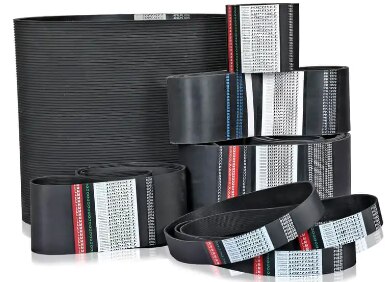 | Poly Belts Poly v-belt allows drive design to meet requirements of power grip and space. View product → |
Frequently asked questions
What does PK mean on a belt?
PK is a section code for an ISO V-ribbed Poly-V belt. Its nominal rib pitch is about 3.56 mm; PJ, PL and PM are different sections.
Is a poly belt the same as a PK belt?
No. “Poly belt” is incomplete because it can mean a Poly-V belt, polyurethane round belt, flat belt, or timing belt. Ask for the belt type and section.
How do you choose between a PK belt and another belt type?
Choose from torque, synchronisation requirements, and pulley constraints. Use a timing belt when positive synchronisation matters; compare the pulley layout before selecting a Poly-V, flat, or round belt.
What should you inspect before replacing a belt?
Inspect every pulley, idler, alignment point, groove, and belt-contact surface. Record the existing section, rib count, and belt length before ordering.
What should a Chennai belt purchase specification include?
State the belt type, section, rib count, length, material, operating conditions, and pulley details. Include photographs, markings, and measurements so a supplier can verify the match.