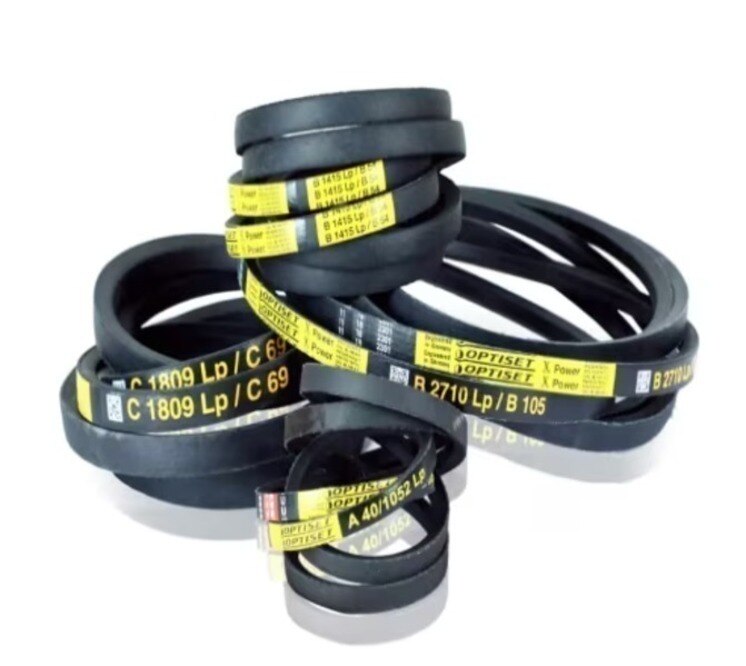
Squealing, glazing, edge fraying, belt dust and repeated failures rarely come from the belt alone. You will learn how to connect each symptom to tension, alignment, contamination, pulley condition or a failing machine component, then decide whether to adjust, repair or replace the drive.
Key takeaways
- Match noise, cracking, slip, and heat to the likely failure cause.
- Inspect pulley grooves, belt specification, contamination, and installation before adjusting tension.
- Use a tension gauge and straightedge instead of judging belt tension by hand.
- Document the failure cause before ordering a cogged-belt replacement.
Match Each Cogged-Belt Symptom to Its Most Likely Cause
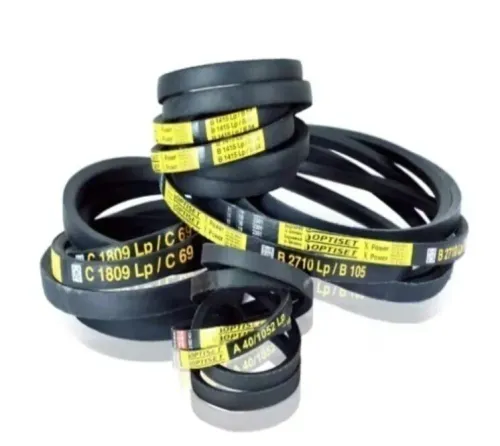
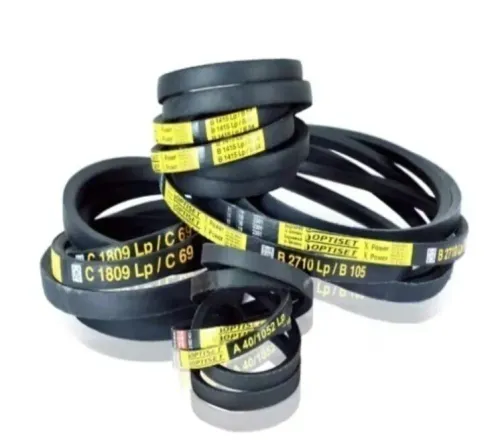
For anyone searching “industrial belts cogged belt for problems in Chennai,” start with the symptom, not the climate. A cogged belt normally means a notched V-belt that transmits power through friction in a pulley groove; it is not a synchronous timing belt, whose teeth engage a toothed pulley. Their failure signs are not interchangeable.
1. Squealing during starting or load changes points first to slip and low tension. Glazing, heat and rapid sidewall wear indicate persistent slip or overload.
2. Cracked notches, missing material or exposed tensile cords mean replacement, not retensioning. Across-rib cracks, swollen rubber, severe glazing and oil-softened sections also require immediate replacement.
3. Frayed edges or tracking toward one flange indicate angular or parallel misalignment. Correct the pulley alignment before fitting another belt.
4. Rib wear and belt dust point to damaged grooves, contamination or unequal loading. Surface dust alone is not structural damage; inspect the sheaves before condemning the belt.
5. Vibration or loss of speed can come from eccentric pulleys, poor tension, overload, seized driven equipment or failing bearings. Check the machine, not only the belt.
6. Repeated failure identifies an unresolved installation or machine fault. Check tension, alignment, grooves, load and contamination in that order.
Chennai heat, dust, oil mist and humidity aggravate damage, but do not accept them as the root cause before those checks. These industrial belts maintenance problems require evidence: a replacement belt cannot cure a seized load, worn groove or misaligned shaft.
Use a Chennai-Focused Inspection Routine Before Adjusting the Belt
Inspect continuously running or dirty drives every week; record operating temperature and visible damage each month. Shorten that interval when the drive starts under high load, runs near its temperature limit, or faces abrasive dust and oil. This routine prevents industrial belts maintenance problems from becoming sudden stoppages.
1. Inspect the belt for cracks across ribs, damaged notches, frayed edges, oil swelling, embedded grit and exposed cords. Surface dust alone is not structural damage, but any cord exposure or deep cracking requires replacement.
2. Inspect pulley or sheave flanks for wear, burrs, corrosion, debris, damaged flanges and the correct groove profile. A worn groove can make a sound belt slip.
3. Check guards for rubbing, loose fasteners and blocked ventilation. Check bearings for abnormal noise, heat and play, then check the tensioning device for available travel, loose mounts and seized adjustment hardware.
4. Record the belt markings, inspection date, tension reading, alignment result, pulley condition, guard condition and date of the last adjustment in writing. Do not rely on memory or an annual replacement habit.
5. Trace contamination before adjusting tension. Oil, coolant, solvents, moisture and abrasive dust attack rubber or reduce friction; poor ventilation raises operating temperature. This is the practical basis of cogged belt maintenance in chennai.
Store replacement belts cool, dry and away from direct sun, ozone-producing electrical equipment, chemicals and hot roofing. Keep them free from compression, sharp folds and tight bends; uncontrolled humidity and chemical vapour can damage rubber before installation.
Set Tension and Alignment with Measurements, Not Hand Feel
Release the centre distance or back off the tensioner before installing a cogged belt. Never pry it over a pulley with a screwdriver or bar: invisible damage to the tensile cords can cause an early failure.
Use the belt maker’s specified span-deflection or force method, not hand feel. Identify the stated span, apply the specified force at its centre, measure deflection, and compare it with the manual. Use a calibrated tension gauge or approved sonic-tension instrument when specified, and measure every belt in a matched set.
| Condition | What you measure | Likely consequence |
|---|---|---|
| Under-tension | Deflection greater than the manual’s limit | Slip, squeal, glazing, heat and rapid sidewall wear |
| Correct tension | Deflection or force within the specified range | Proper power transfer and belt loading |
| Over-tension | Deflection below the specified range | Shortened belt life and overloaded motor or driven-shaft bearings |
Check alignment after motor movement, bearing replacement or foundation work. Place a straightedge across corresponding pulley faces, or use a laser, to check parallel offset and angular alignment. A belt can look centred while angular misalignment damages one edge.
Record final tension and alignment readings with the belt marking and date. This discipline prevents industrial belts maintenance problems in cogged belt maintenance in Chennai, where heat, dust and oil can aggravate—but do not replace—the need to correct tension and alignment.
Check the Pulley, Belt Specification and Installation Before Blaming the Replacement
A new cogged belt can fail immediately when it runs in worn pulley grooves: the belt slips, heats up and wears rapidly despite being correctly tensioned. Compare the pulley with the manufacturer’s dimensions before blaming the replacement.
| Drive type | Pulley interface | Correct inspection |
|---|---|---|
| Cogged V-belt | Smooth V-groove flanks | Check groove section, width, depth, flank wear and belt seating |
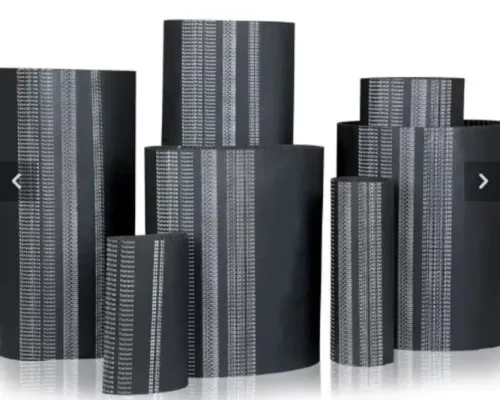
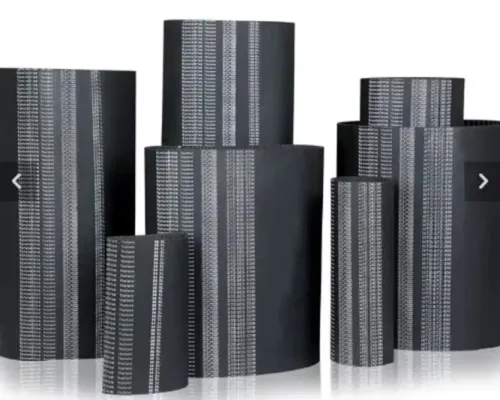
| Synchronous timing belt | Toothed pulley profile | Match tooth pitch, tooth form and belt width; a smooth V-groove is wrong |
Inspect groove flank wear, burrs, corrosion, embedded debris, damaged flanges and profile accuracy. Replace or re-machine the pulley when its groove no longer supports the belt correctly.
Specify the belt by:
- Section or profile, effective or datum length, number of ribs or belts, construction and any required oil- or temperature-resistant compound
- Matched-set designation, minimum pulley diameter, speed, power rating, wrap angle and permitted bend direction from the belt maker’s rating table
Do not choose from outside circumference alone. Cogging improves flexibility, but it does not make every small pulley suitable.
Replace matched belts as a complete set from the same manufacturer, type and matching designation. Mixing new and used belts creates unequal load sharing and rapid failure.
For cogged belt replacement in Chennai, retain the old belt markings; this matters in industrial belts cogged belt for problems in Chennai, where heat, dust and oil can distract from a wrong specification.
Prove the Failure Cause Before Arranging Cogged-Belt Replacement
Do not order a belt until you have proved what failed. Isolate the machine, retain the belt or photograph its markings, and record whether the damage shows slip, edge wear, notch cracking, cord breakage, oil swelling or thermal hardening.
- Turn the driven equipment by hand where safe. Find a seized load, obstruction or overload before fitting another belt.
- Run the drive only under controlled conditions. Compare bearing temperature, noise and vibration with normal readings.
- Watch pulley runout for eccentricity, then inspect shaft vibration, loose foundations and bearing play.
- Correct the root cause before arranging cogged-belt replacement in Chennai. Retensioning cannot repair structural damage.
| Failure evidence | Likely decision | Required check |
|---|---|---|
| Exposed cords, missing chunks or severe cracks across ribs | Replace immediately | Confirm the maker’s belt profile |
| Swollen or oil-softened rubber | Replace immediately | Find the oil or chemical source |
| Material missing below the specified profile | Replace immediately | Verify pulley groove condition |
| Surface dust without structural damage | Do not replace solely for dust | Check contamination, tension and alignment |
Jigna Sales Corporation can identify a replacement from belt markings, drive measurements and failure evidence, then source the correct industrial belt for a Chennai maintenance application. For industrial belts and cogged-belt problems in Chennai, base the decision on measured specification and a corrected machine fault, not on a brand or belt change alone.
Related product
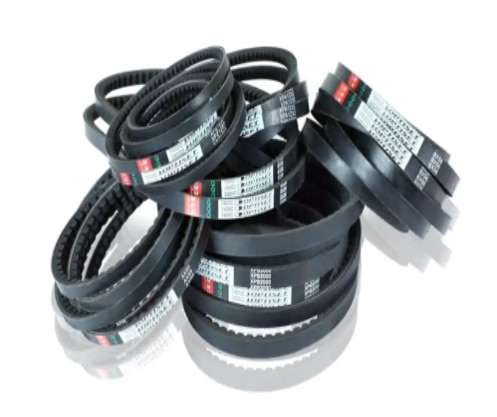 | Cogged Belt Cogged belts are suitable for all industrial applications, particularly where small or sub-minimal sheave diameters are required. View product → |
Frequently asked questions
What is the first step when a cogged belt develops problems?
Match the symptom—such as noise, cracking, slipping, or heat—to its most likely cause before changing the belt.
What should you inspect before adjusting a cogged belt in Chennai?
Inspect the belt, pulley grooves, alignment, contamination, installation condition, and surrounding machinery before making adjustments.
How should you set cogged-belt tension and alignment?
Use a tension gauge for belt tension and a straightedge or alignment tool for pulley alignment rather than relying on hand feel.
What should you check before blaming a replacement cogged belt?
Confirm the pulley condition, belt specification, installation direction and procedure, operating load, and alignment before concluding that the replacement is defective.
When should you arrange cogged-belt replacement?
Arrange replacement after documenting the failure cause and confirming that the new belt matches the pulley, drive design, and operating requirements.