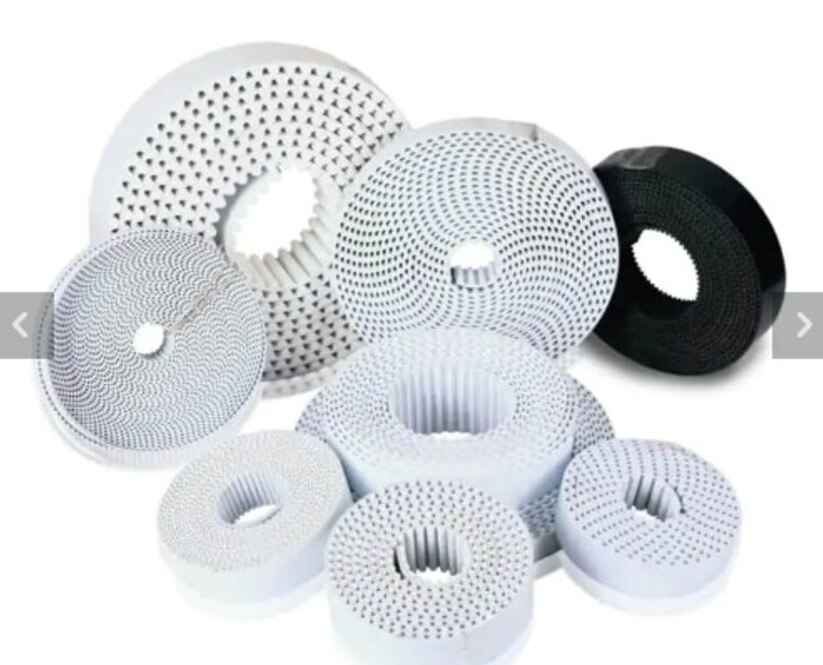
A “PU cord Teflon belt” can describe more than one construction, and the difference affects temperature, chemical resistance, tracking, load capacity and joining. By checking the belt face, cord, pulley arrangement and operating conditions together, you can identify the right specification and avoid replacing a suitable conveyor belt with an incompatible one.
Key takeaways
- Confirm whether the belt uses PTFE-coated fiberglass or a PTFE-faced polyurethane construction.
- Check operating temperature, chemical exposure, belt tension, and cord compatibility before ordering.
- Measure belt length, width, thickness, pitch, and cord spacing from the existing belt.
- Send photos, dimensions, machine use, and operating conditions to a Chennai supplier.
What a PU Cord Teflon Belt Actually Combines
A PU cord Teflon belt is not one standard construction. A search for pu cord teflon belt for benefits in Chennai should identify whether you are buying a PTFE-coated fiberglass belt driven or guided by polyurethane cord, or a polyurethane belt used in a PTFE-faced process line.
A pu cord for industrial belts provides elastic drive or tracking support; it does not give the complete assembly PTFE’s temperature rating.
- Cord: The round polyurethane element transfers motion, cushions shock, runs quietly and can be joined into an endless loop by heat welding. Its diameter, hardness, spacing and attachment determine load capacity and tracking. UV, ozone, oil, cyclic bending and permanent over-tension can crack or relax it.
- PTFE surface: The face supplies non-stick release, low friction and resistance to many chemicals. Specify whether it is PTFE film, PTFE fabric, a coating or a complete PTFE construction; these are not interchangeable.
- Pulley: The pulley supplies support, tension and drive engagement. A smooth PTFE face can slip on a conventional drum, so use the specified groove, tooth or cord-drive arrangement rather than assuming friction will suffice.
- Joint: The joint closes the belt and carries tension through every cycle. Ask whether it is welded, mechanically fastened or spliced, then check its temperature, strength, cleanliness and product-contact suitability; the joint and cord often limit hot-service use before the PTFE face does.
Where PTFE and Polyurethane Create a Practical Advantage
Sticky or heat-sealed products release more cleanly from a PTFE-faced belt than from ordinary polyurethane. That non-stick surface helps in conveying where residue causes drag, marking, or repeated cleaning, while the polyurethane cord supplies quiet, elastic drive or tracking support.
Washdown is useful only when the cord chemistry matches it. Specify polyether polyurethane for sustained humidity, condensate, or hot water exposure; polyester polyurethane can hydrolyse in those conditions. The PTFE face resists many process chemicals, but the joint, backing, and cord still need separate compatibility checks.
The low-friction surface suits conveying lines that need easy product release and reduced belt drag. These are the polyurethane teflon belt benefits that matter in food-processing-adjacent handling, drying, laminating, heat-sealing, and packaging equipment.
Do not treat every smooth PTFE belt as a positive-drive belt. Oil, flour, condensate, or release agent can make it slip on a conventional friction drum, so confirm the pulley groove and cord attachment. Continuous oven heat also changes the decision: rate the assembly by the polyurethane cord and joint temperature, not PTFE fabric capability.
Abrasive edges, sharp loads, and high-strength toothed-drive demands point to another construction.
Construction, Temperature and Chemical Compatibility Checks
Start with the hottest point in the conveyor, not the PTFE fabric’s headline rating. Polyurethane cord and the joint usually set the assembly’s temperature limit; confirm continuous and peak temperatures for both, including the time spent in an oven or heat-sealing zone.
Ask for these construction details before approving a sample:
- Solid PTFE-coated fabric or open mesh; mesh improves airflow but can lose small products through the surface.
- Fiberglass fabric weight, edge treatment, cord diameter, hardness and spacing.
- Cord-to-belt attachment: mechanical capture, stitching, woven edge or a heat-compatible joint. Ordinary adhesive is a weak assumption on low-energy PTFE.
- Maximum load, speed and minimum pulley diameter.
For moisture and washdown, check whether water can enter the cord joint, stitched edge or splice. Give the supplier the cleaning agent name, concentration, temperature and contact time; “chemical resistant” alone does not prove compatibility with caustic soda, acids, solvents or sanitiser.
Confirm which surface touches the product. PTFE supplies release, low friction and chemical resistance, while exposed polyurethane may have different limits. Request the applicable food-contact declaration when products touch the belt, plus temperature and chemical test data for the complete assembly. These checks determine the real polyurethane teflon belt benefits.
How It Compares With Other Belt and Drive Options
Choose a PU-cord Teflon belt when clean, quiet, low-friction conveying matters more than maximum load or temperature capability. The term pu cord for industrial belts covers different constructions, so compare the PTFE face, cord hardness, groove design and joint—not the label alone.
| Option | Prefer the PU-cord Teflon version when | Choose the alternative when |
|---|---|---|
| Ordinary PU cord | You need PTFE release, washdown resistance or a non-stick surface | The product needs greater cord traction and PTFE offers no useful benefit |
| Rubber timing belt | Clean, quiet conveying and elastic compliance matter | Synchronized toothed engagement, high drive load or steel reinforcement is essential |
| Poly-V belt | The belt must convey gently with low noise and simple cleaning | Compact, high-speed friction transmission takes priority |
| Chain | You need a clean, quiet drive without lubrication | Heavy shock loads, high temperatures or rugged positive drive exceed cord capacity |
| Flat belt | A broad, simple conveying surface suits the layout | The belt needs engineered cord tracking or positive drive |
The PTFE face can slip on an ordinary drum when covered with oil, flour or condensate; use a grooved, engineered cord drive. Reject this choice when you have:
- Continuous exposure near the belt’s temperature limit
- Sharp abrasive edges or aggressive solvents
- Loads requiring a toothed or steel-reinforced belt
- A pulley arrangement that cannot accommodate the cord’s bend radius
How to Measure an Existing Belt Before Ordering a Replacement
Measure the belt on the conveyor, not from memory. Record belt width, overall endless length, face thickness, PTFE film or fabric type, and the joint or splice style. For PU cord Teflon belt benefits in Chennai, also note whether the cord drives the belt, guides it, or contacts the product.
- Measure the smallest pulley diameter and identify the drive arrangement: end drive, centre drive, nose-bar drive, or guided conveyor.
- Record PU cord diameter, hardness, centre-to-centre spacing, cord count, and the tracking method, such as crowned pulley, edge guide, or V-guide.
- Write down product temperature, ambient temperature, conveyor speed, load per metre, operating hours, and whether the belt starts under load.
- Name every washdown chemical, including caustic soda, chlorine, sanitiser, oil, or solvent, and state the cleaning temperature and frequency.
- Photograph the belt joint, pulley layout, tensioner, and any worn edge or tracking mark.
| Item | What to record | Why it matters |
|---|---|---|
| Width and length | Finished dimensions, measured under no tension | Prevents rubbing, slackness, and frame interference |
| Pulley and drive | Smallest diameter, drive position, guides | Determines bending and tracking fit |
| Cord specification | Diameter, hardness, spacing, joint type | Controls grip, tension, and replacement compatibility |
| Operating conditions | Temperatures, speed, load, chemicals | Confirms the complete assembly rating |
| Compliance | Food-contact certificate for the finished assembly | PTFE alone does not prove suitability |
What to Put in a Chennai Supplier Enquiry
Compare quotations only after giving every supplier the same operating brief. A search for “pu cord teflon belt for benefits in chennai” is not a specification; “PU-cord Teflon belt” covers different constructions.
Ask Jigna Sales Corporation, or any pu cord belt supplier in Chennai, to quote the complete assembly rather than cord alone:
- Belt width and length, PTFE film or fabric face, cord diameter, hardness and spacing
- Product and ambient temperatures, speed, load, pulley diameter and drive arrangement
- Washdown chemicals, tracking method, tension adjustment and joint or splice type
- Cord-to-belt attachment, installation instructions, lead time, warranty and replacement joint details
- A finished-assembly food-contact declaration for the target market, such as FDA 21 CFR or EU food-contact rules
| Quotation | Accept when it states | Reject when it only says |
|---|---|---|
| Complete assembly | Belt, cord, joint, tracking and installation are identified | “PU cord Teflon belt” with no construction |
| Temperature rating | Cord and joint limits cover operating heat | PTFE fabric rating is the only temperature figure |
| Compliance | Declaration covers cord, adhesive, pigment and lubricant | “Food grade” appears without documentation |
| Fit | Dimensions match your measured conveyor and pulley layout | Standard size is offered without checking measurements |
Ask how tension changes after heating: PTFE and polyurethane expand differently, so cold alignment alone does not prove reliable tracking. In Chennai, also request storage guidance covering sunlight, ozone, oils and permanent over-tension.
Related product
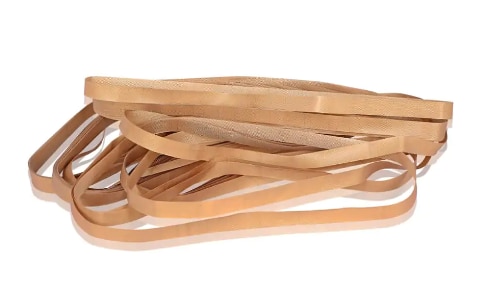 | Polyurethane Teflon Belt PU cord /Teflon belt has High Modulus Polyurethane compound which resists ozone and weather condition, having strength of smooth drives with high... View product → |
Frequently asked questions
What does a PU cord Teflon belt combine?
It can combine a PTFE-coated fiberglass belt with polyurethane drive or guide cords, or use polyurethane belt material with a PTFE-facing layer. Confirm the construction before buying.
What benefits do PTFE and polyurethane provide together?
PTFE offers a low-friction, non-stick, and chemically resistant surface, while polyurethane cords provide flexible positive drive, abrasion resistance, and practical tracking options.
What compatibility checks matter before ordering?
Check the belt construction, maximum and continuous temperature, chemical contact, cord diameter, belt dimensions, drive arrangement, and load before selecting a replacement.
How do you measure an existing belt for replacement?
Record belt length, width, thickness, cord diameter or pitch, splice type, guide position, and pulley dimensions. Photograph markings and the installed routing.
What should a Chennai supplier enquiry include?
State the machine and process, belt construction, dimensions, operating temperature, chemicals, speed, load, splice requirement, quantity, delivery location, and clear photographs.