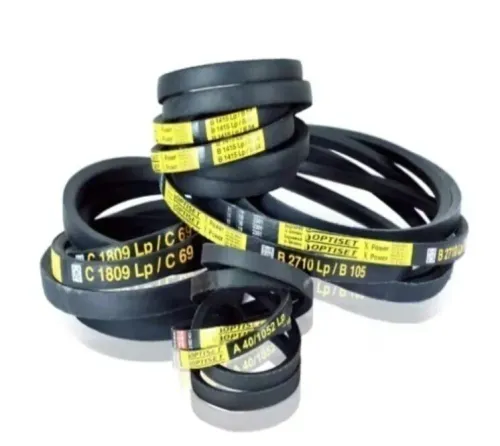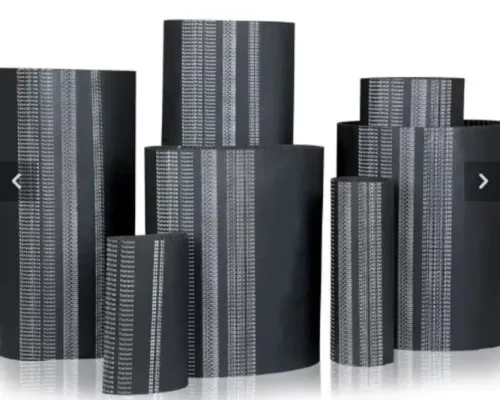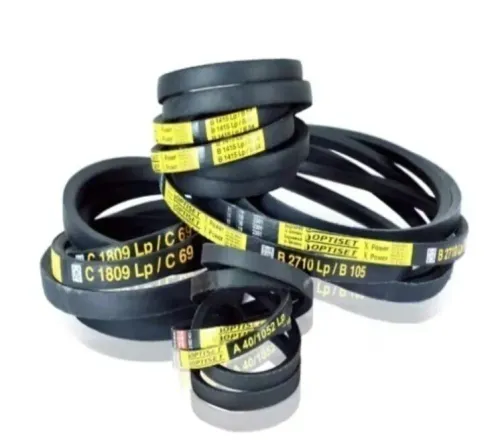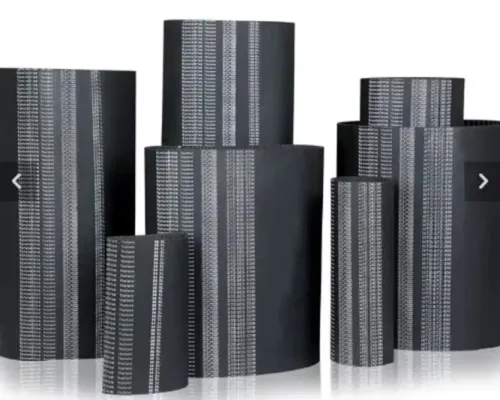
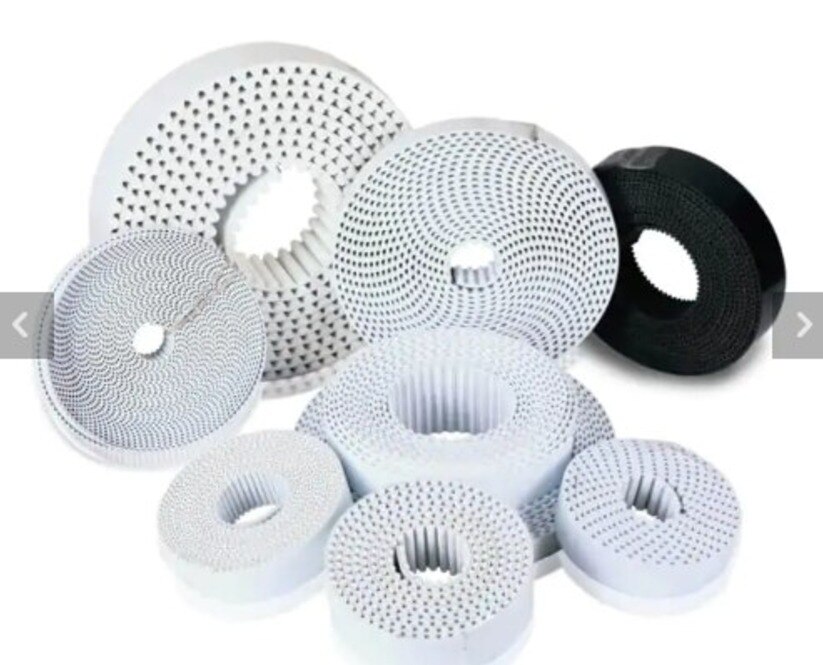
“Poly belt” can mean a round polyurethane cord, a joined PU/Teflon belt, a poly-V belt, or a toothed PU timing belt, and those constructions do not fit the same pulleys or loads. By the end, you will be able to match the belt to power, torque, speed, temperature, contamination, pulley geometry, and replacement requirements before requesting a quotation.
Key takeaways
- Choose PU cord for light-to-moderate loads and short centre distances.
- Reject belts that do not match pulley groove geometry and belt profile.
- Check Chennai heat, moisture, oil, dust and contamination before selection.
- Record belt profile, length, joint method and operating conditions before replacement.
Start with the load: when PU cord is the right compact-drive choice
For PU cord or poly belt compact drive conditions in Chennai, choose PU cord when the load is light to moderate, the centre distance is short, and a quick endless joint matters more than maximum torque capacity.
Choose a poly-V belt when the compact drive must transmit higher power, tolerate greater start-up load, or drive several shafts in a serpentine path.
| Option | Best fit | Main limitation |
|---|---|---|
| Round PU cord | Conveyors, rollers, packaging equipment, light-duty compact drives | Lower torque and shock-load capacity; friction drive can slip |
| Poly-V belt | Higher power in limited space; multiple shafts; small sheaves | Needs matched ribbed pulleys and still permits slip under overload |
Do not select from ambient temperature alone. Measure belt-surface temperature beside the smallest pulley after the drive reaches operating speed; pulley flexing, slip, bearing heat, enclosure heat, and radiant heat can raise it above Chennai’s surrounding air temperature. Then check the supplier’s minimum pulley-diameter table for the exact PU cord diameter, hardness, construction, and speed.
There is no safe universal rule such as ten times the cord diameter.
Reject PU cord for substantial torque, repeated shock loading, or a required fixed speed ratio. Its welded joint is convenient, but a poorly finished joint can catch on a guide or fail at the pulley.
A poly-V belt spreads load across longitudinal ribs and suits compact power transmission better, provided the groove profile, belt length, tension, and pulley alignment match.
Identify the belt construction before comparing specifications
“Poly belt” is not a construction. For poly belt drive conditions, identify whether the belt grips by friction, uses a low-friction facing, or engages teeth positively.
| Option | What it means | Practical use |
|---|---|---|
| Round polyurethane cord belt | A circular PU profile, usually cut and heat-welded into an endless loop | Light-to-moderate power, short centres, rollers, conveyors, and quick replacement; it can slip under overload |
| Joined PU/Teflon belt | An open PU belt or cord joined endless, with a Teflon sleeve or facing at the joint or working surface | Low-friction conveying, release applications, and products that must not stick; the joint remains a service limit |
| Poly-V belt | A moulded belt with several longitudinal ribs running in matching sheave grooves | Higher power in a compact friction drive, small pulleys, and serpentine drives across multiple shafts; it still slips |
| PU timing belt | A toothed PU belt with embedded reinforcement engaging a matching pulley | Synchronous speed and position transfer; it cannot run correctly on the wrong tooth pitch or profile |
Record the cross-section, rib or tooth profile, PU hardness, reinforcement, endless-joint method, and original length before requesting quotations. Poly belts in Chennai should match the existing pulley geometry; generic round cord is not an equivalent replacement for a poly-V or timing belt.
Use pulley geometry and operating conditions to reject a mismatch
A compact drive fails when the belt matches the shaft spacing but not the pulley groove, diameter, or starting torque. Treat “poly belt” as an incomplete specification: state the cross-section, groove profile, material, hardness, reinforcement, pulley diameters, speed, power, and required speed ratio.
| Option | Geometry and engagement | Reject it when |
|---|---|---|
| Round PU cord | Round V-groove; friction drive; endless welded cord; short centres and quick splicing | The smallest pulley falls below the supplier’s diameter limit, or torque, shock load, or slip tolerance is high |
| Poly-V belt | Matching longitudinal ribs; friction drive; several ribs share load on compact pulleys | The pulley has the wrong rib profile, rib count, or insufficient wrap |
| PU timing belt | Matching tooth pitch and tooth profile; positive synchronous engagement | The pulley pitch is unknown, teeth are damaged, or the belt cannot accommodate the required centre-distance adjustment |
| Joined PU/Teflon belt | Open belt joined after installation; friction drive; low-maintenance conveying or light transmission | An endless moulded belt or precise synchronous timing is required |
Check the load at startup, not only the running power. A round PU cord can slip or stretch under a jammed conveyor, repeated starts, or reversing torque; a poly-V belt carries more compact-drive power but still needs correct tension and wrap. A timing belt avoids slip only when its tooth pitch matches the pulley exactly.
For Chennai poly belt drive conditions, calculate surface temperature near the smallest pulley, where flexing and slip add heat. Confirm centre distance, pulley alignment, duty cycle, and shaft speed, then reject any belt whose diameter table does not cover the exact cord grade, hardness, and speed.
Check Chennai heat, moisture, contamination and belt-joint limits
Measure the belt surface near the smallest pulley, not only Chennai’s ambient air. Pulley flexing, slip, bearing heat, enclosure heat and radiant heat can raise belt temperature enough to shorten service life.
- Specify the measured surface-temperature range, shaft speed and duty cycle. A polyurethane cord belt that survives room temperature may soften, glaze or lose tension beside a hot motor or bearing.
- Treat humidity and rain as contamination controls, not automatic reasons to reject polyurethane. Guard exposed drives, provide drainage, and prevent standing water; salt-laden moisture can corrode pulleys, contaminate grooves and cause slip.
- Allow for Chennai dust and coastal salt in the enclosure design. Use sealed or shielded layouts, clean grooves during maintenance, and specify corrosion-resistant pulleys or a suitable surface treatment.
- Do not call an ordinary PU belt antistatic. For solvent vapour, combustible dust or static-sensitive equipment, require a tested antistatic or conductive belt and verify continuity through the belt, pulleys, shafts and grounding path.
- State the joint method: endless welded cord, sleeved/open polyurethane belt, or moulded poly-V belt. A welded polyurethane cord belt needs a clean, properly formed joint; do not replace it with generic cord without matching diameter, hardness and pulley geometry.
- Set initial tension using the supplier’s span-deflection or tension-value method. Low tension creates slip and heat; excessive tension overloads bearings and shafts.
- Put cross-section, material, hardness, reinforcement, pulley diameters and operating temperature on the quotation. “Poly belt” alone is not a specification for compact drive conditions in Chennai.
Measure the replacement and document a serviceable specification
A quotation for poly belts in Chennai is incomplete if it says only “poly belt.” Record the removed belt before disposal, then measure the belt and drive so a supplier can match both construction and pulley geometry.
- Measure belt length using the manufacturer’s stated method, plus round-cord diameter or poly-V rib count, rib profile, timing-belt pitch, and belt width.
- Record the centre distance, smallest and largest pulley outside diameters, groove shape, number of grooves, shaft speeds, transmitted power, start-up torque, and daily running hours.
- Photograph every marking: manufacturer, belt family, size code, material, hardness, reinforcement, batch number, and any arrow showing running direction.
- State the construction precisely: endless welded cord, sleeved or open polyurethane belt, moulded poly-V belt, or PU timing belt. For a polyurethane cord belt, specify the welding method and finished joint diameter.
- Request the supplier’s minimum pulley-diameter table for the exact cord grade, hardness, speed, and driving or idling position; do not substitute a generic “10-times diameter” rule.
- Record the original material and hardness, installation date, measured tension, alignment checks, pulley wear, operating temperature at the belt surface, contamination, and the failure mode.
Give Jigna Sales Corporation this complete record, including whether the replacement must be antistatic or conductive and how continuity is grounded; standard insulating PU does not satisfy that requirement. Never mix different lengths, profiles, or constructions on one multi-belt drive. The service sheet should also note the belt joint date and the next inspection interval.
Related products
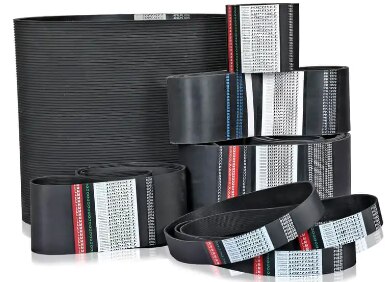 | Poly Belts Poly v-belt allows drive design to meet requirements of power grip and space. View product → |
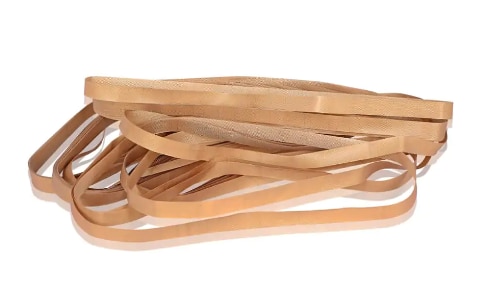 | Polyurethane Teflon Belt PU cord /Teflon belt has High Modulus Polyurethane compound which resists ozone and weather condition, having strength of smooth drives with high... View product → |
Frequently asked questions
When is PU cord the right choice for a compact drive?
Choose PU cord when the load is light to moderate, the centre distance is short and an endless welded or joined belt is useful for quick replacement.
What must you identify before comparing PU cord and poly belt specifications?
Identify the belt construction, profile, diameter or width, reinforcement, hardness, joint method and intended drive application before comparing specifications.
How do pulley geometry and operating conditions determine belt suitability?
Match the belt to pulley groove shape, diameter, wrap angle, tension and speed, then check heat, moisture, oil, dust and other contaminants.
What should you measure and document before ordering a replacement belt?
Record the belt profile, cross-section, length, pulley dimensions, centre distance, speed, load, temperature, contamination and joint requirements.