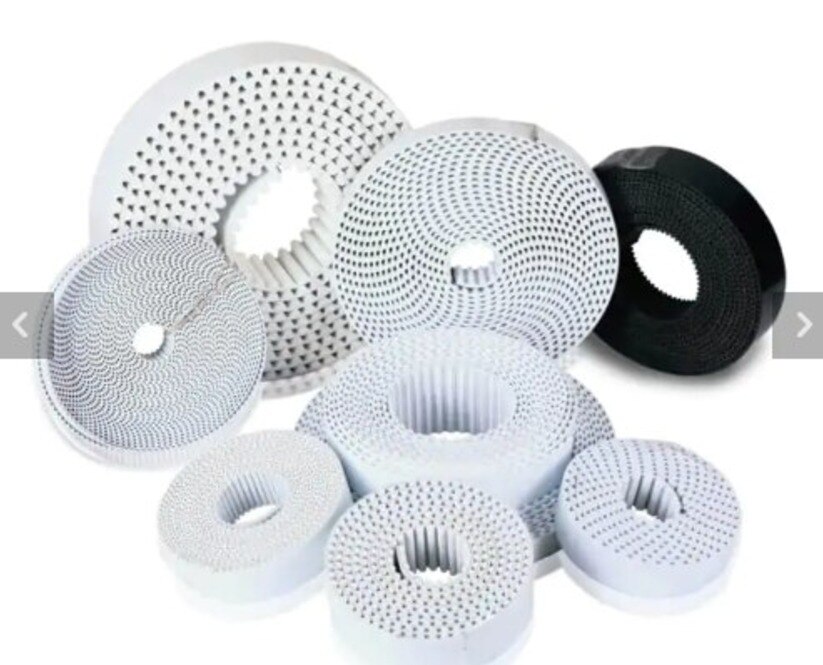
A PU timing belt can keep rotating after its tensile cord has failed, so intact-looking teeth do not prove that the drive is safe. You will learn how to separate cord damage from tooth shear, misalignment, tension errors, and pulley faults, then document the failure and specify a replacement correctly.
Key takeaways
- Remove the belt immediately when one tensile cord is exposed or broken.
- Record belt width, tooth pitch, tooth profile, length, and pulley tooth counts.
- Inspect pulley alignment, tooth wear, flange damage, and tension before replacement.
- Run the replacement under load and recheck tracking, noise, and tension.
How do you recognise PU cord failure before the belt stops?
One exposed tensile cord is enough to remove the belt from service: the remaining cords no longer provide dependable load capacity. Cord damage appears as exposed or broken strands, longitudinal splitting, local bulges, kinks, edge fraying, cracking, glazing, stretching, or a sudden change in belt pitch.
1. Watch the running drive for sideways tracking, abnormal noise, vibration, tooth jump, intermittent positioning errors, or sudden loss of synchronization. A broken cord can leave the teeth looking intact while the belt rotates briefly because the undamaged cords still carry part of the load.
A jump still requires inspection for hidden cord damage, permanent elongation, pitch deformation, damaged tooth flanks, and poor engagement.
2. Distinguish cord failure from tooth shear. Sheared teeth look rounded, stripped, or missing while the belt body can remain straight. Tooth deformation, incorrect tension, belt elongation, and worn pulley teeth produce separate clues; they do not prove cord failure.
A belt that walks sideways under load points more strongly to cord damage or alignment trouble.
3. Treat syncrodrive timingbelt problems in Chennai as urgent when salt-laden humidity, heat, oil, grease, solvents, or abrasive contamination accompany cracking or glazing. Do not keep testing a belt after visible cord exposure.
4. Record the failure as pu cord timing belt failure when synchronization disappears without obvious tooth loss, especially after shock loading, a kinked installation, or a jam. Teeth can look normal while a damaged cord changes the belt’s effective length and tracking.
What inspection proves the failure mode and its likely cause?
1. Isolate and lock out the machine, release stored tension, and remove the guards before touching the belt. Mark the belt’s running direction, then inspect both faces and both edges around the full circumference. Photograph the damage before replacement.
Record belt width, tooth count, pitch, and location; note repeated damage at one tooth pitch or damage near a splice or weld.
2. Check tooth engagement on every pulley. Use a straightedge, laser alignment tool, or dial indicator to verify shaft parallelism and pulley runout; do not trust visual alignment. Edge polishing, fraying, flange marks, or one-sided tooth wear indicate misalignment or insufficient engagement, while a small pulley can cause tight-bend cord breaks.
3. Match the pattern to the cause. Cords pulled across the belt suggest excessive torque or shock loading; a local cut or pinch suggests mechanical interference. Swelling, softening, or cracking indicates chemical attack, oil, or grease; glazing and hardening indicate heat.
Abrasive dust produces uniform dull wear, while metal chips leave sharp cuts or embedded tracks. Rounded, stripped, or missing teeth with a straight belt body indicate tooth shear rather than pu cord timing belt failure.
4. Treat any exposed cord, cut, or pinch as structural damage: steel tensile members can be harmed beneath intact polyurethane, and Chennai’s humid coastal air can accelerate corrosion through the cut. For syncrodrive timingbelt problems in chennai, retain the photographs and measurements; replace the belt only after correcting the initiating fault.
What should you measure before ordering a PU timing-belt replacement in Chennai?
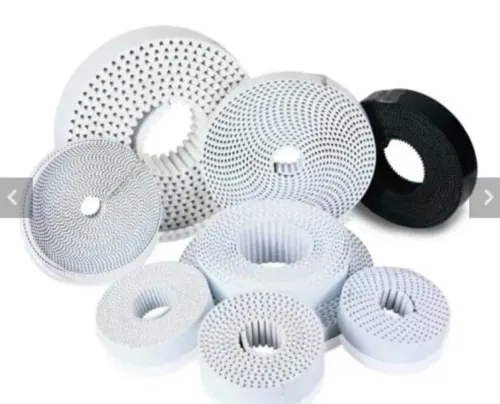
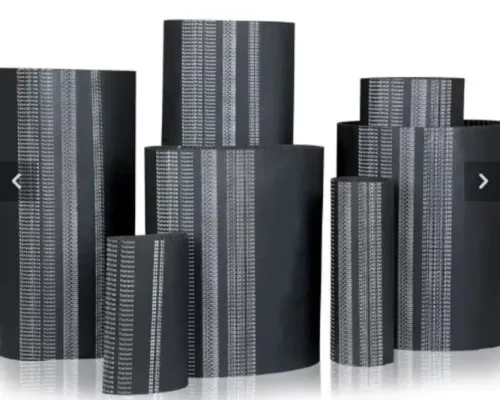
Record the belt and pulley as a matched drive, not as a visual replacement. A pu timing belt replacement in Chennai can have the same nominal length yet fail because its pitch, tooth profile, cord construction, or endless or joined format differs.
- Belt pitch and tooth profile
- Tooth count or pitch length, width, and tensile-cord type
- Endless construction or joined construction
- Operating-temperature range
- Pulley tooth profile and any belt coating or cleat requirement
| Drive item | Measurements to provide | Why it matters |
|---|---|---|
| Belt | Pitch, profile, tooth count, pitch length, width, cord type, format | Confirms the replacement will engage and carry load |
| Pulley | Tooth count, pitch, width, bore, outside diameter, flange arrangement | Confirms belt and pulley compatibility |
| Application | Temperature, coating, cleat, speed, and duty | Prevents heat, tracking, or product-contact mismatch |
Measure pitch length by counting the teeth and multiplying by the belt pitch. If the belt is damaged, measure its pitch line using the manufacturer’s specified method; do not substitute outside circumference or a printed belt designation for pitch length.
For a Syncrodrive timing-belt PU cord-failure replacement in Chennai, provide these measurements and photographs of both faces, edges, teeth, splice or weld, and damaged area. Jigna Sales Corporation can compare the exact belt and pulley specification, but ordering by appearance alone invites a repeat failure.
The same nominal length is not interchangeable when pitch, profile, cord construction, or format differs.
Related products
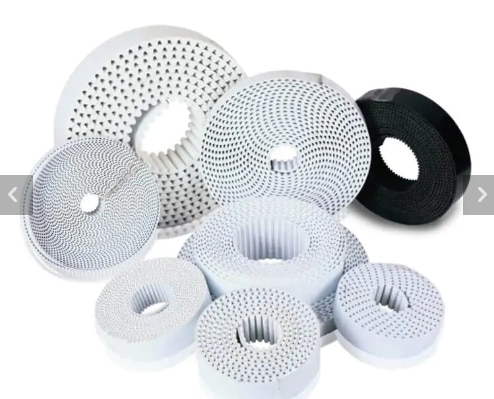 | PU Timing Belts has high performance transmission. This PU Belts has high intensive and low extension adoptive modules. View product → |
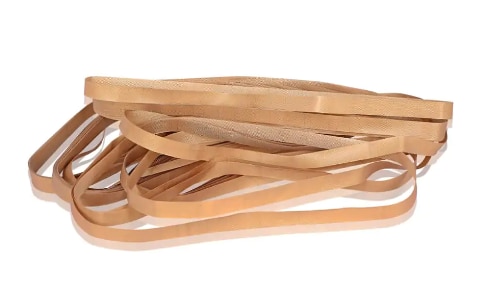 | Polyurethane Teflon Belt PU cord /Teflon belt has High Modulus Polyurethane compound which resists ozone and weather condition, having strength of smooth drives with high... View product → |
Which pulley and installation faults must be corrected with the belt?
A new belt alone is the wrong repair when pulley teeth are rounded, chipped, contaminated, or incorrectly profiled. Replace or rework the pulley, then inspect flanges for damage and continuous belt contact; flanges guide tracking but cannot correct misalignment.
| Fault to correct | What to inspect | Why the belt fails again |
|---|---|---|
| Pulley or idler damage | Tooth profile, chips, rough idler rotation, bent shafts, bearing play, and the tensioning mechanism | Poor engagement, shock loading, and uneven cord load |
| Alignment fault | Shaft parallelism and pulley alignment with a straightedge, laser, or dial indicator | A flange cannot correct misalignment; continuous edge loading abrades the PU body and cord |
| Contamination | Foreign objects, oil, grease, solvents, abrasive dust, and metal chips | Abrasives wear teeth and flanges; chemicals can swell or soften polyurethane; grease reduces engagement and traps grit |
Remove every foreign object before fitting the replacement. Clean only with a method confirmed as compatible with that specific polyurethane formulation, because “polyurethane” alone does not identify chemical resistance. Do not fit a wider belt or add a flange to hide tracking trouble; both can increase edge loading.
- Check shaft parallelism, bent shafts, bearing play, idler roughness, flange clearance, and the tensioning mechanism.
- Never lever the belt over a pulley with a screwdriver or force the centre distance smaller. Both actions kink or locally stretch tensile cords, causing delayed pu cord timing belt failure.
- Treat recurring syncrodrive timingbelt problems in chennai as a drive fault investigation, not a belt-only replacement.
How should you tension and validate the replacement drive?
Do not set replacement tension by a universal kilogram-force value or by pressing the span and judging deflection. Use the belt manufacturer’s specified method; the setting depends on width, pitch, tooth profile, span length, speed, torque, pulley sizes, and start-stop duty. Over-tension damages cords and bearings; under-tension promotes ratcheting and tooth jump.
1. Install the belt without levering it over a pulley or forcing the centre distance. Set the specified tension, then rotate the shafts by hand and measure again if the manufacturer’s procedure requires it.
2. Before fitting guards, verify full tooth engagement, straight tracking, flange clearance, pulley alignment, and free shaft rotation. A flange cannot correct misalignment; continuous contact causes edge loading.
3. Run a controlled low-speed trial, stop the machine, and inspect noise, vibration, temperature, tracking, tooth engagement, and synchronization. Then repeat those checks at operating speed.
4. Recheck tension after the belt seats or an installation change alters the reading. For PU timing belt replacement in Chennai, record the final setting and the manufacturer’s method rather than relying on an informal retensioning interval.
If the belt jumped teeth, do not return it to production until you confirm permanent elongation, pitch deformation, tooth-flank damage, and cord condition. This precaution matters when investigating Syncrodrive timingbelt problems in Chennai: a cord can be damaged without a visible break, and a belt that still runs can fail under the next load.
Frequently asked questions
How do you recognise PU cord failure before the belt stops?
Look for exposed or broken tensile strands, longitudinal splitting, bulges, kinks, edge fraying, cracking, glazing, stretching, or a sudden pitch change. Remove the belt from service when any cord is exposed.
What inspection proves the failure mode and its likely cause?
Photograph the damaged area, inspect the full belt circumference, check tooth shear and flank wear, and compare the damage with pulley alignment, contamination, overload, and tension findings. A single damaged section does not prove the cause without checking the drive.
What should you measure before ordering a PU timing-belt replacement in Chennai?
Record the belt width, tooth pitch, tooth profile, pitch length or tooth count, pulley tooth counts, centre distance, and required temperature or chemical exposure. Use the belt marking and tooth dimensions rather than appearance alone.
Which pulley and installation faults must be corrected with the belt?
Correct pulley misalignment, worn or damaged teeth, incorrect pulley spacing, bent shafts, damaged flanges, debris, and excessive centre-distance error. Replacing the belt without fixing these faults can repeat the failure.
How should you tension and validate the replacement drive?
Set tension to the belt or drive manufacturer’s specification, verify pulley alignment and tooth engagement, then run the drive at low speed before operating under load. Check tracking, noise, vibration, temperature, and tension again after the initial run.