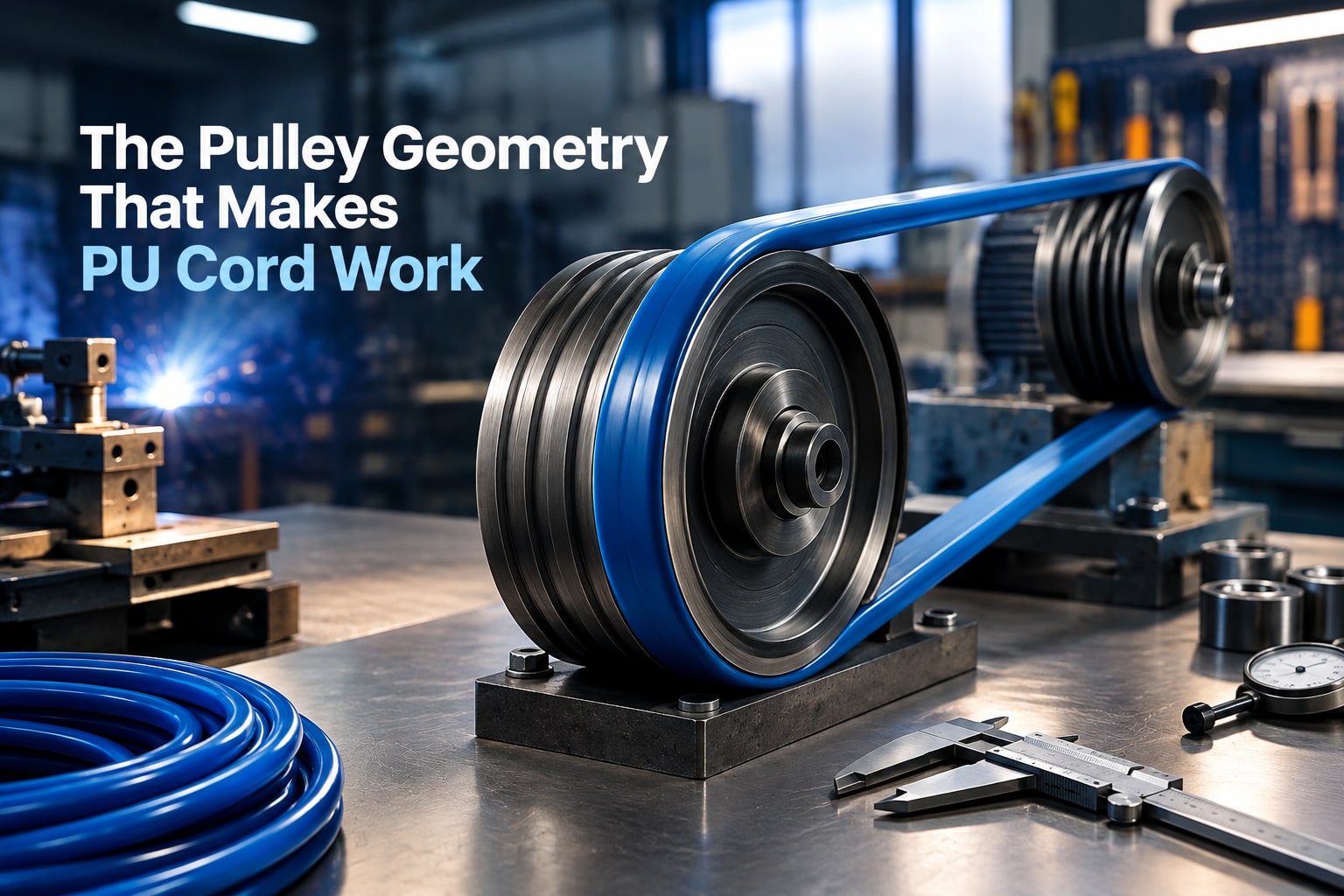
Choosing a round polyurethane belt requires more than matching a catalogue diameter to a pulley. You need to confirm the drive layout, groove geometry, tension, bend radius, material grade, joining method, and the consequences of using friction instead of tooth engagement. By the end, you will be able to specify PU cord, reject unsuitable substitutes, and inspect an endless welded loop before it enters service.
Key takeaways
- Match cord diameter to groove size, pulley diameter, and transmitted load.
- Use a square, clean heat cut for a strong endless weld.
- Inspect the weld for bulges, gaps, offset, and surface damage.
- Choose PU cord over other belts when flexibility and clean running matter.
What PU cord is and where a round belt fits
PU cord is a round polyurethane belt that transmits power through friction between its surface and a grooved or flanged pulley. Its circular cross-section bends in multiple directions, unlike a flat belt’s broad face, a V-belt’s wedge-shaped section, or a ribbed belt’s longitudinal ribs.
It is not a drop-in replacement for a toothed timing belt because it does not provide fixed angular engagement.
| Profile | Transmission method | Suitable drive layout |
|---|---|---|
| PU cord | Friction and traction | Parallel shafts, crossed drives, serpentine routes, and flexible conveying paths |
| Flat belt | Friction across a wide flat face | Parallel shafts with broad, crowned pulleys |
| V-belt | Wedge action in a V-groove | Parallel shafts designed for V sheaves |
| Poly-V belt | Rib engagement with a matching pulley | Compact parallel-shaft drives with ribbed pulleys |
| Timing belt | Positive tooth engagement | Synchronous drives requiring fixed speed or phase |
Choose PU cord when the route needs a flexible loop, frequent routing changes, or a compact traction drive rather than precise synchronization. Parallel shafts are the usual arrangement; crossed routing can reverse the driven shaft, while serpentine paths can drive several pulleys or conveyor rollers.
Pulley alignment still matters. A misaligned cord can climb from the groove, rub a flange, or wear on one side. Match the groove profile and containment to the polyurethane cord, and leave enough clearance to prevent pinching.
A round belt and a poly-V belt require different pulleys, load calculations, and installation tension even when both are sold as industrial “PU belts.”
How to size PU cord for pulley geometry and load
Select the PU cord from the drive’s torque, speed, wrap angle, shaft spacing, and number of cords—not diameter alone. A larger cross-sectional area carries more load, but it also needs a larger groove and pulley.
1. Calculate the transmitted torque and divide it among the cords in the drive. Use the supplier’s load tables for the exact polyurethane cord diameter, Shore A hardness, speed, and duty cycle; two cords with the same diameter but different hardness can have different capacity.
2. Match the groove to the cord’s circular profile. Confirm groove diameter, included shape, edge radius, and belt seating with the pulley drawing. Check every pulley and idler, because a small idler can fatigue the cord faster than the main pulley.
3. Keep the operating pulley diameter comfortably above the specified minimum for that cord grade, hardness, reinforcement, and speed. Treat the minimum as a limit, not a normal target; tight bending and high pretension shorten service life.
4. Set installation elongation from the manufacturer’s design data. Many drives use about 2–8% stretch, but cord diameter, length, load, and hardness change the correct value. Excessive stretch overloads shafts and bearings; insufficient stretch causes slip and pulsation.
5. Choose the material grade for the environment and load. Polyether TPU suits wet or hydrolysis-prone service, while polyester TPU often offers stronger oil and abrasion resistance; verify solvent compatibility. Specify the grade, colour, hardness, diameter tolerance, and reinforcement, if used, before ordering.
How to weld and inspect an endless PU-cord loop
A usable endless loop starts with two clean, square-cut polyurethane cord ends and a controlled thermal weld. A skewed cut leaves a thin side that carries little load; contamination prevents fusion.
- Cut both ends with a sharp, dedicated cutter, not a crushed knife. Make the faces perpendicular to the cord axis.
- Heat the faces at the approved welding temperature for the specified time. Do not guess from appearance.
- Bring the softened ends together straight, using only the specified joining pressure. Keep the cord aligned so the loop does not form a kink.
- Hold the joint motionless for the full cooling time. Trim the bead only after the weld has cooled sufficiently.
- Record the cord batch, welding temperature, heating time, joining pressure, cooling time, and operator.
Inspect the joint before installation. Do not accept a joint simply because it holds the loop together.
| Defect | What you see | Failure it predicts |
|---|---|---|
| Skewed or offset joint | Centreline does not match | Tracking error, cyclic noise, early fatigue |
| Voids, cracks, or an incomplete bead | Gaps, splits, or a dull unfused line | Tensile separation under load |
| Oversized or uneven bead | Local bulge around the cord | Groove mis-seating, pulley noise, speed variation |
| Burnt or discoloured polyurethane | Brown, brittle, or crumbly material | Degraded joint strength |
Measure diameter at several points around the loop, including beside the weld; one measurement can miss a locally oversized joint. Check hardness, surface damage, cord length, bead size, and batch traceability before fitting. Reheating the same location can degrade the polyurethane and should be avoided.
When PU cord is better—or worse—than other belt types
Choose smooth or reinforced PU cord when flexible routing, compact pulleys, and simple replacement matter more than high torque or exact angular timing. Choose another belt when the pulley geometry, load, or synchronization requirement demands it.
| Option | Drive principle | Better when | Worse when |
|---|---|---|---|
| Smooth PU cord | Friction on a round groove | You need flexible routing, crossed runs, or a weldable endless loop | High torque, heavy pretension, or severe slip is unacceptable |
| Reinforced PU cord | Friction with added tensile stability | Centre distance, speed, or load makes stretch a concern | Small pulleys or tight bends leave insufficient flexibility |
| Rubber V-belt | Wedge action in a V-groove | The machine already has matched sheaves and needs established torque capacity | You need compact serpentine routing or a simple welded loop |
| Poly-V belt | Longitudinal ribs engaging a grooved pulley | One belt must wrap a wide contact arc and transmit power compactly | A round-cord groove, not a ribbed pulley, is installed |
| PU timing belt | Positive tooth engagement | Shafts must maintain fixed phase, such as indexing or synchronized dosing | Shock, debris, or a non-toothed pulley prevents reliable tooth meshing |
A PU cord is a traction belt, so slip increases with contamination, inadequate wrap, or insufficient tension. Reinforcement reduces stretch but does not turn it into a synchronous belt. A smooth cord also needs containment: misalignment can make it climb from the groove, while a small idler can cause rapid bending fatigue.
Do not accept “PU belt” as an equivalent quotation. Catalogues from poly v belt manufacturers may use that term for round cord, ribbed belt, timing belt, or conveyor belt; specify the profile and pulley system.
What to put in a PU-cord purchase specification
A purchase order that says “PU belt” is incomplete. Specify polyurethane round cord, then state the geometry, material, operating conditions, joining method, and acceptance checks so a toothed belt, ribbed belt, or conveyor belt is not quoted as an equivalent.
- Diameter and tolerance, hardness in Shore A, TPU chemistry, colour, and smooth or reinforced construction
- Open length or finished endless length, allowable length tolerance, installation elongation percentage, and the required weld method
- Minimum pulley diameter, belt speed, wrap angle, shaft spacing, transmitted power or torque, and the number of cords sharing the load
- Continuous and intermittent temperature limits, chemical exposure, and whether the cord needs food-contact, antistatic, or electrically conductive performance
- Required batch traceability, certificate of conformity, material data sheet, dimensional report, and electrical-resistance test where static control matters
Jigna Sales Corporation can use these details to distinguish a round traction cord from the unrelated products that industrial belt manufacturers in India and poly v belt manufacturers may group under “PU belt.”
| Check at receipt | Accept the shipment when | Reject or quarantine when |
|---|---|---|
| Diameter and hardness | Measurements match the stated tolerance and Shore A value | Cord size, hardness, colour, or reinforcement differs |
| Length and weld | Length is within tolerance; weld is square, centred, smooth, and fully fused | Bead shows cracks, voids, offset ends, scorching, or exposed reinforcement |
| Documentation | Batch number and requested certificates accompany the cord | Material grade, temperature rating, or static-control claim is undocumented |
| Product identity | Label says polyurethane round cord with the specified TPU grade | Label identifies Poly-V, timing, flat, or conveyor belt product |
Related products
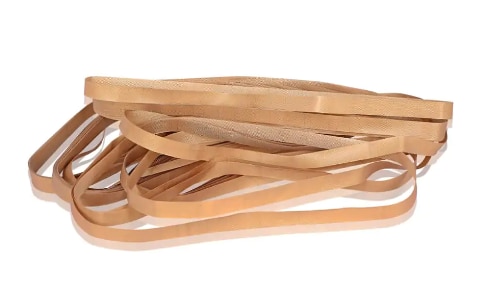 | Polyurethane Teflon Belt PU cord /Teflon belt has High Modulus Polyurethane compound which resists ozone and weather condition, having strength of smooth drives with high... View product → |
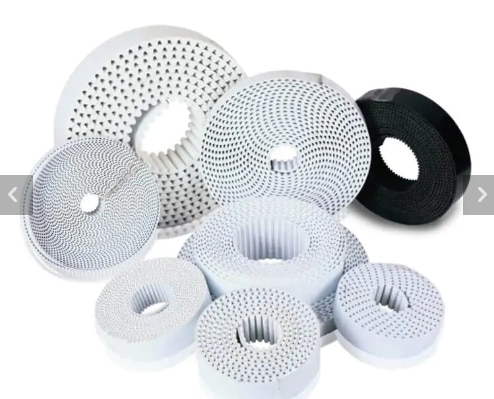 | PU Timing Belts has high performance transmission. This PU Belts has high intensive and low extension adoptive modules. View product → |
Frequently asked questions
What is PU cord, and where does a round belt fit?
PU cord is a round polyurethane belt that transmits power by friction on grooved or flanged pulleys. Its circular section suits routing around bends and multi-directional layouts.
How do you size PU cord for pulley geometry and load?
Check the cord diameter against the pulley groove, measure the smallest pulley diameter, calculate the required belt length, and confirm the cord’s load and speed rating for the drive.
How do you weld and inspect an endless PU-cord loop?
Cut both ends square, heat them evenly with a suitable welding tool, join them without twisting, and trim the bead after cooling. Inspect the joint for gaps, bulges, offset, cracks, and contamination.
When is PU cord better or worse than other belt types?
PU cord suits flexible routing, quick replacement, clean conveying, and moderate power transmission. It is a weaker choice for high torque, long centre distances, high shock loads, or drives requiring positive tooth engagement.
What belongs in a PU-cord purchase specification?
State polyurethane hardness, cord diameter, colour, length or finished loop size, joint method, pulley groove dimensions, operating speed, temperature, load, chemical exposure, and quantity.