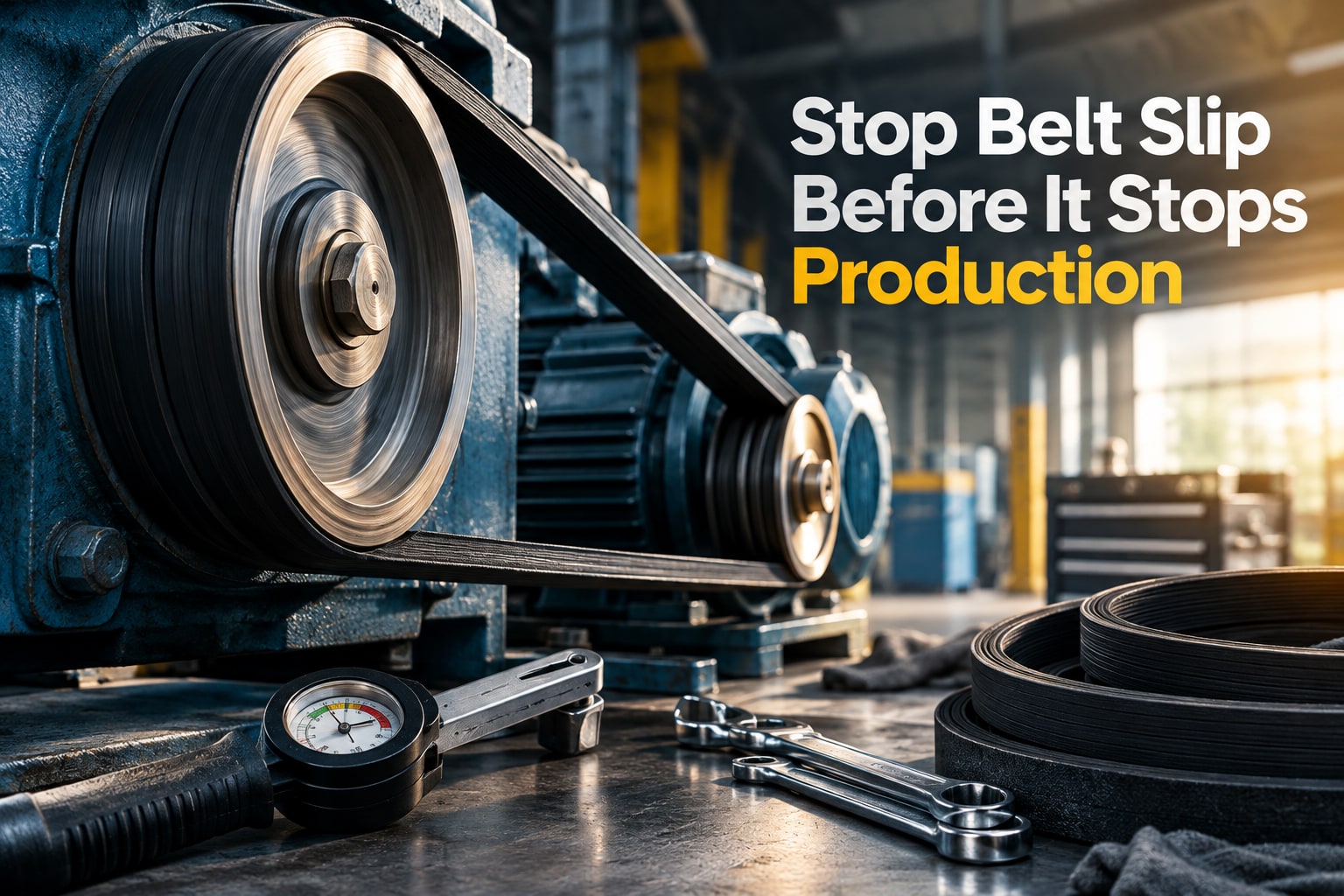
A slipping drive is not always caused by a loose belt. By checking symptoms, measured tension, sheave geometry, load conditions, contamination, and belt compatibility in the right order, you can identify the fault instead of repeatedly replacing belts or increasing tension blindly.
Key takeaways
- Distinguish slip from creep, misalignment, bearing drag, and belt vibration.
- Measure belt tension and sheave alignment; do not adjust by feel.
- Match belt section, sheave grooves, wrap angle, and starting-load capacity.
- Replace contamination-damaged belts and correct heat, installation, or overload causes.
Start with the symptom: slip, creep, or a different drive fault?
Belt squeal, speed loss, glazing, polished pulley grooves, black rubber dust, heat marks, and a burnt-rubber smell are strong signs that a v belt drive is sliding. Gross slip points to inadequate effective tension, overload, contamination, or an unsuitable belt-and-sheave combination.
1. Record when the fault occurs. Continuous slip suggests incorrect tension, contamination, or wear; slip during acceleration, peak load, or a jam points to starting torque or overload.
2. Check whether the motor reaches operating speed before the v belt slips. A motor-start capacitor or starter fault can prevent acceleration and imitate belt failure.
3. Measure motor current and starting performance, then check driven-shaft resistance and bearing temperature. A seized bearing, brake that fails to release, or driven-machine jam can overload the belt.
4. Do not increase tension until you have ruled out a locked bearing, excessive driven load, and a starting problem. Extra tension can overload shafts and bearings without curing the cause.
Separate gross slip from belt creep. Creep occurs as the belt’s tensile members elongate and relax while entering and leaving the sheave; it creates a small speed-ratio error without obvious sliding, squeal, or rubber dust. A slipping belt loses speed visibly and generates friction heat, while creep does not produce the same sliding damage.
Measure tension and alignment instead of adjusting by feel
Set tension on a V-belt drive from the manufacturer’s span and deflection figures, never by feel. Measure the free span, apply the stated force at its midpoint, and check deflection with a ruler; a tension meter can measure force or frequency. The target depends on belt section, span, speed, transmitted power, and service conditions.
No generic value suits all industrial belts.
- Place a straightedge across sheave faces, or use a laser on the sheave datum surfaces; do not infer alignment from shafts alone.
- Correct angular misalignment and parallel offset; each changes belt entry and sidewall loading.
- Inspect for uneven groove wear.
- Check whether the belt sits too deep in the groove.
- Verify the groove profile matches the belt section.
- Compare pulley diameters with the drive specification.
Under-tension causes slip, heat, and dust; over-tension raises radial load on motor and driven-shaft bearings, accelerates shaft wear, and overstresses tensile members. Recheck after the initial running-in period. A worn sheave makes a new belt slip when it sits too deep and loses wedging action; replace severely worn sheaves, not another belt.
Check belt section, sheaves, wrap, and starting-load capacity
A v belt drive can carry its load without slipping only when the belt, sheaves, wrap, and starting capacity match the design. Confirm the belt section and construction, pitch or effective-length convention, number of ribs where applicable, and groove profile.
Classical V-belts, narrow or wedge belts, raw-edge cogged belts, wrapped belts, and industrial vee belts are not interchangeable because similar top widths do not ensure correct fit or power rating.
- Check the manufacturer’s minimum sheave diameter. A smaller sheave increases bending strain and shortens belt life, even when the nominal power calculation passes.
- Measure wrap angle on the small sheave. Centre distance, belt length, and an idler change wrap; a wrongly positioned backside idler can sharply increase bending fatigue.
- If slip appears during acceleration, peak load, or a jam, check starting torque and overload before adding tension. The solution may be a larger belt section, more belts, a larger sheave, greater wrap, a different speed ratio, or controlled starting.
- Install matched belts only when they carry the manufacturer’s matched-set designation or approved length match. Never mix new and worn belts or different constructions: the tight belt takes excess load while the loose belt slips.
Compare the selected belt and pulley arrangement with the drive manufacturer’s power tables, speed, service factor, and starting load. A correctly tensioned belt still fails when the drive is under-designed or the groove geometry is wrong.
Treat contamination, heat, and installation damage as root causes
Replace a belt that has absorbed oil, grease, coolant, or process chemicals; do not try to clean the contamination out of the rubber. These fluids reduce friction and can swell, soften, or crack industrial belts.
1. Stop the leak before fitting a replacement. Clean the sheaves and the surrounding guard with the belt manufacturer’s approved degreasing method, then remove loose dust and abrasive particles that polish or wear groove sidewalls.
2. Keep the guard effective without trapping heat or blocking inspection. Check high ambient temperature, poor ventilation, nearby hot surfaces, and bearing drag because heat can cause slip and result from it.
3. Replace the belt if it is stretched, glazed, hardened, cracked, delaminated, missing ribs or teeth, softened, swollen, or visibly heat-damaged. Inspect worn sheaves too; a belt that sits too deeply loses its wedging action and can slip again.
4. Do not use belt dressing as a repair. It can mask slip, contaminate pulleys, attract abrasive dust, and delay correction of tension or alignment.
5. During installation, move the motor or tensioner to create slack and fit the v belt without force. Never pry it over a sheave with a screwdriver; damaged cords and sidewalls can fail after the drive starts. Recheck alignment and measured tension before returning the machine to service.
Specify the replacement so the next belt is not another failed experiment
A reliable replacement starts with the drive data, not the old belt’s top width. Give v belt manufacturers the belt section and construction, approved length convention (inside, datum, pitch, or outside length), operating speed, transmitted power, starting or peak load, number of belts, centre distance, sheave diameters, and groove dimensions.
Give the supplier these environmental requirements:
- Oil, coolant, dust, ozone, static, temperature range, and chemical exposure
- Start frequency, acceleration pattern, jams, peak loads, and driven-machine load changes
- Photographs or measurements of both sheaves, plus the fault conditions and machine start pattern
| Nominal request | Decision-grade replacement information |
|---|---|
| Length | Approved length convention and measured centre distance |
| Belt type | Section, construction, material, and groove-profile requirement |
| Capacity | Speed, transmitted power, starting or peak load, and belt count |
| Sheave fit | Diameters, groove angle, width, depth, and minimum permitted diameter |
| Installation | Manufacturer’s tension procedure and matched-set designation |
Ask for the manufacturer’s tension procedure, minimum sheave diameter, matched-set designation, and groove-profile requirement. Compare the proposed belt with the existing sheaves before ordering; replace worn sheaves if the old belt has been sitting too deeply. Jigna Sales Corporation can help businesses specify industrial belts and industrial vee belts instead of choosing from width alone.
This record prevents a correctly tensioned belt from failing because the drive is under-designed.
Related products
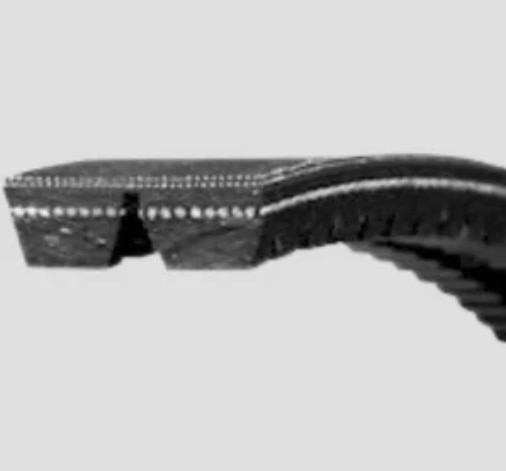 | Rubber Banded Belts Rubber Banded Belts are made up from Classical, Wedge or Narrow belts with strong tie band over them. View product → |
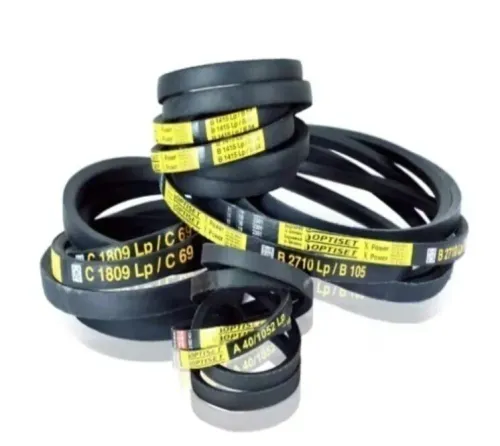
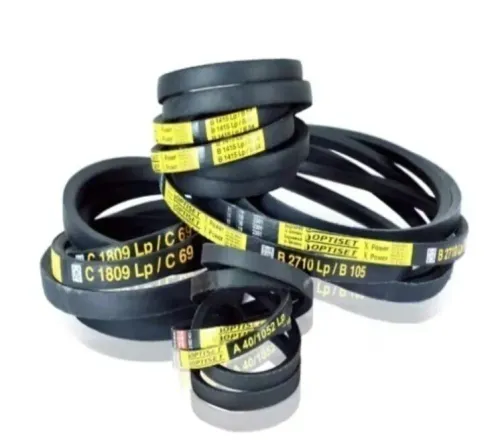
 | V-Belt V-Belt V-belts are widely used on high speed and high torque drives on light, heavy industrial and automotive machines. |
Frequently asked questions
How can you tell whether a V-belt drive is slipping?
Look for squeal, speed loss, glazing, polished pulley grooves, black rubber dust, heat marks, and a burnt-rubber smell. Compare driven-shaft speed with driver speed to confirm slip.
How should you correct V-belt tension and alignment?
Use the belt manufacturer’s tension method or force-deflection value, then check sheave alignment with a straightedge or laser. Do not set tension by feel alone.
What should you check when a replacement V-belt keeps failing?
Verify the belt section, sheave groove profile, wrap angle, centre distance, starting load, contamination, operating temperature, and installation method before ordering another belt.
When should contamination, heat, or installation damage be treated as the root cause?
Treat them as root causes when oil or chemical exposure, excessive temperature, blocked ventilation, forced installation, twisted belts, or damaged sheave edges appear with the failure.
Related products
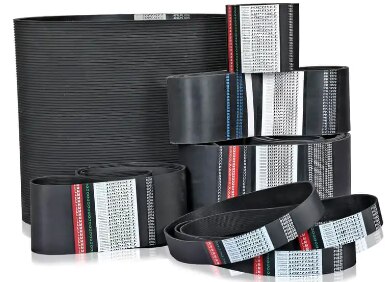 | Poly Belts Poly v-belt allows drive design to meet requirements of power grip and space. View product → |
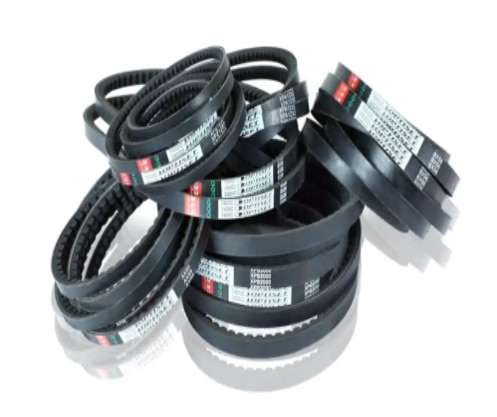 | Cogged Belt Cogged belts are suitable for all industrial applications, particularly where small or sub-minimal sheave diameters are required. View product → |
 | 5m, 7m, 11m Belts Belts are recommended for use on bench type milling machines, lathe drives, woodworking and metalworking machine spindle drives, computer peripheral... View product → |