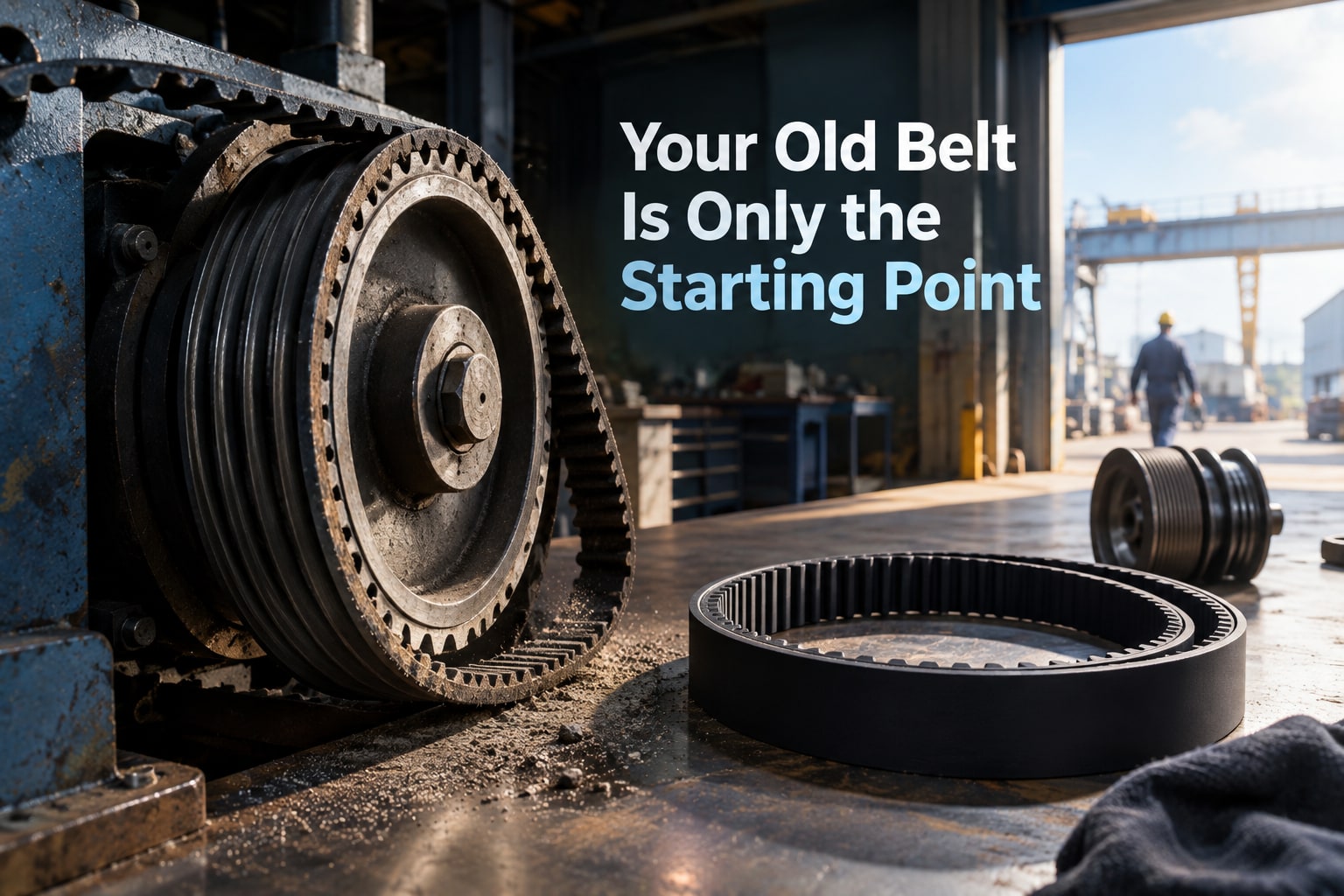
A raw edge cogged belt is not automatically interchangeable with every cogged belt, industrial V belt, or timing belt carrying a similar width marking. By checking the belt construction, profile, length reference, pulley geometry, operating conditions, and supplier documentation, you can order a replacement that fits the drive instead of merely fitting the shaft distance.
Key takeaways
- Record the belt profile, length, width, and tooth spacing from the old belt.
- Match the cogged V belt profile to the pulley groove, not just its length.
- Account for Chennai heat, humidity, dust, oil, and washdown exposure.
- Include pulley dimensions, drive details, and operating conditions in your enquiry.
What makes a raw edge cogged belt different
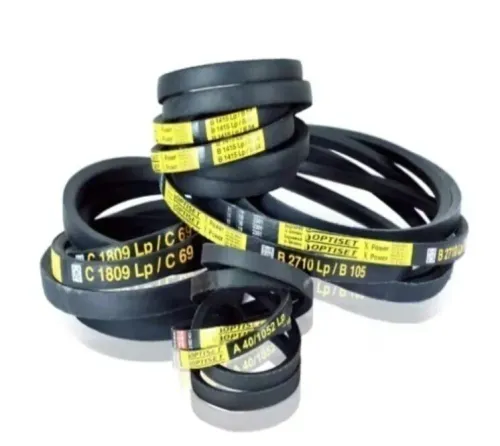
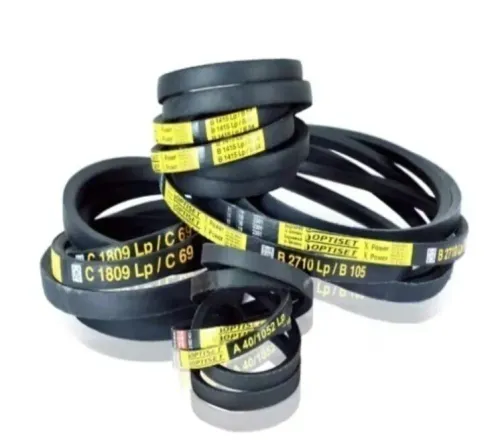
A raw edge cogged belt is a friction-drive V-belt with exposed, unwrapped sidewalls and molded longitudinal notches on its inner surface. The notches let the belt flex around a smaller pulley with less bending stress; they do not engage pulley teeth, so the drive is not synchronous and can still slip.
| Type | Construction | Main difference |
|---|---|---|
| Raw edge cogged V-belt | Exposed sidewalls; molded inner cogs | Flexible, efficient on smaller pulleys, but still depends on friction and correct groove contact |
| Wrapped V-belt | Fabric jacket around the rubber body | Better protected against abrasion; usually needs a larger minimum pulley than a comparable raw edge cogged belt |
| Wedge or narrow V-belt | Deeper, narrower section | Transmits more power in less space; its profile is not interchangeable with a standard V-belt |
| Banded belt | Two or more V-belts joined by a top band | Resists belt whip and maintains alignment across multiple grooves |
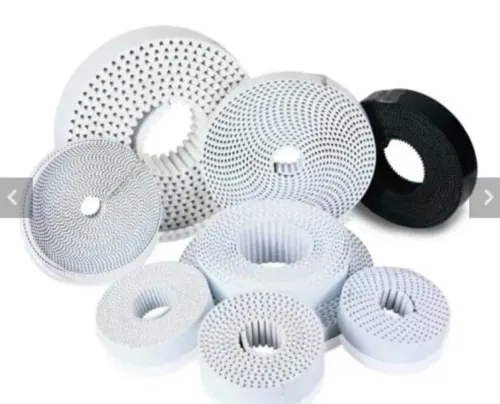
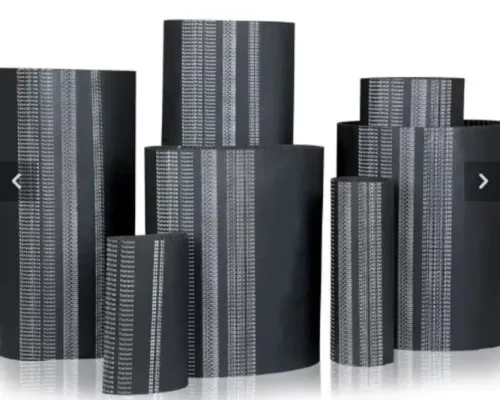
| Timing belt | Toothed belt engaging a toothed pulley | Provides positive indexing; it is not a cogged belt |
Do not specify only “cogged belt” when ordering. Give the section, such as SPZ, SPA, SPB, SPC, 3VX or 5VX, plus datum or pitch length and any oil-resistance or antistatic requirement. Smaller pulley limits remain profile-specific, and worn grooves can quickly damage even the correct belt.
How to identify the belt from the old part
A belt marking is the quickest clue, but do not order from the marking alone. Clean the old raw edge cogged belt and photograph every printed character before it fades.
Record the section profile, such as A, B, 3V, 5V, SPZ, SPA, SPB or SPC, only if the marking is legible; similar-looking profiles do not share the same groove dimensions.
Measure the removed belt without stretching it:
- Measure top width and thickness with calipers at an unworn section. A worn sidewall can make a v belt appear narrower than its original size.
- Measure pitch length, outside length or inside length only after identifying which length the marking uses. Do not substitute one for another; the difference depends on the belt profile.
- Record cog spacing and the number of grooves on the pulley. Cog spacing helps confirm the construction, while groove count tells you whether you need a single belt or a matched set.
- Copy every marking, including profile code, length code, manufacturer code and any oil-resistant or antistatic designation. “Cogged belt” alone is not enough.
- Check the old belt against the pulley: a polished, narrowed or cracked sidewall can mean the belt is the wrong profile or the groove is worn.
| Measurement or marking | What it identifies | What can go wrong |
|---|---|---|
| Profile code | Groove cross-section | An A-section replacement will not correctly fit a B or narrow 3V groove |
| Length code | Reference length | “Outside” and “pitch” lengths are not interchangeable |
| Pulley groove count | Belt quantity | Replacing one belt in a matched multi-groove drive creates unequal loading |
How to match the belt to the pulley
Do not match a replacement by length alone. Confirm that its cross-section fits the pulley groove: top width, thickness, flank angle and pitch must correspond to the belt manufacturer’s section designation. A cogged V-belt remains a friction-drive belt; its notches do not mesh with pulley teeth like a timing belt.
1. Read the pulley marking or measure one unworn groove. Record the groove angle, top width, depth, pitch diameter and number of grooves. A mismatch lets the belt sit too high or bottom out, causing slip, heat and rapid wear.
2. Compare the belt’s section designation with the pulley specification. An industrial V-belt, narrow wedge belt and standard V-belt are not interchangeable simply because their lengths appear similar.
3. Match the length reference exactly. Outside length, inside length, datum length and pitch length use different measurement paths. Use the belt maker’s catalogue method and the pulley’s stated measurement datum; do not apply a fixed conversion between designations.
4. Inspect the pulley before fitting the belt. Replace or re-machine grooves that are sharp, polished, rusted, widened or uneven. A glazed belt, repeated squeal or exposed reinforcement can indicate pulley wear rather than a faulty replacement.
Fit the belt without forcing it over the flange, then check that it sits evenly across every groove and that all belts in a matched set share the load. If the drive uses oil, coolant or solvent, confirm the belt compound against that named fluid and its temperature; “oil resistant” is not universal.
What Chennai conditions change the belt specification
Chennai’s heat, humidity and coastal air affect belt life through the actual drive environment, not the word “industrial” on the package. Give the supplier duty cycle, measured belt-area temperature, speed, pulley diameter and exposure to oil, coolant, salt mist or ozone.
| Factor | What changes belt life | What to specify or check |
|---|---|---|
| Tension | Low tension causes slip and heat; excessive tension overloads shafts, bearings and the raw edge cogged belt. | Use the manufacturer’s deflection or tension value for the section and span. |
| Speed and pulley | High speed, slip and a pulley below the approved minimum increase bending stress, heat and flex fatigue. | Confirm maximum speed and minimum diameter for that exact cogged belt profile. |
| Temperature | A small pulley, poor ventilation or continuous duty can make belt temperature exceed room temperature. | Report ambient and measured belt-area temperatures; select the compound for both. |
| Contamination | Oil or chemicals can swell, soften or change belt dimensions. | Name each fluid and its temperature; request confirmed compatibility, not a generic “oil-resistant” claim. |
| Alignment and wear | Misalignment, widened grooves, rust pits or polished sidewalls cause poor seating, slip and uneven wear. | Check shaft alignment and replace damaged pulleys before fitting a new industrial V belt. |
| Storage | Sunlight, ozone, moisture, heat and tight bends age rubber before installation. | Store belts cool, dry, shaded, relaxed and away from motors, solvents and welding equipment. |
Where static discharge is hazardous, request verified antistatic capability and preserve the drive’s discharge path; use a continuity test during incoming inspection.
What to put on a replacement-belt enquiry
A verified like-for-like replacement needs more than the old belt’s length. Send the supplier the belt marking, section profile, measured top width and thickness, pitch length, and the pulley groove count. State that the replacement is a raw edge cogged belt, not simply a generic v belt.
- Photograph every marking on the old belt, including unreadable or partial codes, and provide the manufacturer and belt age if known.
- Give the measured inside, outside, or pitch length, stating which measurement method you used. Do not mix an inside-length code with a pitch-length replacement.
- Record the pulley groove profile, groove count, smallest pulley diameter, and whether the grooves are polished, widened, rust-pitted, or damaged.
- Provide the drive details: motor power, operating speed, centre distance, shaft arrangement, and whether the belt runs singly or in a matched set.
- Name the operating temperature, dust level, oil, coolant, solvent, or other chemical contacting the belt. “Oil resistant” does not confirm compatibility with every fluid.
- Request the required antistatic or electrical-conductivity specification, and ask how to verify continuity on receipt when static discharge is a hazard.
- Include photos showing belt tracking, pulley alignment, and the complete drive, plus the machine model and application.
Jigna Sales Corporation can use those details to distinguish a replacement industrial v belt from a different profile, compound, or length. Ask for the proposed belt code, dimensions, minimum pulley diameter, compound, and any antistatic evidence in writing before ordering.
Related product
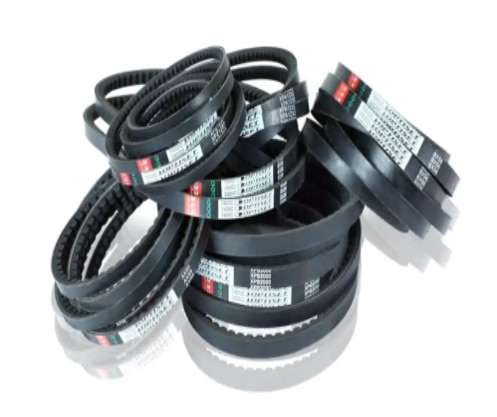 | Cogged Belt Cogged belts are suitable for all industrial applications, particularly where small or sub-minimal sheave diameters are required. View product → |
Frequently asked questions
What makes a raw edge cogged belt different from a wrapped V belt?
A raw edge cogged belt has exposed sidewalls and molded inner notches that reduce bending stress around smaller pulleys. It remains a friction-drive belt and does not provide synchronous tooth engagement.
How can you identify a cogged belt from the old part?
Record the belt profile, top width, thickness, outside or inside length, tooth spacing, markings, and the old belt’s application. Measure the belt and pulley instead of relying on a faded or incomplete code.
How do you match a cogged belt to the pulley?
Match the belt cross-section to the pulley groove angle and dimensions, then verify the pulley diameter, groove condition, alignment, and required length. A belt that fits the shaft but not the groove will wear quickly and transmit power poorly.
Which Chennai conditions can change the belt specification?
Heat, humidity, dust, oil, chemical exposure, washdown, and outdoor storage can affect belt material and service life. State the operating temperature, contamination, cleaning method, and duty cycle when requesting a belt.
What should you include in a replacement-belt enquiry?
Provide the old belt markings, profile, measured dimensions, pulley details, centre distance, motor power, speed, rotation, application, temperature, contamination, and required quantity.